
Lieferung heute & morgen

Qualitätsgarantie

Willkommens-Angebote freischalten: KOSTENLOSE Lieferung | Bis zu 80 % RABATT | Kostenlose 30-Tage-JoyPlus-Testphase
App herunterladen
A dead car battery in the morning or a slow puncture on the way to an important meeting—these mishaps are more than just an annoyance. A multifunctional jump starter with an integrated compressor promises a quick and easy solution. However, the market is flooded with devices whose advertising claims often promise more than the technology can deliver. Before you make a decision, it's crucial to understand the most common pitfalls that can lead to a regrettable purchase.
To make an informed choice based on objective criteria, you should carefully examine three core parameters.
The power of a car jump starter is measured in amperes (A). A clear distinction is necessary here:
A portable 12V compressor is only useful if it can inflate a tyre in a reasonable amount of time. Look for these features:
The capacity, often stated in milliampere-hours (mAh), primarily relates to its function as a power bank with jump-starting capability. It indicates how many times you can charge your smartphone. For the jump-starting function, the quality of the battery cells and their ability to discharge current rapidly is more important. An indispensable part of a good car emergency kit is its integrated safety mechanisms. Look for explicitly mentioned features such as:
Here are some recommendations tailored to different user profiles and vehicle types.
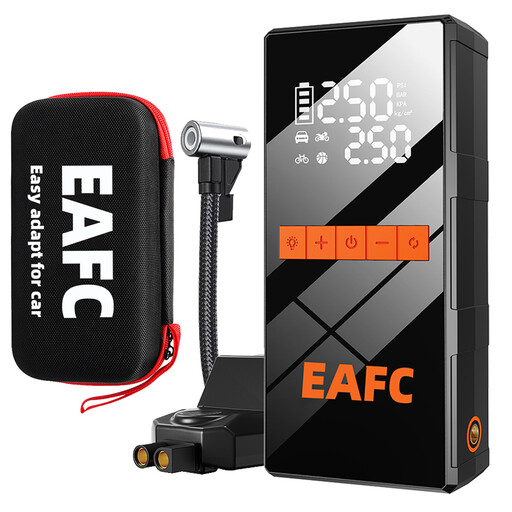
Why This Fits Their Persona: A practical all-in-one solution for daily use. Compact enough for the glove compartment, this device covers the two most common breakdowns: a dead battery and low tyre pressure. Ideal for drivers of petrol and smaller diesel vehicles.
It avoids the trap of being a mere marketing gimmick by offering a functional 150 PSI compressor with an automatic shut-off feature that is practical for standard car tyres.
4-in-1 functionality (jump starter, compressor, power bank, LED light) in a compact design. Suitable for petrol engines up to 4.0L and diesel engines up to 2.0L.
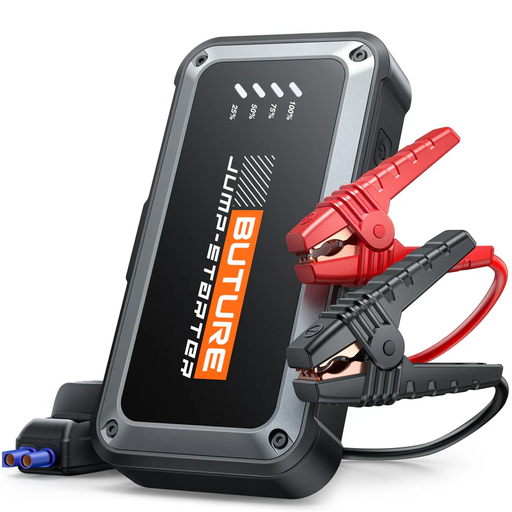
Why This Fits Their Persona: Owners of large-displacement vehicles (petrol or diesel) need one thing above all: high starting power. This device focuses on maximum force to reliably start even large engines in cold weather.
It avoids the pitfall of a weak secondary feature. Instead of integrating an underpowered compressor, it focuses on delivering extremely high starting power, which is crucial for this class of vehicle.
High peak current of 3000A. According to the manufacturer, it's suitable for engines up to 9.0L petrol and 8.5L diesel. It also includes a 16800mAh power bank and an LED light.
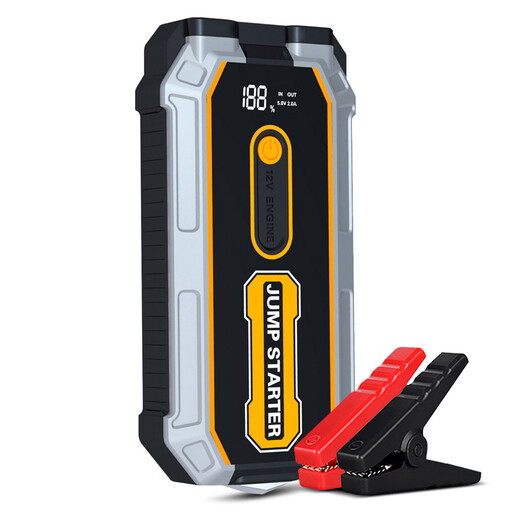
Why This Fits Their Persona: For anyone seeking a basic and reliable safeguard against the most common problem—a dead battery—without a large investment. Its extremely compact design makes it easy to store in the car.
This device avoids the trap of feature bloat. It is a dedicated battery booster and power bank. It focuses on reliably performing one task: jump-starting common passenger cars.
Very compact and lightweight design (approx. 330 g). Excellent value for its core jump-starting function, complemented by an LCD display and a USB charging port.
We have compiled a complete, real-time list of products that fully satisfy these strict selection criteria and UK safety regulations.
1. How often do I need to charge a jump starter with a compressor? Even when not in use, the internal battery will slowly self-discharge. Most manufacturers recommend fully charging the device every 3 to 6 months to preserve the battery's lifespan and ensure it's ready for an emergency. Always check the specific recommendations in your model's user manual.
2. Can I inflate any tyre with one of these devices? The integrated compressors are typically designed for the tyres of cars, motorcycles, and bicycles. For very large tyres, such as those on motorhomes or large trucks, the performance may reach its limits, and the inflation process could take a very long time. Pay attention to the maximum pressure (Bar/PSI) and, if listed, the airflow rate.
3. Is it safe for a novice to use? Yes, modern devices are equipped with a range of safety features that make them safe to use. The most important is reverse polarity protection, which prevents damage if the clamps are accidentally connected to the wrong battery terminals. Nevertheless, always read the manual carefully before first use and follow the steps: connect the red clamp to the positive (+) terminal, and the black clamp to the negative (-) terminal or a ground point on the vehicle's chassis.