
Lieferung heute & morgen

Qualitätsgarantie

Willkommens-Angebote freischalten: KOSTENLOSE Lieferung | Bis zu 80 % RABATT | Kostenlose 30-Tage-JoyPlus-Testphase
App herunterladen
A dead car battery on a cold morning or a slow puncture far from the nearest garage—these are challenging situations for any driver. A multi-function jump starter with an integrated compressor promises a quick, self-sufficient solution. However, the market is flooded with devices whose performance claims often promise more than they deliver in practice. Before you make a purchase, it's crucial to understand the typical traps that can lead to a bad buy.
A common problem is unrealistic performance specs. Many manufacturers advertise high peak current values (Amps) that, in reality, are insufficient to start a larger engine, especially a diesel in low temperatures. Another shortcoming is often the integrated compressor: slow inflation times and inaccurate pressure gauges make the tire inflator unreliable in an emergency. Finally, the quality of the built-in battery is decisive. Low capacity or rapid self-discharge means the device will fail precisely when you need it most.
To find a reliable and durable device, you should base your decision on objective technical data. Three parameters are of central importance here.
The peak current, measured in Amperes (A), indicates the maximum current the device can deliver for a short period during the jump-starting process. This value is the single most important factor for compatibility with your vehicle.
Check the manufacturer's specifications for maximum engine displacement for both petrol and diesel engines to ensure an adequate power reserve.
A good integrated compressor is more than just an add-on. Pay attention to the maximum pressure, usually specified in PSI (Pounds per Square Inch) or Bar. A 150 PSI battery-powered compressor offers enough power reserve for most car and SUV tires. Important features for a practical car tire inflator include:
The capacity of the internal battery, given in milliampere-hours (mAh), determines how many jump-starts or tire inflations are possible on a single charge. A higher capacity offers more security. Many devices also function as a multi-function jump starter and offer useful additional features that can supplement or replace a complete roadside emergency kit:
Choosing the right device depends heavily on your individual use case. Here are some recommendations tailored to different driver profiles.
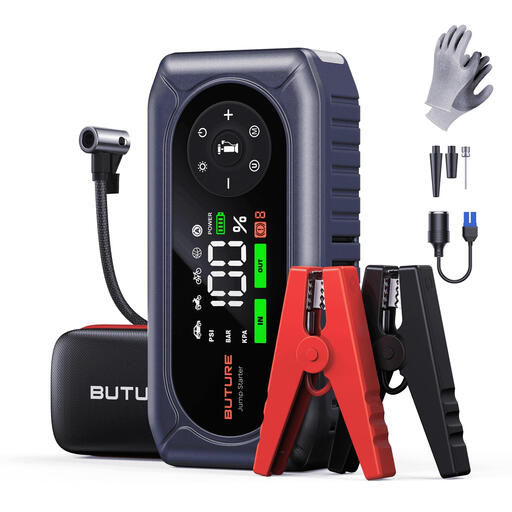
Why This Fits Their Persona: Ideal for owners of SUVs, vans, or vehicles with large-displacement diesel engines (up to 8.0L according to the manufacturer) who need a high power reserve for demanding starts.
With a stated peak current of 4500A, this device counters the trap of underpowered jump starters. It provides a clear, high-performance specification for demanding engines.
Combines high jump-starting power with a 150 PSI digital compressor and 10 integrated safety features for secure operation.
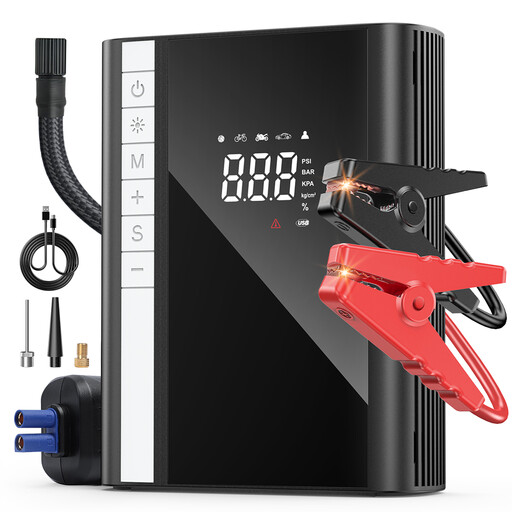
Why This Fits Their Persona: A versatile solution for drivers of standard cars, SUVs, and RVs who need a balanced combination of jump-starting and inflation functions for the most common roadside emergencies.
This device bundles essential emergency functions (jump starter, pump, light) into one unit, avoiding the need to buy and store multiple, potentially incompatible gadgets.
Explicitly compatible with a wide range of vehicles (SUV/Pickup/RV) and features an integrated emergency light for enhanced safety at night.
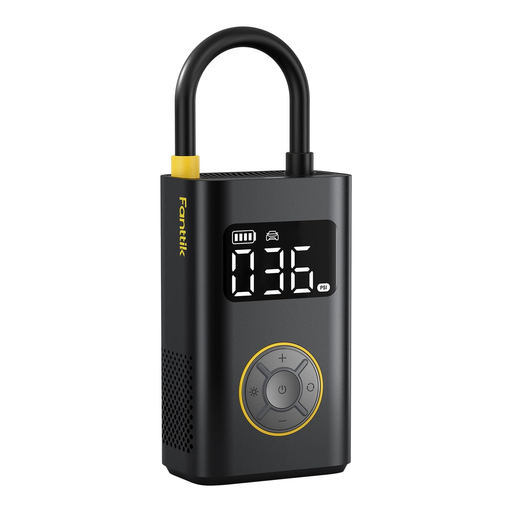
Why This Fits Their Persona: For users who already own a jump starter or primarily need a very fast and efficient tire inflator. Compact, modern, and ideal for regular tire pressure checks. Note: This device does not have a jump-starting function.
This device focuses on its core competency—inflation. It bypasses the trap of weak compressors found in some combo units by offering a specialized, high-quality function.
Very fast inflation time (approx. 1 min. to go from 30 to 35 PSI on a compact car tire, per manufacturer) and smart features like auto-shutoff and a clear, readable display.
We've compiled a full, up-to-date list of products that fully meet these strict selection criteria and UK safety regulations.
1. How often do I need to charge a jump starter with a compressor? To maintain the battery's health, it is recommended to fully charge the device every 3 to 6 months, even if it hasn't been used. Most modern devices have low self-discharge, but regular charging ensures it's ready in an emergency. Always refer to the manufacturer's specific instructions.
2. Can I use a device like this to inflate a completely flat tire? Yes, most devices with a compressor that reaches up to 150 PSI are capable of re-inflating a completely flat tire to its recommended pressure. However, the process can take several minutes depending on the tire size and compressor power. It is advisable to run the vehicle's engine during inflation (if possible) to avoid draining the car battery, especially if the device is powered via the 12V socket. For purely battery-operated units, capacity is the limiting factor.
3. Is a peak current of 1500A sufficient for my diesel vehicle? For smaller diesel engines (up to approx. 2.0-litre displacement), a peak current of 1500A may be sufficient under ideal conditions (mild temperatures). However, for larger diesel engines or in cold weather, this value is often too low. Diesel engines require a significantly higher starting current. To be on the safe side, a device with at least 2000A peak current or more is a more reliable choice for most diesel vehicles.