
Lieferung heute & morgen

Qualitätsgarantie

Willkommens-Angebote freischalten: KOSTENLOSE Lieferung | Bis zu 80 % RABATT | Kostenlose 30-Tage-JoyPlus-Testphase
App herunterladen
A dead battery or a flat tire always happens at the worst possible time. A jump starter with an air compressor promises to solve both problems with a single device, ending your reliance on roadside assistance. However, the market is flooded with products making grandiose claims that often fall short in practice. Before you make a decision, it's crucial to understand the common pitfalls to avoid a bad investment.
As your Joybuy Product Recommendation Officer, I'm here to help you separate the good from the bad. We'll highlight the critical features that define a reliable combination device and show you what to look for.
Many devices fail in an emergency due to fundamental flaws. Pay close attention to these three points to avoid disappointment:
To make an informed decision, you should focus on the following three core features. These determine the real-world performance and reliability of your mobile emergency kit.
Ignore the marketing numbers for a moment. What's crucial is whether the power is sufficient for your vehicle. Most manufacturers specify which engine sizes (in liters of displacement) the device is suitable for. A basic rule of thumb is:
Look for the "suitable for up to X-liter diesel engines" specification. This is a more reliable indicator than the raw amperage number.
A portable car tire inflator is defined by two values:
A device with an auto-shutoff feature when the target pressure is reached prevents over-inflation and increases safety.
The capacity of the internal battery, often advertised as a car jump starter power bank, determines its endurance. A capacity of 15,000 mAh to 20,000 mAh (or approx. 60-75 Wh) is a good benchmark for performing multiple jump-starts, inflating a tire, and still having enough power to charge a smartphone. Modern devices also offer fast-charging capabilities (both for recharging the unit itself and for connected USB devices), which significantly improves their readiness.
Here are some recommendations tailored to different user needs that specifically avoid the pitfalls mentioned.
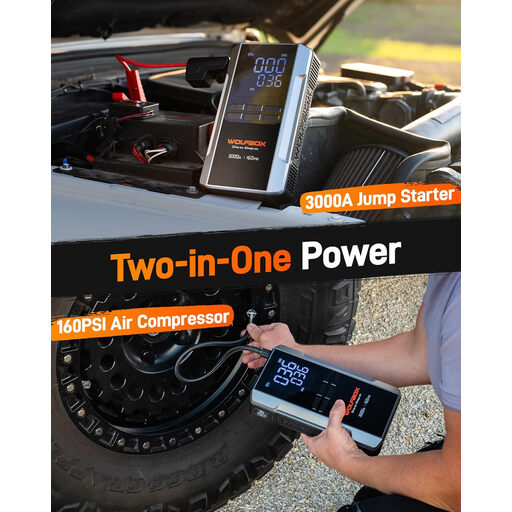
Why This Fits Their Persona: Ideal for drivers seeking a true all-in-one solution. This device combines a powerful jump starter with a fully-featured air compressor, covering the two most common breakdown causes without needing to carry two separate gadgets.
It sidesteps the weak compressor trap with a clear performance spec of 160 PSI, sufficient for most vehicle tires. Combining both functions in one robust housing avoids the compromises made by many budget devices.
True 2-in-1 functionality (jump starter and compressor). Supports 65W fast charging to get the device ready for action again quickly.
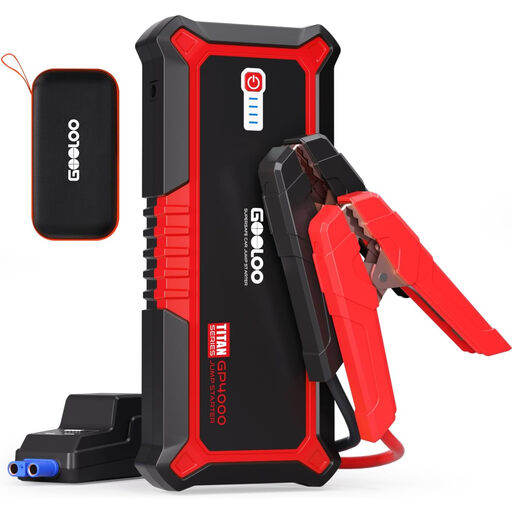
Why This Fits Their Persona: Perfect for owners of SUVs, RVs, vans, or vehicles with large-displacement diesel engines. This device focuses on maximum jump-starting power, providing the necessary reserves to reliably start even demanding engines.
It avoids the unrealistic peak current trap by combining a very high 4000A rating with clear suitability for engines up to 10.0L diesel. The "BOOST" function for deeply discharged batteries is a practical testament to its capability.
Extremely high peak current for maximum compatibility. Robust metal clamps and a durable housing ensure longevity.
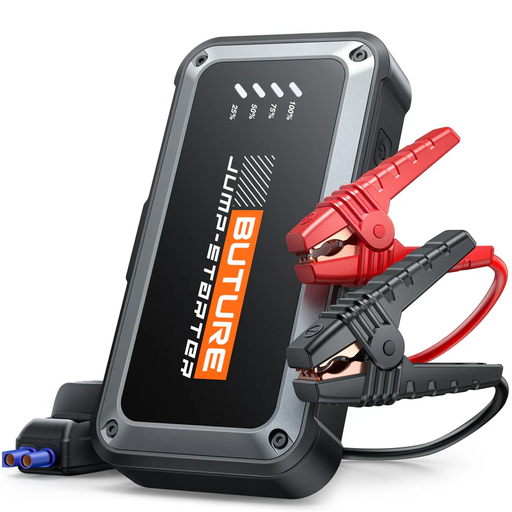
Why This Fits Their Persona: For commuters and drivers of standard cars who need a reliable but space-saving and lightweight solution for the glove compartment. This device focuses on the core functions of jump-starting and power banking in a very compact form factor.
It avoids the trap of oversized and heavy devices. Weighing only 370g yet delivering a high 3000A output, it offers a balanced ratio for everyday use without skimping on safety (10 protection features).
Extremely lightweight and compact. The 16800mAh capacity serves as a solid power bank with two USB outputs for on-the-go charging.
We've compiled a complete, up-to-date list of products that fully meet these strict selection criteria and safety regulations.
1. How do I choose the right peak current for my vehicle? Use the jump starter manufacturer's engine displacement guide. As a rule of thumb, diesel engines require more power than gasoline engines of the same size due to their higher compression. If you drive a vehicle with a large diesel engine (over 3.0L) or an RV, a device with 3000A or more is a safe bet. For most gasoline cars, models between 1500A and 2500A are sufficient.
2. How often should a jump starter with a compressor be charged? The internal battery will slowly self-discharge even when not in use. It is recommended to fully charge the device every 3 to 6 months to maintain battery health and ensure full performance in an emergency. You should also recharge the device promptly after every use (whether for jump-starting or inflating a tire).
3. Can a jump starter replace a dead car battery? No. A portable car jump starter is an emergency tool to start a vehicle with a weak or discharged battery. It is not a replacement for a healthy, functioning car battery. If your battery fails regularly, you should have it checked and, if necessary, replaced at a workshop.