
Lieferung heute & morgen

Qualitätsgarantie

Willkommens-Angebote freischalten: KOSTENLOSE Lieferung | Bis zu 80 % RABATT | Kostenlose 30-Tage-JoyPlus-Testphase
App herunterladen
A dead car battery or a flat tire never happens at a convenient time. In the middle of the night, in a deserted car park, or on the way to an important appointment—a breakdown means stress, lost time, and often high costs for roadside assistance. A jump starter with a compressor promises to be a self-reliant solution for two of the most common causes of breakdowns. But the market is flooded with devices that have exaggerated performance claims and hidden defects.
As a Joybuy Product Recommendation Officer, I analyse product data to help you make informed decisions. This guide reveals the three most common pitfalls to avoid when buying and explains which technical specifications truly matter, so you can find a reliable car jump starter that actually works in an emergency.
Many products advertise impressive numbers that, in practice, mean very little. Watch out for these typical marketing traps to avoid a bad purchase.
To find a reliable portable jump starter, you should focus on verifiable technical data instead of marketing buzzwords.
The current required to start an engine depends on its size (displacement in litres) and type. Diesel engines fundamentally require more power than petrol engines due to their higher compression.
The capacity, given in milliampere-hours (mAh), determines how many times you can provide a jump-start or how long you can charge your smartphone before the jump starter power bank itself needs to be recharged.
If you opt for a power bank with a jump starter and compressor, check the compressor's performance.
Instead of making a one-size-fits-all recommendation, we have matched products based on different user profiles and requirements.

Why This Fits Their Persona: Ideal for owners of SUVs, vans, or vehicles with large petrol and diesel engines who need a comprehensive all-in-one breakdown solution. This device combines high jump-starting power with a fully-fledged compressor.
The high power output is specified for large engines (up to 9.0L petrol / 8.0L diesel). The 150 PSI compressor with auto-shutoff is a fully-fledged tool, not a weak link.
5-in-1 Functionality: Jump starter, compressor, power bank, 4-mode LED flashlight, and 10-fold safety protection in a rugged housing.
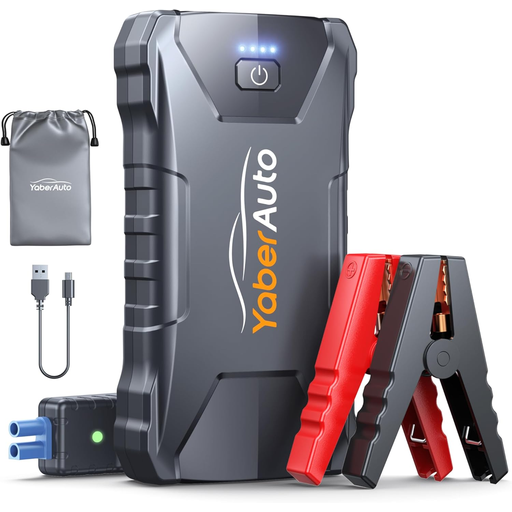
Why This Fits Their Persona: Perfect for drivers of standard passenger cars, motorcyclists, or campers looking for a very light and compact jump starter that fits in the glove compartment or even a side pocket, without sacrificing power for common engines.
This device forgoes a compressor to achieve maximum compactness. It features 10 built-in safety protections that minimise the risk of user error and damage to the vehicle's electronics.
Extremely Portable: Weighing just 0.340 kg and with compact dimensions, it's one of the most mobile options that still offers enough power for engines up to 7.0L petrol / 5.5L diesel.
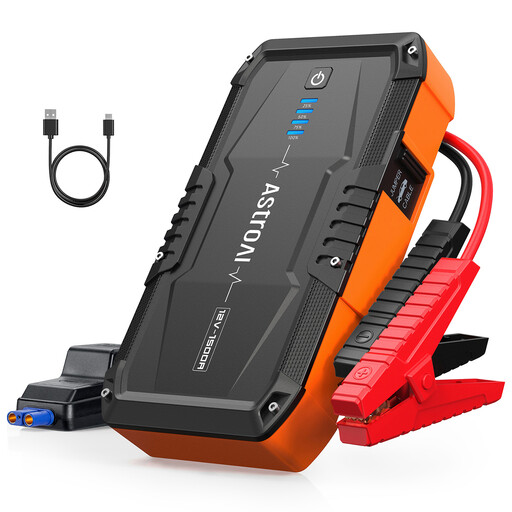
Why This Fits Their Persona: A solid choice for drivers of small to mid-size cars who need reliable and affordable emergency equipment. It provides safety and functionality without unnecessary extras.
Instead of advertising with unrealistic numbers, this device focuses on reliable performance for its specified engine classes (up to 6.0L petrol / 3.0L diesel) and integrates 8 essential safety protections.
Boost Mode: A special function allows for a jump-start attempt even on deeply discharged batteries where other devices might fail. The metal clamps are designed for better durability.
These multi-function devices often include a useful flashlight feature. However, if you need a dedicated lighting solution for your garage, outdoor adventures, or emergencies, we have curated a selection of products that meet strict selection criteria.
1. How often do I need to charge a jump starter power bank? Even when not in use, the battery loses charge over time. To maintain the battery's lifespan and ensure the device is ready in an emergency, most manufacturers recommend fully charging the jump starter every 3 to 6 months.
2. Can I use a jump starter to jump-start a car without a second car? Yes, that is the primary purpose of these devices. You do not need a second vehicle. The process is simple: connect the clamps of the charged jump starter to your car battery's terminals (red to positive, black to negative), turn on the device, and then start your car as usual.
3. Is a jump starter for diesel vehicles different? Yes, diesel engines have a higher compression ratio and require significantly more current to start, especially in cold temperatures, than petrol engines of a comparable size. When buying, it is crucial to ensure the device is explicitly rated for the engine displacement of your diesel vehicle. A jump starter that is too weak will not be able to start a diesel engine.