
Lieferung heute & morgen

Qualitätsgarantie

Willkommens-Angebote freischalten: KOSTENLOSE Lieferung | Bis zu 80 % RABATT | Kostenlose 30-Tage-JoyPlus-Testphase
App herunterladen
A dead car battery on a cold morning or a flat tyre just before an important trip are scenarios every driver wants to avoid. Instead of depending on roadside assistance, a multifunctional emergency tool offers an independent and fast solution. A jump starter with a compressor combines the ability to start an engine with the function of an electric tyre inflator.
This article serves as a practical guide. It explains the key technical features to look for and presents a selection of devices suitable for various requirements and vehicle types. Our goal is to provide you with the information you need to make an informed decision and find the right jump starter for your needs.
Choosing the right device depends on your vehicle and individual needs. The following criteria will help you better understand the technical specifications.
The peak current, measured in Amperes (A), is the crucial metric for the performance of a car jump starter. It indicates how much energy the device can deliver in a short burst to start the engine.
A 12V booster with a sufficiently high peak current ensures you have enough starting power, even in low temperatures or with a severely discharged battery.
An integrated compressor turns the device into a versatile tool. Its performance is measured in PSI (Pounds per Square Inch) or Bar.
The battery capacity, specified in milliampere-hours (mAh), determines how many times you can jump-start a vehicle or how long you can charge other devices. A high capacity turns the unit into a fully-fledged power bank with jump-starting capabilities.
Look for integrated protection mechanisms. Modern devices offer up to 10 safety features, including:
These features protect both the vehicle's electronics and the user from damage caused by incorrect use.
Based on the criteria mentioned, we have compiled a selection of devices that stand out for their functionality and technical specifications.
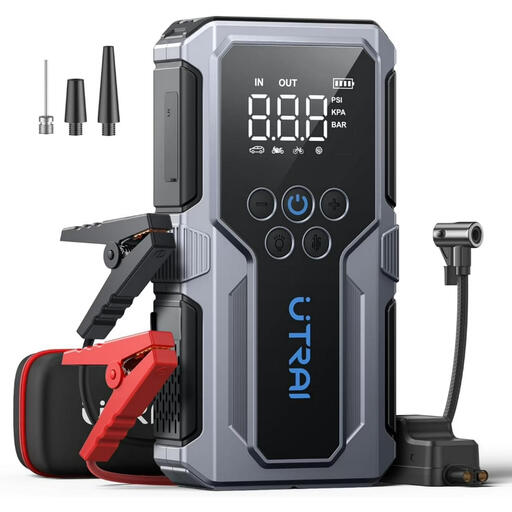
Why It Stands Out: This model combines a very high peak current with a powerful compressor and an informative LCD display. It is designed as an all-in-one solution for a wide range of vehicles.
Pros:
Who It's For: For drivers of larger cars, SUVs, and light commercial vehicles who need a powerful and reliable solution for breakdowns and value the ease of use provided by a clear display.
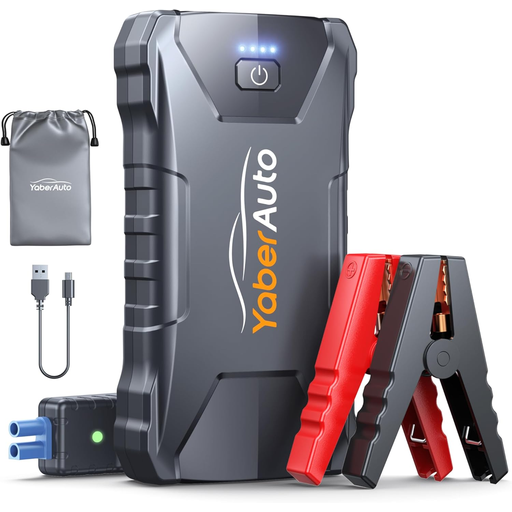
Why It Stands Out: The YaberAuto YA80 is an exceptionally compact and lightweight jump starter that focuses on the core functions of jump-starting, power banking, and a flashlight. It is ideal for anyone who prefers a space-saving emergency solution.
Pros:
Who It's For: For owners of standard cars with petrol or smaller diesel engines, motorcyclists, and anyone looking for an extremely compact and lightweight jump starter for emergencies who can do without a compressor.
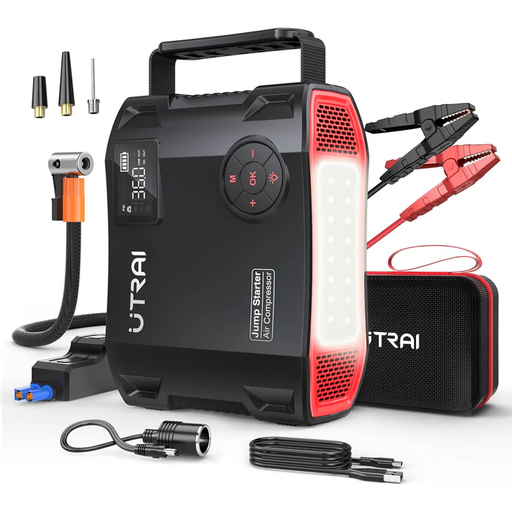
Why It Stands Out: This model is a powerhouse, combining an extremely high peak current with a large battery capacity and a fast compressor. The additional DC output makes it a mobile power source for various 12V devices.
Pros:
Who It's For: For owners of very large vehicles, motorhomes, or boats, as well as for campers and outdoor enthusiasts who require maximum power and versatile applications, including a mobile 12V power supply.
Being well-prepared for breakdowns provides peace of mind on the road. But thoughtful tools can also make daily life easier in other areas. If you want to make your home or travels even more comfortable and secure, you'll find other useful products in our range.
Discover our selection of folding steel frame commode chairs.
Even when not in use, a jump starter should be fully charged every 3 to 6 months. This helps maintain battery health and ensures the device is ready for an emergency. Most modern units have a very low self-discharge rate.
A jump starter provides the short, high-current burst needed to start the engine. However, it is not a car battery charger in the traditional sense. Once the engine is running, the alternator takes over charging the battery. If a battery is deeply discharged or faulty, it should be checked by a professional workshop and, if necessary, charged with a dedicated charger or replaced.
Safety is the top priority. The correct procedure is crucial: