
Lieferung heute & morgen

Qualitätsgarantie

Willkommens-Angebote freischalten: KOSTENLOSE Lieferung | Bis zu 80 % RABATT | Kostenlose 30-Tage-JoyPlus-Testphase
App herunterladen
A dead car battery or a flat tyre rarely happens at a convenient time. It's especially frustrating when you face both at once and have to rely on outside help. A jump starter with a compressor promises a self-sufficient solution. However, the market is flooded with devices whose advertised performance specs often fail to deliver in practice. As your Joybuy Product Recommendation Officer, I'll help you identify the crucial features and sidestep common purchasing traps.
Many multi-function devices entice buyers with impressive numbers, but not all of them live up to their promises. Pay close attention to these three points to avoid a bad investment:
To find the right device for your needs, don't be guided by marketing slogans, but by verifiable technical data. Here are the two most important criteria.
The peak current (Peak Amps) is the maximum current the device can deliver for a short burst. It's crucial for turning over an engine's starter motor.
Always check the manufacturer's specification for the maximum recommended engine size (in litres) to ensure the car jump starter is suitable for your vehicle.
An integrated car tyre inflator is only useful if it's powerful enough.
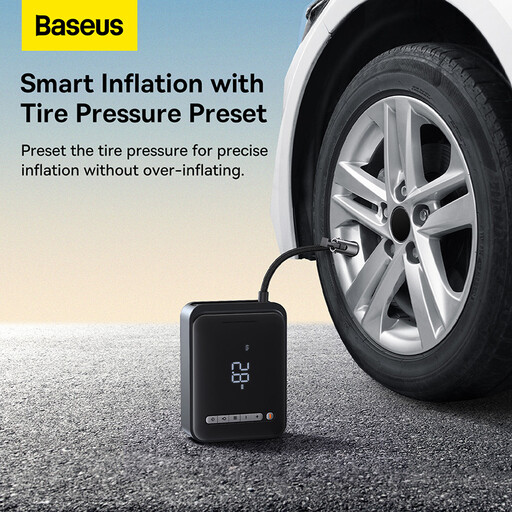
Why This Fits Their Persona: A solid and compact solution for drivers of small and compact petrol cars. The device focuses on the two core functions—jump-starting and inflating—and is ideal for peace of mind in daily urban driving.
The device provides realistic performance data: 1000A peak current and 500A starting current. This clearly communicates that it is designed for smaller engines and doesn't make exaggerated promises.
Very compact design that fits easily in the glove compartment. The integrated power bank with jump starter and USB ports is a practical bonus.
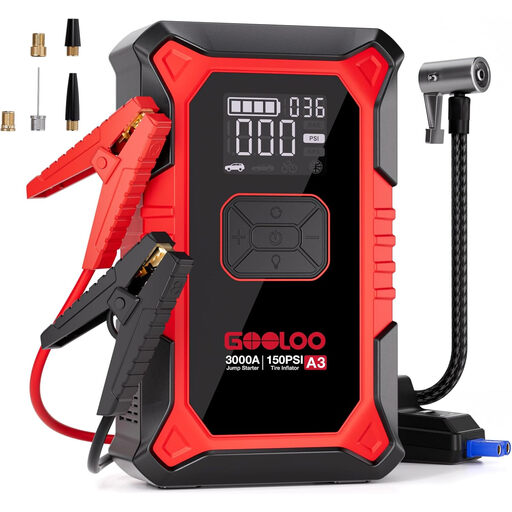
Why This Fits Their Persona: A powerful and versatile choice for drivers of SUVs, vans, or larger petrol and diesel cars. The combination of high starting current and a fast compressor makes it a reliable companion for family holidays and daily use.
This device avoids the weak compressor trap with a specified air flow rate of 35 L/min. Additionally, it explicitly lists 10 protection features, thus bypassing the safety trap.
The "BOOST" function enables starting even with deeply discharged batteries. The digital display with auto-shutoff for the compressor significantly enhances user convenience.
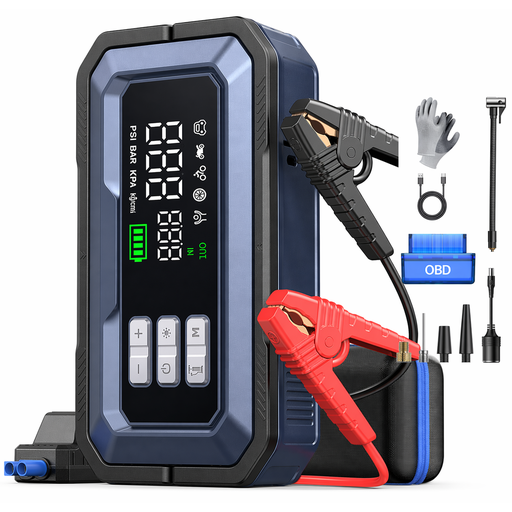
Why This Fits Their Persona: Designed for owners of vehicles with large-displacement diesel engines (up to 14L), motorhomes, or 12V trucks. The additional features, like the OBD2 diagnostic tool and the 160W DC output, make it the go-to tool for tech-savvy users and outdoor enthusiasts.
With a peak current of 7000A, this device specifically addresses the needs of large engines, avoiding the trap of insufficient power. The V0 flame-retardant housing rating and 10 protection mechanisms underscore its focus on safety.
The combination of extreme starting power, OBD2 diagnostics for reading engine fault codes, and a 160W DC output (cigarette lighter socket) for powering coolers or vacuums offers a unique range of functions.
A multi-function device like this can also be a practical gift idea. We have curated a selection of products suitable for various occasions.
1. How often do I need to charge a jump starter with a compressor? Even when not in use, it is recommended to fully charge the device every 3 to 6 months. This maintains the health of the internal battery and ensures full power is available in an emergency. Always refer to the manufacturer's specific instructions.
2. Can I use a jump starter on a completely dead battery? Many modern devices have a "Boost" or "Force Start" function designed specifically for this scenario. This feature bypasses some of the automatic safety checks and should therefore be used with caution and exactly according to the instructions. However, a permanently dead or damaged battery should be inspected and, if necessary, replaced by a professional workshop.
3. Is a jump starter for diesel engines different from one for petrol engines? Yes, the difference is significant. Diesel engines have a higher compression ratio and therefore require a much stronger current pulse to start. If you need a diesel jump starter, it is essential to look for a high peak current (Amps) and explicit suitability for your diesel engine's displacement. A device designed for a small petrol car will be ineffective on a large diesel engine.