
Lieferung heute & morgen

Qualitätsgarantie

Willkommens-Angebote freischalten: KOSTENLOSE Lieferung | Bis zu 80 % RABATT | Kostenlose 30-Tage-JoyPlus-Testphase
App herunterladen
A jute rug can add natural texture to a room and pair well with modern, Scandinavian or rustic furniture. However, the term “natural” does not automatically guarantee the right purchase. The key factors are the material, workmanship, dimensions and intended location.
Jute is a natural plant fibre with a distinctive, rather firm texture. This gives a jute rug its characteristic appearance, but it may feel different under bare feet compared with a wool or cotton rug. For a bedroom or seating area, you should therefore consider whether the surface meets your personal comfort expectations.
Its tolerance of moisture is also limited. Natural fibres can absorb water and should not be left permanently in damp areas. A jute rug is therefore only suitable to a limited extent for bathrooms, unheated cellars or areas where liquids are frequently spilled.
A rug can quickly look too small if you only measure the area of exposed floor. In the living room, sofa legs, the coffee table and walking routes should all be included in your planning. A size such as 250 x 200 cm is better suited to defining a larger seating area, while 150 x 80 cm can be used as a runner, bedside rug or accent in front of a piece of furniture.
A flat-weave rug can slip on smooth floors, particularly in a hallway or beneath a chair that is used frequently. A suitable non-slip underlay can help keep it securely in place. At the same time, check whether doors can open easily over the approximately 1 cm thick rug.
Weight also matters with larger sizes. A model with a net weight of 14 kg is less straightforward to move after laying than a small rug weighing 2 to 3 kg.
With a natural-fibre rug, the material specification is particularly important. A model made from 100% jute has a different feel and care requirements from a blended fabric containing cotton. Handwoven rugs may show slight variations in pattern, shade and texture. This is possible with traditional workmanship and is not an indication of a manufacturing defect, but it should be taken into account if you expect a completely uniform pattern.
If you prefer a softer surface, these alternatives may be worth considering:
A sustainable rug should not be chosen based solely on a marketing term. More meaningful information includes the exact fibre content, manufacturing method, care requirements and disposal instructions.
The term rectangular rug only describes the basic shape. Length, width and thickness are the decisive factors when choosing a rug. Useful size guidelines include:
A shade such as natural grey rug can complement light wooden furniture and neutral walls. Due to the structure of the fibres, jute rugs often feature natural beige, grey and brown nuances. The product image should therefore be checked against the colour description.
For everyday care, regular vacuuming on a suitable setting is sufficient for many flat-weave models. A jute rug should not be soaked. In the event of stains, always follow the care instructions for the specific product first. Small rugs can sometimes be shaken out; this is more difficult with larger sizes because of their weight.
In a child’s bedroom, the edges, underside and a non-slip underlay are also important. A decorative cotton children’s rug can serve a different purpose there from a hard-wearing jute rug in the living room. If you are looking for a neutral design for this room, you can find more options in the neutral children’s bedroom rug category.
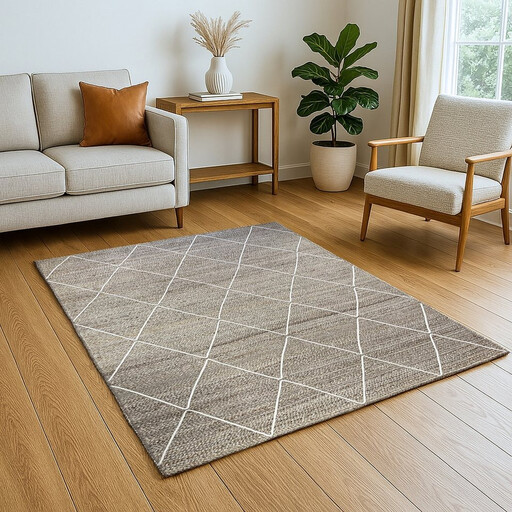
Why this product suits this profile: The compact size is ideal for smaller areas without taking over a whole living space. Jute and a geometric cotton pattern combine a natural look with a clean design.
The stated dimensions and jute material specification make planning easier. The size reduces the risk of overwhelming a small room with an excessively large rug.
Jute material, handmade construction and dimensions of 150 x 80 x 1 cm.
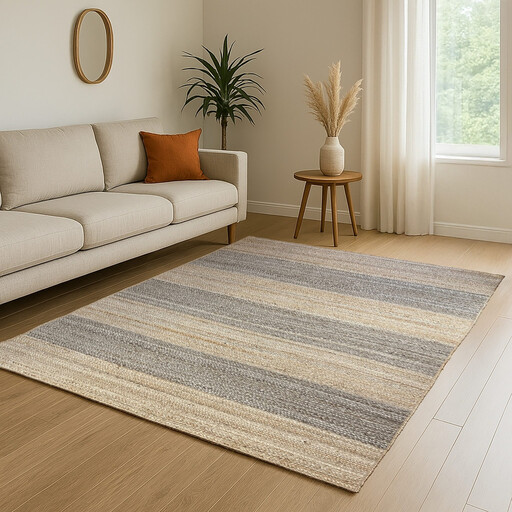
Why this product suits this profile: The large rectangular size and two-tone zigzag weave create a clearly defined area in the living room. The stated material weight of 2700 g/m² helps provide a stable base.
The large area is described with precise dimensions and a product weight of 14 kg. This allows you to check in advance whether the available space, doors and route for carrying it are suitable.
Jute, 250 x 200 x 1 cm, two-tone natural grey look and high area weight.
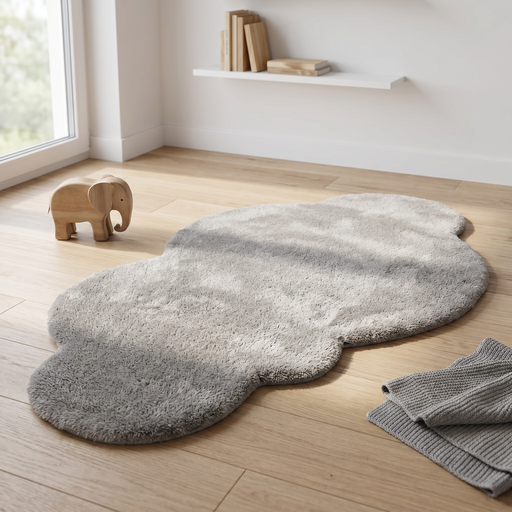
Why this product suits this profile: In a child’s bedroom, cotton is an alternative to the firmer texture of jute. The grey cloud shape is compact and works well as a decorative accent.
The care instructions specify spot cleaning and vacuuming. This makes it clear that the rug is not automatically intended for machine washing.
100% cotton, handwoven construction, grey colour and dimensions of 100 x 60 x 1 cm.
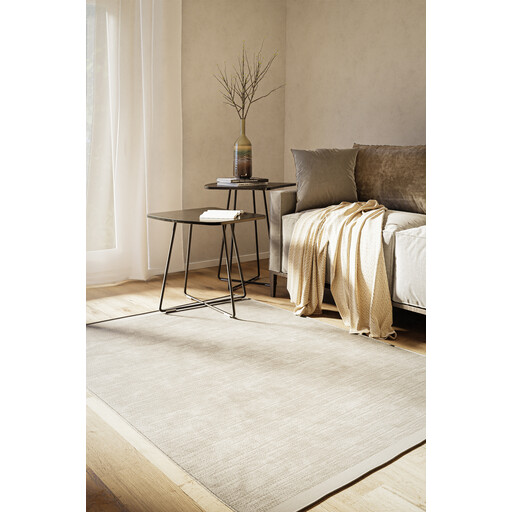
Why this product suits this profile: If you are looking for a natural rug with a softer surface, wool is an alternative to jute. The cream-coloured, marled look works well with Scandinavian and modern interiors.
The specification of 100% pure new wool makes the difference from jute clear. Before buying, check that the feel you want is suitable for the intended location.
100% new wool, handwoven, 150 x 80 x 1 cm and natural marled colouring.
We have compiled a complete, regularly updated list of products that fully meet these strict selection criteria and the safety regulations applicable in the EU.
Yes, provided the room is dry and you want a firm, textured surface. Larger sizes such as 200 x 140 cm or 250 x 200 cm can work well in seating areas. Beneath furniture and on smooth floors, you should consider using a suitable underlay.
Regular, gentle vacuuming and occasional shaking are standard care measures. Liquids should not be allowed to soak in. For stains, the manufacturer’s specific care instructions are essential; heavy soaking and harsh cleaning products can damage natural fibres.
Its lifespan depends on the weave, material weight, level of use, flooring and care. A handwoven rug with a robust texture may be suitable for heavily used living areas, provided it is kept dry and does not constantly slip. Without knowing the specific conditions of use, giving a general durability estimate would not be reliable.