
Lieferung heute & morgen

Qualitätsgarantie

Willkommens-Angebote freischalten: KOSTENLOSE Lieferung | Bis zu 80 % RABATT | Kostenlose 30-Tage-JoyPlus-Testphase
App herunterladen
By the Joybuy Product Recommendation Officer
Natural jute and wool rugs combine natural materials with an understated look. However, not every model is suitable for every room. Material, weave, dimensions and care requirements determine whether a jute rug is practical in the hallway or a wool rug will suit everyday life in the living room over the long term.
Before buying, you should therefore look beyond terms such as “sustainable rug”, “Natural Living” or “handwoven rug”. The specific product details are more informative.
“Natural rug” initially describes only the type of material. A natural-fibre rug may be made from jute, wool, cotton or a blend. So check the exact composition:
Product descriptions containing terms such as “eco-friendly” or “sustainable” should be supported by specific information. This includes the material content, manufacturing method and care instructions. A natural fibre alone is not proof of a particular environmental impact.
A 200 x 250 cm rug can look smaller or larger in product photos than it does in your own room. Measure the available area beforehand. Remember to account for doors, radiators, chair movement and the distance from other furniture.
In a living room, a large rug can sit beneath the sofa and coffee table. In a hallway, however, a narrow runner is often more practical. A round rug works well beneath a small table, in a reading nook or as a visual divider within a larger room.
Jute and wool are intended for dry indoor spaces. Moisture and prolonged dampness can place strain on jute fibres. For kitchens, bathrooms or poorly ventilated entrance areas, the manufacturer’s instructions should be checked particularly carefully.
On smooth floors such as parquet, laminate or tiles, a suitable anti-slip underlay may be useful. It stabilises the rug and reduces the risk of it moving. The underlay must be suitable for the particular floor and must not cause discolouration.
A jute rug usually has a tactile, textured surface. This suits Natural Living, boho and rustic interiors. A wool rug made from 100% new wool generally offers a softer feel underfoot. However, the exact surface also depends on the weave, yarn thickness and finishing.
Also pay attention to the rug pile height. The heights of around 1 cm specified for the selected models are comparatively low and can be used beneath furniture. Even so, doors and drawers should have sufficient clearance.
“Handwoven” describes how a rug is made; it does not automatically indicate a particular level of durability. Fibre quality, knotting or weave structure, and edge finishing remain key factors. A handwoven rug may have slight variations in texture and colour distribution. This is possible with natural materials and should be taken into account when making your decision.
For example, the My Flair “Natural Bengal” is listed with a material weight of 2700 g/m². This technical feature may indicate a substantial rug construction, but it does not replace checking the edges, underside and care instructions.
Check whether the product details list the length and width in the order you expect. Parcel dimensions, net weight and delivery method are also relevant. Large jute rugs are often sent as bulky goods, while more compact wool models may be delivered as standard parcels.
For everyday homes in Germany, the following formats are often practical:
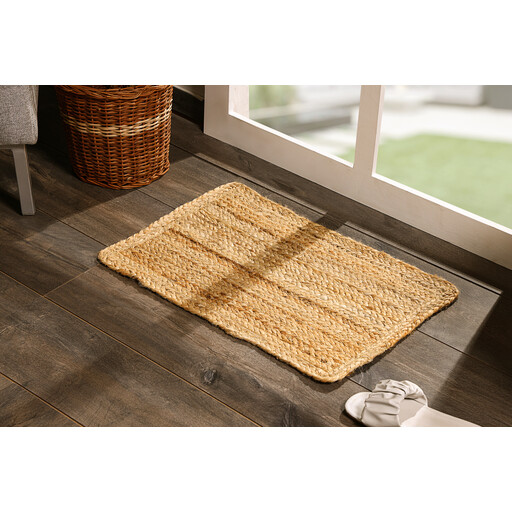
Why this product suits the profile: Its compact size is suitable for small living areas, entranceways or as a standalone decorative element in a Natural Living style.
The product details clearly state 100% jute, as well as the length, width and height of 1 cm. This makes it easier to assess where it can be used before buying.
100% jute, rectangular shape, 60 x 40 cm and a low profile for smaller indoor areas.
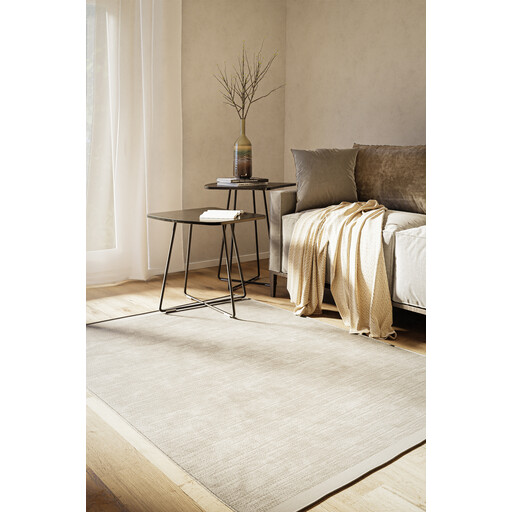
Why this product suits the profile: This handwoven wool rug combines a cream and beige colour scheme with 100% new wool, making it suitable for bedrooms, seating areas or narrow spaces.
The composition is specified clearly as 100% new wool. This prevents a general natural-fibre description from being confused with a pure wool product.
100% new wool, handwoven construction, 150 x 80 cm and a height of 1 cm.
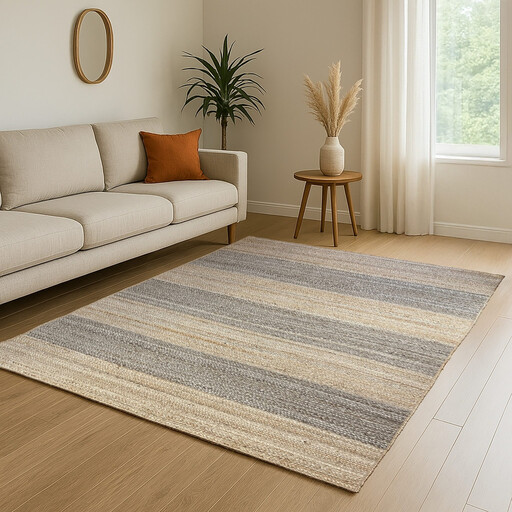
Why this product suits the profile: Its large rectangular format is designed for users who want to define a larger seating group or a spacious living area.
The dimensions of 250 x 200 cm, the height of 1 cm and the net weight of 14 kg are clearly stated. This makes planning the space and transport easier.
Jute, 2700 g/m² material weight, two-tone natural jute look and distinctive zigzag weave.
We have put together a complete, regularly updated list of products that fully meet these strict selection criteria and the safety regulations applicable in the EU.
Vacuum a jute rug regularly using low suction power and avoid harsh cleaning products. For loose dirt, gently shaking the rug out may be sufficient. Wool should be treated according to the care label. With both materials, liquids should be absorbed as quickly as possible without thoroughly soaking the rug.
Before laying it out, unroll the rug completely and position it on a level surface. A suitable underlay is recommended for smooth floors. Open flames and strong sources of heat should always be kept away from the rug.
Yes, a jute rug can be used in the living room if the space is dry and its textured surface suits the intended use. In areas where people often walk barefoot, a wool rug may feel more comfortable. The furniture layout, care instructions and a suitable anti-slip underlay are also important factors.
Its lifespan depends on the material, weave, level of use, flooring and care. Without standardised testing, it would not be reliable to derive a specific number of years from the product name alone. Regular cleaning suited to the material and protection from prolonged moisture can help extend its useful life.
Ongoing costs usually include vacuuming, occasional deep cleaning and, where necessary, an anti-slip underlay. Jute and wool do not require specialist electrical cleaning equipment. However, tougher stains may result in professional cleaning costs; check the manufacturer’s information beforehand.