
Lieferung heute & morgen

Qualitätsgarantie

Willkommens-Angebote freischalten: KOSTENLOSE Lieferung | Bis zu 80 % RABATT | Kostenlose 30-Tage-JoyPlus-Testphase
App herunterladen
A coffee machine should work reliably day to day, take up little space and suit your personal coffee-drinking habits. However, eye-catching product claims don’t always help you make the right choice. A high bar rating, lots of programmes or an elegant casing tell you little on their own about ease of use, running costs and cleaning requirements.
This buying guide explains what households, working professionals and coffee lovers in Germany should consider before buying.
Espresso machines and bean-to-cup machines are often advertised with a pressure of 15 or 19 bar. But the quality in the cup also depends on the grind size, dosage, water temperature, brewing time and the quality of the beans. So treat a high pressure rating as a technical specification, not a guarantee of a particular flavour.
A bean-to-cup machine with a milk system often makes espresso, coffee, cappuccino or latte macchiato at the touch of a button. However, milk tubes, containers and spouts need regular cleaning. If you mostly drink black coffee, you may not need an automatic milk system. A simple milk frother may be easier to clean.
With a capsule machine or pod machine, you’ll also need to factor in the ongoing cost of capsules or pods. A coffee machine with a grinder, on the other hand, uses whole beans but requires regular cleaning of the grinder and brewing unit. Before you buy, it’s worth asking yourself:
A bean-to-cup machine grinds the beans, measures out the coffee and brews it automatically. Models with one-touch functions are a good choice for households that regularly make several different drinks.
A portafilter machine gives you more control over grind size, dosage and milk froth. However, you’ll need a separate or built-in coffee grinder, some practice and time to clean the machine after each use.
A capsule machine is usually compact and quick to get ready. It’s well suited to small households or offices where a limited choice of serving sizes is enough. Check the capsule system before you buy, as not every capsule is compatible with every machine.
The tank size should suit your daily consumption. Smaller tanks of around 0.6 to 0.7 litres are suitable for one person or occasional use. For several people, 1.5 to 1.8 litres is more practical, as you won’t need to refill it as often.
Also measure the space available, including the height. If you’re placing the machine under a wall cabinet, check whether the water tank can be removed from above. A compact coffee machine may be narrow but could still need enough room to load capsules or beans.
For a coffee machine with a grinder, important factors include the materials, grind settings and how easy it is to access. Multiple grind settings make it easier to adjust the machine to different beans. A removable container or guided cleaning routine can make maintenance simpler.
For milk systems, look for removable, dishwasher-safe parts and automatic rinsing programmes. These details apply to the specific model, so check them against the instruction manual.
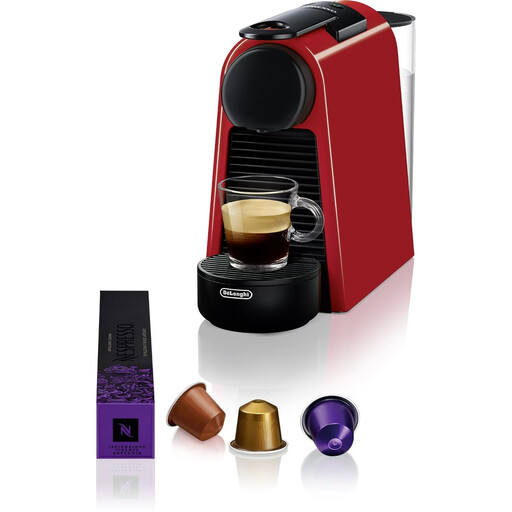
Why this product suits this profile: This capsule machine takes up little space, has two programmable cup sizes and, according to the product information, heats up in around 25 seconds.
The capsule type, NESPRESSO Original, is clearly specified. This means you can check compatibility before buying capsules.
0.6-litre water tank, automatic shut-off, and espresso and lungo buttons.
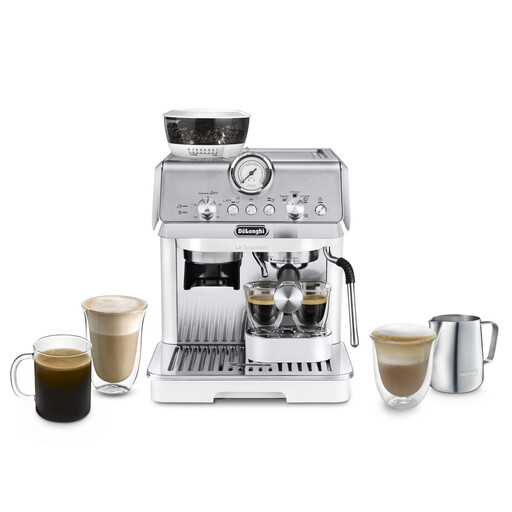
Why this product suits this profile: This portafilter machine combines an integrated conical burr grinder with eight grind settings, three temperature settings and a manual milk frother.
The box contents include a tamper, dosing guide, filters and milk jug. You won’t need to budget for these accessories separately.
1.5-litre water tank, integrated grinder and pressure gauge to guide you through the brewing process.

Why this product suits this profile: This model is designed for people who want to make espresso, filter coffee and cold brew with one machine.
The four milk froth settings and 25 grind settings are clearly specified, so you can compare the features with what you actually need.
1.5-litre capacity, integrated scales, and programmes for hot and cold drinks.
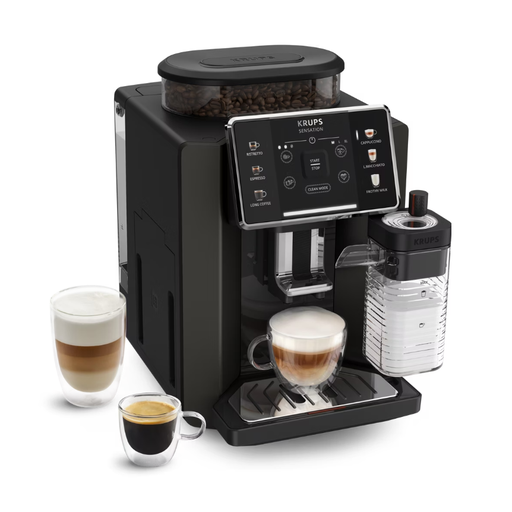
Why this product suits this profile: This bean-to-cup machine offers six coffee and milk-based drinks, a removable milk container, and settings for drink volume, strength and milk froth.
According to the product information, the milk container is removable and dishwasher-safe. Automatic cleaning programmes help with regular maintenance.
260 g bean hopper, 1.7-litre water tank and the ability to make two cups at once.
We’ve put together a complete, regularly updated list of products that meet these strict selection criteria and fully comply with the safety regulations in force in the EU.
Capsule or pod machines with a slim casing are practical for small kitchens. Also check the depth, the position of the tank and the clearance needed to open the capsule lever. A compact coffee machine with a 0.6 to 0.7-litre tank is often enough for occasional use.
Its lifespan depends on the type of machine, water hardness, how often you use it and how well you maintain it. Regular descaling, emptying any remaining water and cleaning the milk system or brewing unit can help keep it working reliably. It isn’t possible to give a definitive lifespan without specific information from the manufacturer.
As well as electricity, ongoing costs include coffee, capsules or pods, descaler and filters. With a capsule machine, the cost per serving is particularly important. If you have a bean-to-cup machine, factor the cost of maintenance and cleaning products into your household budget too.