
Lieferung heute & morgen

Qualitätsgarantie

Willkommens-Angebote freischalten: KOSTENLOSE Lieferung | Bis zu 80 % RABATT | Kostenlose 30-Tage-JoyPlus-Testphase
App herunterladen
An espresso machine with grinder combines two appliances in one housing. The beans are ground just before brewing and then extracted as espresso. This saves space and makes it easier to get started with espresso, cappuccino or latte macchiato. However, not every model with an integrated coffee grinder is suited to the same needs.
Before you buy, check for these three common marketing pitfalls:
A conical burr grinder can grind beans directly into the portafilter or brewing chamber. The key things to look for are:
For beginners, a manageable range of settings is often enough. If you use different roasts, more settings can be useful. According to the product specifications, the De’Longhi La Specialista Arte has eight grind settings, while the HiBREW H7B offers 30. More choice is handy if you enjoy experimenting, but it also means more fine-tuning.
An espresso machine with 15 bar or an espresso machine with 20 bar shouldn’t be chosen on that figure alone. The machine’s design can mean that the actual brewing pressure differs from the pump’s maximum rating.
For everyday use, these factors matter more:
Dual-boiler models such as the HiBREW H7B and H7A are designed for brewing and frothing at the same time, according to their product descriptions. With simpler systems, you may need to wait briefly between making espresso and using the steam function.
An espresso machine with milk frother can have either a manual steam wand or an automatic milk system. The manual option gives you more control over the consistency of the milk foam, but takes practice. Automatic systems are more convenient for households with several users.
Also check:
A compact coffee machine for home use won’t necessarily fit beneath every kitchen worktop. Machines with a large bean hopper or water tank need more space. Place them somewhere dry and stable, with enough distance from water sources.
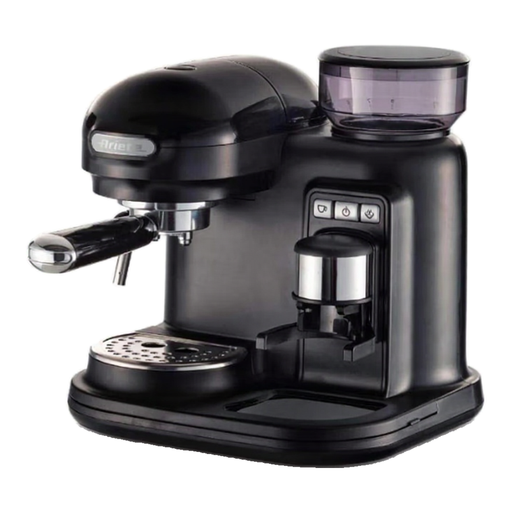
Why this product suits this profile: According to Ariete’s product information, this model combines an integrated grinder, filters for one or two cups and a milk-frothing function in one compact machine.
The product description says you can make one or two cups and adjust the coffee strength using the filter. This avoids unnecessary features for smaller households.
Integrated coffee grinder, 15-bar pump rating, milk frother and automatic shut-off, according to the product specifications.
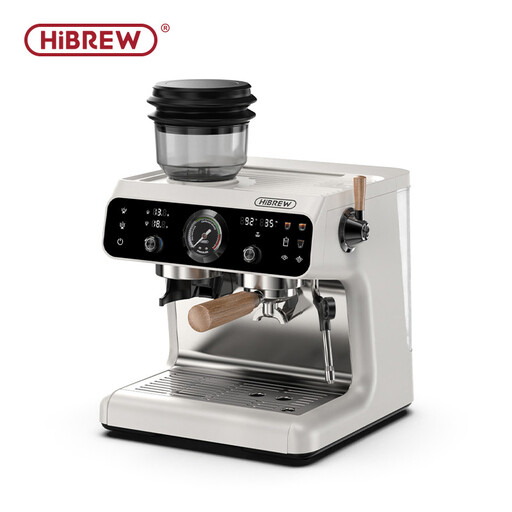
Why this product suits this profile: According to HiBREW’s product information, the machine offers 30 grind settings, a 250-g bean capacity and a dual heating system for users who want plenty of ways to fine-tune their coffee.
According to the manufacturer, its separate heating system and temperature control are designed to let you brew and steam at the same time, so the pump rating isn’t the only focus.
Dual heating system, 30 grind settings, 2.8-l water tank and 20-bar pump rating, according to the product description.
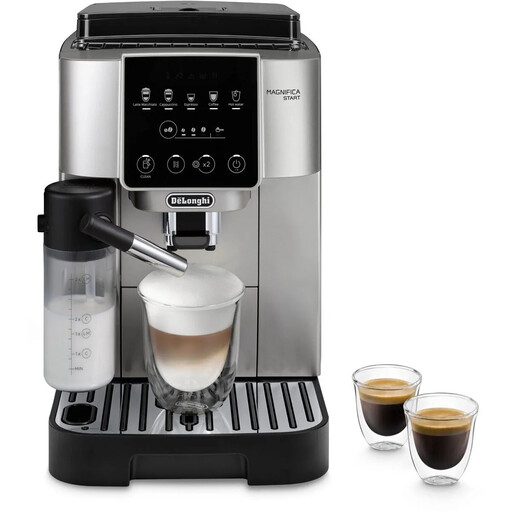
Why this product suits this profile: According to the product information, this bean-to-cup machine is designed for regular household use, with several one-touch buttons and automatic milk preparation.
The automatic rinsing, cleaning and descaling programme helps tackle the maintenance involved with milk systems and grinders, which is often underestimated.
13 grind settings, a 1.8-l water tank, a 250-g bean hopper and five pre-programmed drinks, according to the product specifications.
Not every household needs a portafilter machine. If you usually make several cups of filter coffee, a filter coffee machine with a grinder may be a better fit. Models such as the Philips HD7888/01 All-in-1 Brew Filter Coffee Machine offer a 1.25-l water tank, a conical grinder and settings for up to ten cups, according to the product information.
A portafilter machine, on the other hand, is suited to anyone who wants to control the dose, tamping and milk foam themselves. A bean-to-cup machine is more convenient if you want the simplest possible routine. The key is not the longest list of features, but how well the machine suits the way you use it every day.
We’ve put together a complete, regularly updated list of products that meet these strict selection criteria and fully comply with the safety regulations in force in the EU.
Espresso usually requires a finer grind than filter coffee. Start with a medium setting, then adjust the grind according to the extraction time and taste. Grounds that are too fine can slow the flow, while a coarse grind often leads to fast extraction.
Its lifespan depends on how often you use it, the hardness of your water, how well you clean it and whether replacement parts are available. Descale the machine as instructed by the manufacturer, remove coffee residue regularly and clean the milk nozzle straight after use. A removable brew group or an accessible grinder makes maintenance easier.
Energy use depends mainly on the heating power, heat-up time and keep-warm functions. Running costs also include beans, descaler, cleaning products and, where needed, water filters. So don’t compare purchase prices alone: consider capacity, maintenance and the availability of compatible consumables, too.