
Lieferung heute & morgen

Qualitätsgarantie

Willkommens-Angebote freischalten: KOSTENLOSE Lieferung | Bis zu 80 % RABATT | Kostenlose 30-Tage-JoyPlus-Testphase
App herunterladen
A baking tin is often chosen by diameter, colour or a bargain price. In everyday use, however, the weak points tend to show up elsewhere: the base can warp, the clasp on a springform tin may not close securely, or the coating can be damaged by improper cleaning. If you regularly bake cakes, sourdough bread, tarts or quiches, it’s worth checking the technical details carefully before you buy.
As a Joybuy Product Recommendation Officer, I filter the relevant product data and organise it by specific use cases. This makes it easier to decide which Kaiser La Forme Plus bakeware suits your household and baking plans.
A non-stick baking tin can make releasing your bakes easier. But the base material, the workmanship and the care instructions are just as important. In the La Forme Plus range, depending on the model, a two-layer KAIRAMIC ceramic coating is specified. Metal utensils can still damage the surface, so silicone, wooden or plastic tools are the more practical choice.
A 20 cm springform tin isn’t suitable for the same amount of batter as a 28 cm or 30 cm springform tin. The height of the rim also affects the result. For smaller households, a 20 cm diameter with a lower volume can make sense. Large pound cakes, layer cakes or family-sized portions, on the other hand, need more capacity.
On several La Forme Plus models, only the base is dishwasher-safe. The springform ring, clasp and coated surfaces should usually be washed by hand with a mild detergent and a soft sponge. It’s worth checking the full care instructions before you buy.
An enamelled base can offer advantages over a conventional coated base when it comes to serving. On certain Kaiser baking tins, the base is described as cut-resistant, so you can slice a cake or tart directly on the tin. However, this doesn’t mean the rim or the coating is suitable for metal knives.
The KAIRAMIC coating is specified as a ceramic non-stick surface on the models mentioned. Claims such as “PTFE- and PFOA-free” should only be repeated if they are explicitly stated in the product data for that specific model. Features can vary within a series depending on the type of tin.
According to the product specifications, the models listed are heat-resistant up to 250 °C and intended for ovens. A baking tin isn’t automatically suitable for hobs. Induction, open flames and direct use on gas or electric hotplates are excluded for many models. A sudden change from a hot tin to a cold or wet surface can also stress the material and coating.
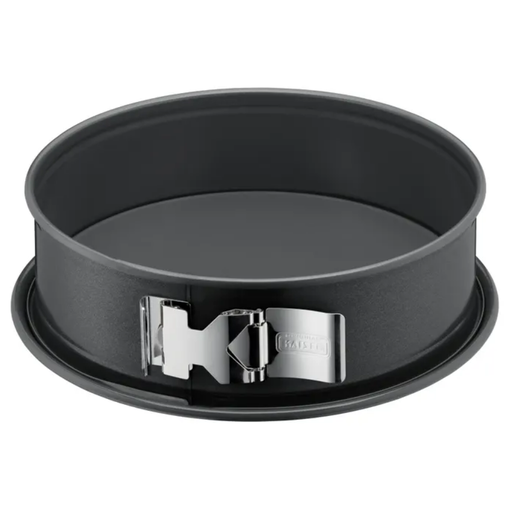
Why this product fits the profile: The compact 20 cm springform tin is ideal for smaller cake quantities and households where large layer cakes aren’t baked regularly.
The SafeClick clasp and the base described as leak-proof reduce typical problems with runny cake batter.
Kai-Ramic coating, cut-resistant base and a stated heat resistance of up to 250 °C.

Why this product fits the profile: The 28 cm springform tin offers a 3.4 litre capacity and suits classic layer cakes, pound cakes and multi-layered baking recipes.
SafeClick, leak-proof design and a removable, cut-resistant enamelled base address issues with the clasp, leakage and serving.
KAIRAMIC non-stick coating, steel construction and, according to the product description, made in Germany.

Why this product fits the profile: The bread tin is designed for loaves of up to around 1,000 g and is aimed at households that want to bake both bread and cakes in a loaf tin.
The extra-strong steel is designed for shape stability; the enamelled base is described as cut-resistant and acid-resistant.
30 × 10 × 8.5 cm, KAIRAMIC coating and heat resistance up to 250 °C; according to the product information, a ten-year guarantee on the non-stick coating.
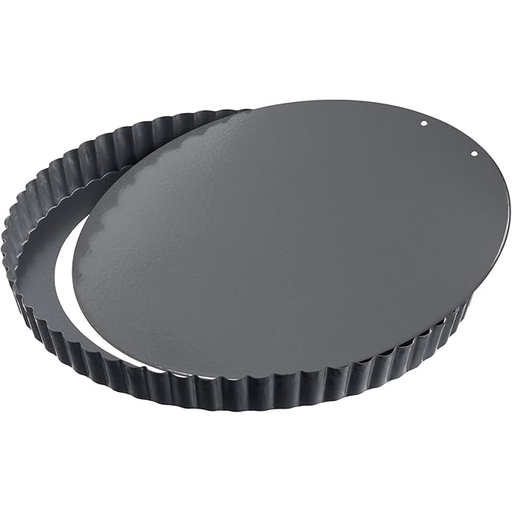
Why this product fits the profile: The removable base helps release tarts and quiches when you want a clean transfer from the tin to the serving plate.
The loose base reduces the risk of breaking delicate bases when releasing; the enamelled base is described as cut-resistant.
32 cm diameter, steel construction, KAIRAMIC double ceramic coating and oven suitability up to 250 °C.
We’ve put together a full, regularly updated list of products that meet these strict selection criteria and the safety regulations in force in the EU.
A 28 cm springform tin is designed for many classic cake and layer cake recipes and, according to the product data, offers a volume of 3.4 litres. A 20 cm springform tin is better suited to smaller quantities. For large family portions, a 30 cm springform tin with around 4 litres can make sense.
That depends on the model. On several springform tins, only the base is dishwasher-safe. Loaf tins and bread tins are often stated as not dishwasher-safe. The specific care instructions for each product are what matter.
Yes. The La Forme Plus loaf tins mentioned, in 30 cm and 35 cm, are described as suitable for bread. The smaller version is designed for around 1,000 g of bread, the larger for around 1,500 g. For sourdough recipes, you should also consider the dough quantity, proving volume and oven size.