
Lieferung heute & morgen

Qualitätsgarantie

Willkommens-Angebote freischalten: KOSTENLOSE Lieferung | Bis zu 80 % RABATT | Kostenlose 30-Tage-JoyPlus-Testphase
App herunterladen
A high-quality karaoke machine with 2 microphones can liven up any party and offers a versatile solution for amateur musicians or small events. However, the market is flooded with devices whose marketing promises often suggest more than the technology can deliver. Before you make a decision, it's crucial to understand the common pitfalls that lead to disappointment and unnecessary expenses.
As your Joybuy Product Recommendation Officer, I'll filter the relevant information for you and show you what really matters when making your choice.
Many buyers focus on superficial features and overlook crucial technical details. You should avoid these three mistakes:
To make an informed decision, focus on the following three core aspects. These determine whether a device will perform its function reliably or quickly become a dust collector.
Sound quality depends not on the wattage, but on the tuning of the components. A good professional karaoke machine features a multi-way system:
A versatile vocal system with 2 microphones must be flexible. Look for these connections and technologies:
For use in the garden, at the park, or at gigs, an integrated battery is crucial.
Here are some models that are suitable for specific user groups based on objective technical features.
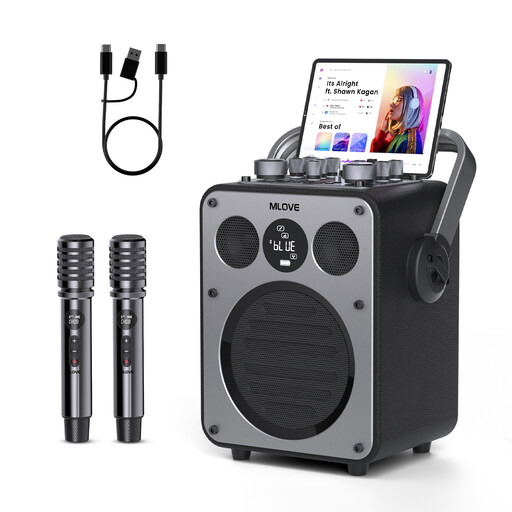
Why This Fits Their Persona: This system is an all-in-one solution for parties. With 200 watts of power, a 5-inch subwoofer, two UHF microphones, and a large 10,000 mAh battery, it's equipped for both living room use and garden parties. The simple indoor and outdoor EQ modes make operation straightforward.
The system uses stable UHF wireless microphones to minimise latency and interference. The clear separation into a subwoofer and tweeter bypasses the problem of indistinct sound. The high battery capacity and versatile connections (incl. guitar) prevent usage limitations.
High Power and Endurance: 200W of power and 10-12 hours of battery life. Versatile Connectivity: Bluetooth, AUX, USB, Micro-SD, and a 6.35mm instrument input.
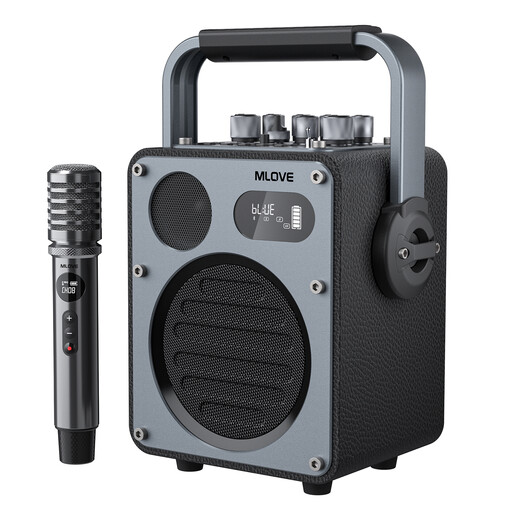
Why This Fits Their Persona: This model is designed as a professional, portable PA system. It offers dedicated EQ modes for vocals, guitar, and other instruments. The USB-C OTG function enables direct live streaming and recording to a smartphone, making it ideal for content creators and street performers. The robust housing and high-quality microphone underscore its professional focus.
Instead of focusing on high wattage, this system prioritises sound processing with a dual-core DSP and specific EQs. It bypasses the connectivity trap with professional features like OTG streaming and the option for a wireless instrument transmitter.
Professional Audio Processing: Dual-core DSP and dedicated instrument EQs. Streaming and Recording Function: USB-C OTG for direct live streaming and recording.
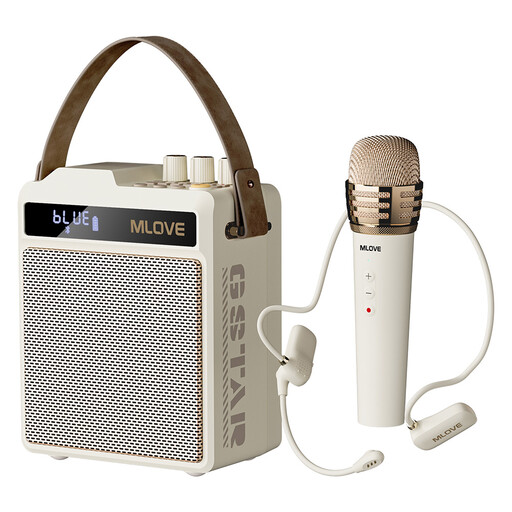
Why This Fits Their Persona: For anyone who needs maximum portability. This compact system weighs only 1.35 kg and comes with a wireless handheld microphone and a wireless headset microphone. This makes it ideal for tour guides, teachers, or for spontaneous outdoor karaoke sessions. Despite its size, it offers an instrument input and USB-C fast charging.
It refutes the misconception that small speakers must sound tinny by using a passive bass radiator for deeper frequencies. The dual microphone setup (handheld + headset) offers a level of flexibility often missing even in larger, more expensive models.
Extreme Portability: Very lightweight and compact. Dual Microphone Options: Includes wireless handheld and headset microphones for maximum flexibility.
We have compiled a complete, up-to-date list of products that fully meet these strict selection criteria and German safety regulations.
The most common method is via Bluetooth. Pair the karaoke machine with your Smart TV as an external speaker. You can then play karaoke videos from apps like YouTube directly on the TV, with the sound outputting through the machine. Alternatively, some systems can also be connected to the TV via an AUX or HDMI cable.
UHF (Ultra High Frequency) microphones operate in a frequency range that is less used by household devices like Wi-Fi routers or microwaves. This results in a more stable connection with less interference and dropouts, making them the more reliable choice for a vocal system with 2 microphones. The 2.4 GHz band is more congested and can be more susceptible to interference.
No, this is not possible with every model. You need a system that explicitly features an instrument input, which is typically a 6.35mm jack socket. Look for terms like "guitar input," "instrument input," or "6.35mm Jack" in the product specifications. Only such models are suitable as a karaoke system with a guitar input.