
Lieferung heute & morgen

Qualitätsgarantie

Willkommens-Angebote freischalten: KOSTENLOSE Lieferung | Bis zu 80 % RABATT | Kostenlose 30-Tage-JoyPlus-Testphase
App herunterladen
A karaoke system with two microphones is the heart of many unforgettable parties and family gatherings. However, the market is flooded with devices whose marketing claims often create more confusion than clarity. The search for a reliable karaoke set that delivers great sound and is easy to use can quickly become overwhelming. As your Joybuy Product Recommendation Officer, I'll help you identify the key features and avoid common purchasing pitfalls.
Before you make a decision, you should be aware of the most common issues that lead to disappointment with many models on the market.
To make an informed decision, focus on the following three objective criteria. These are the primary determinants of the performance and durability of your future karaoke system.
A good vocal system must reproduce voices clearly and naturally without overpowering the music. Look for a balanced speaker configuration, ideally consisting of at least one woofer for bass and one or more tweeters for clear highs. Specifications for frequency response (e.g., 60 Hz – 20 kHz) indicate the breadth of the sound spectrum the speaker can cover. A simple party speaker with a microphone often focuses only on bass, whereas a good karaoke system also accurately represents the mid-range for vocals.
A complete karaoke set for adults and families needs flexible connection options.
For use in the garden, at the park, or at a friend's house, a portable PA system with a battery is the right choice. Battery capacity is often stated in milliampere-hours (mAh) or watt-hours (Wh). Compare these values, but also pay attention to the manufacturer's stated realistic playback time at medium volume. A runtime of 8–12 hours is a good benchmark for extended parties. A USB-C charging port is also a modern and practical feature.
Here are some recommendations tailored to different use cases that take the above criteria into account.
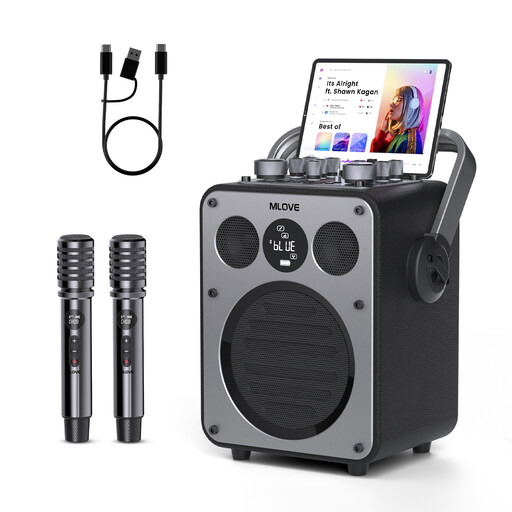
Why This Fits Their Persona: Ideal for users who value high sound quality and extensive adjustment options. With separate controls for microphones and instruments, the system is also suitable for small live performances or sophisticated karaoke nights.
This system avoids the pitfall of inferior microphones by including two high-quality UHF wireless microphones. The separate channels for microphones and instruments provide the promised flexibility without compromise.
Features a 2-channel PA system for independent control of effects (treble, bass, reverb) for microphones and instruments. The recording function via USB-C OTG is another major plus.
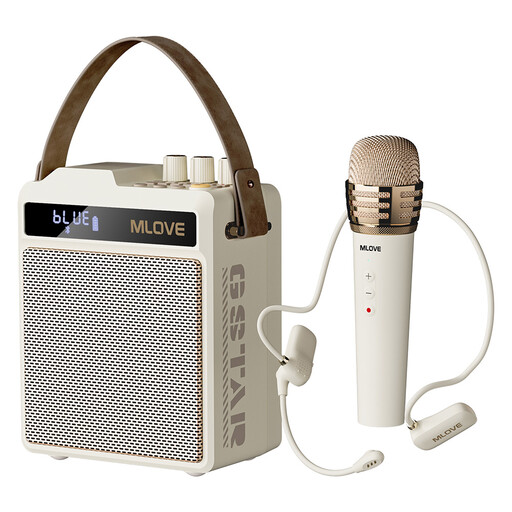
Why This Fits Their Persona: Perfect for families and users looking for maximum flexibility. The headset microphone allows for hands-free singing and dancing, ideal for kids or as a compact vocal system for presentations.
This set directly provides two different but fully functional wireless microphones. It avoids the disappointment of buying a supposed duet system that, in practice, is only usable by one person.
The combination of a handheld and a headset microphone is rare in this class and offers high operational flexibility. Its compact and lightweight design makes it a very portable solution.

Why This Fits Their Persona: A solid foundation for anyone wanting to start with a high-quality speaker and one microphone. The speaker's performance is remarkable for its price and provides a good basis for future upgrades.
Instead of advertising two low-quality microphones, this set provides one solid wireless microphone and a transparently specified instrument input. This can easily be used for a second, wired microphone, thus avoiding hidden costs.
Offers high output power (200W according to the manufacturer) and a long battery life of up to 13 hours. The instrument input makes the system flexible and future-proof.
We've compiled a complete, up-to-date list of products that fully meet these strict selection criteria and safety regulations.
1. What should I look for in the battery life of a portable karaoke system? The battery life specified by the manufacturer often refers to playback at low to medium volume without using the microphones. In a real party scenario with high volume and active microphones, the runtime can be significantly shorter. A good indicator is the battery capacity in watt-hours (Wh). A value above 30 Wh suggests solid endurance.
2. Can I also use a karaoke system for instruments like an electric guitar? Yes, provided the system has a dedicated instrument input. This is typically a 6.35mm jack. Some models, like the MLOVE Rangers D5, even offer separate equalizer settings for instruments to optimize the sound. A standard AUX input is not suitable for directly connecting an electric guitar.
3. What is the difference between UHF and 2.4 GHz wireless microphones? UHF (Ultra High Frequency) operates in a frequency band that is less commonly used by other household devices like Wi-Fi routers or microwaves. This generally results in a more stable connection with fewer interruptions and dropouts, which is crucial for a smooth karaoke night. 2.4 GHz systems can be more susceptible to interference in environments with many Wi-Fi networks.