
Lieferung heute & morgen

Qualitätsgarantie

Willkommens-Angebote freischalten: KOSTENLOSE Lieferung | Bis zu 80 % RABATT | Kostenlose 30-Tage-JoyPlus-Testphase
App herunterladen
The search for a professional karaoke system can quickly become overwhelming. Manufacturers advertise with impressive performance figures and long feature lists. But not every system that looks professional delivers professional results. Often, exaggerated marketing claims and hidden defects lead to a poor investment.
As your Joybuy Product Recommendation Officer, I'm here to help you identify these pitfalls. This guide focuses on the crucial technical features that define a quality system and shows you what to look for to make an informed decision.
Before we dive into the important specifications, let's highlight three common marketing traps that often lead to disappointment:
To make a well-founded choice, you should focus on verifiable technical specifications. The following three aspects are crucial for sound quality, flexibility, and durability.
Always look for the RMS (Root Mean Square) power. This value indicates the speaker's realistic continuous power output and is the most reliable indicator of volume and sound stability. For home use in a living room, 40–60 watts RMS is often sufficient. For larger parties, events, or outdoor use, 100 watts RMS or more is recommended.
Equally important is the driver configuration. A good system uses separate drivers for different frequency ranges, typically a woofer for bass and a tweeter for clear highs. These 2-way or 3-way systems deliver a significantly more balanced and detailed sound than simple full-range speakers.
Making a portable vocal system truly portable requires more than just a battery. Its connectivity options determine its versatility:
For a karaoke set for adults with wireless microphones, the transmission technology is critical. UHF (Ultra High Frequency) is the gold standard here. Compared to older VHF systems or the crowded 2.4 GHz band (which is also used by Wi-Fi and other devices), UHF offers a much more stable connection with fewer interferences and a greater range. This is particularly advantageous at events with many guests or in environments with many wireless signals.
Here are some recommendations tailored to specific user profiles that meet the quality criteria mentioned above.
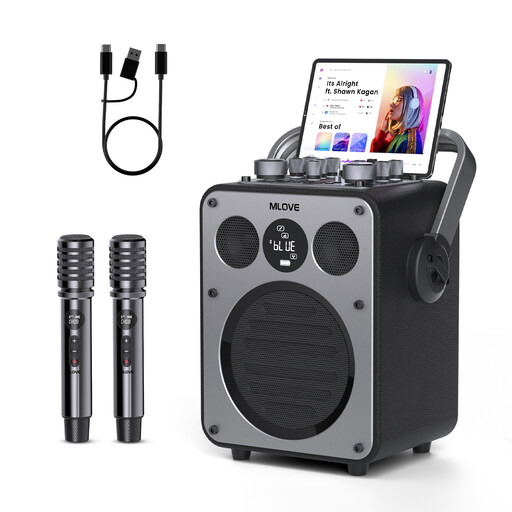
Why This Fits Their Persona: Ideal for users seeking a powerful all-in-one solution for parties, small gigs, and high-end home karaoke. Its high output and professional adjustment options make it the centrepiece of any event.
The system delivers 200W of power with a 5-inch subwoofer, offers two high-quality UHF wireless microphones, and features separate channels for controlling microphone and instrument sound. All connections are clearly specified.
Separate sound control for vocals and instruments; special EQ modes for indoor and outdoor use; robust construction with metal alloy.
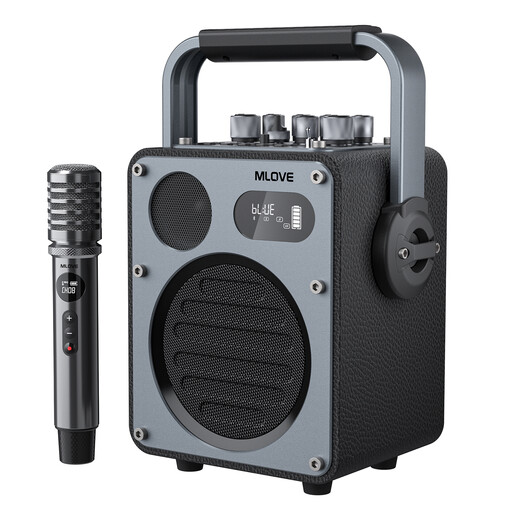
Why This Fits Their Persona: Perfect for musicians who need a compact, lightweight, yet powerful-sounding portable PA system with a battery. The dedicated instrument EQs and OTG recording function are designed for creative use on the go.
The battery life is realistically stated for different modes (Music/Karaoke). The zinc alloy and wood housing, along with the high-quality microphone, avoid the trap of cheap materials.
Highly portable (approx. 2.6 kg); USB-C OTG for direct live streaming/recording; advanced DSP chip with specific EQ modes for vocals and instruments.

Why This Fits Their Persona: An excellent choice for anyone looking for a hassle-free party speaker with a microphone and battery that does more than just karaoke. It functions as a complete home entertainment system for music, movies, and radio.
As a product from an established brand, Sony provides transparent power ratings (70W RMS) and reliable functionality. The wide range of connections (HDMI ARC, CD/DVD) is a genuine added value, not a hidden limitation.
Extreme versatility: Serves as a karaoke system, TV sound system (via HDMI ARC), CD/DVD player, and radio (FM/DAB+). The party lighting adds extra atmosphere.
We have compiled a complete, up-to-date list of products that fully meet these strict selection criteria and relevant safety regulations.
For a typical house party in a 30 to 50 square meter living room, a system with 40 to 60 watts RMS is usually more than enough to achieve good volume and clear sound. If you're planning larger gatherings or outdoor use, you should consider a system with 100 watts RMS or more to ensure good intelligibility even with ambient noise.
Yes, this is possible, provided the system has a dedicated 6.35mm (1/4-inch) instrument input, often labelled "GUITAR" or "INST". Such inputs are matched to the specific requirements of instrument pickups. Models that also offer separate EQ settings for guitars will deliver sonically better results than a simple connection via a line-in port.
UHF (Ultra High Frequency) operates in a frequency band that is less prone to interference than the crowded 2.4 GHz band (used by Wi-Fi, Bluetooth, etc.) or older VHF systems. This results in significantly fewer signal dropouts and interference. The outcome is a stable, clear, and reliable transmission of your voice, which is essential for a successful karaoke night or performance.