
Lieferung heute & morgen

Qualitätsgarantie

Willkommens-Angebote freischalten: KOSTENLOSE Lieferung | Bis zu 80 % RABATT | Kostenlose 30-Tage-JoyPlus-Testphase
App herunterladen
A wood or WPC patio is an asset to any home, but the elements inevitably leave their mark. Algae, moss, and general greying can mar the appearance. In the search for a solution, many turn to electric patio cleaners, especially models from K?rcher. However, selecting the right device is not straightforward. Certain marketing promises and technical misunderstandings can lead to a poor investment or even damage to your valuable patio.
Before you make a decision, you should be aware of the most common pitfalls:
patio cleaner with a brush is the gentler method, but bristles that are too hard can leave fine scratches on softwoods or delicate WPC coatings. Conversely, bristles that are too soft are ineffective against stubborn dirt on robust surfaces.To avoid these problems, you should base your selection on objective technical features. Three parameters are crucial for effective and material-safe wood patio cleaning or WPC cleaning.
A high-quality electric patio cleaner works not with high pressure, but with mechanical cleaning power. Models like the K?rcher PCL 6 use rotating brush rollers. This principle has a key advantage: dirt is lifted from the surface rather than being driven into the material. Counter-rotating brushes also ensure an even cleaning result without streaks and require significantly less effort from the user, as the device does not need to be actively pushed forward. The working pressure remains in the low-pressure range (typically under 10 bar), which is equivalent to the pressure from a standard garden hose and is harmless for wood and WPC.
Efficiently removing algae from a patio requires a constant water supply that loosens dirt and immediately washes it away. Look for devices with nozzles positioned directly above the brushes. This ensures that water is delivered exactly where it's needed. A valve for continuously adjusting the water volume is another key feature. It allows you to adapt water consumption to the level of soiling—enough water for stubborn spots, but as little as possible to conserve water and prevent flooding.
The device's working width determines how quickly you can complete the cleaning. A width of around 300 mm is a good benchmark for efficiently tackling medium to large areas. At the same time, ergonomics are crucial for user comfort. A height-adjustable or angle-adjustable handle allows for an upright, back-friendly posture throughout use. The device's weight also plays a role, especially if it needs to be carried over steps or long distances.
Based on these objective criteria, we have identified products that suit specific user profiles.
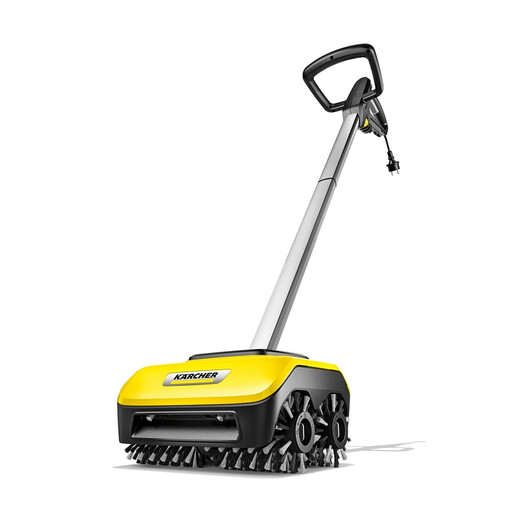
Why This Fits Their Persona: Ideal for owners of medium to large wood or WPC patios who are looking for a fast, thorough, and material-safe cleaning solution and value an even finish without major physical effort.
This device operates with low pressure and rotating brushes specifically designed for wood surfaces, preventing material damage. The integrated, adjustable water supply and splash guard minimise soiling of the surrounding area.
Four counter-rotating brush rollers ensure high cleaning performance and an even finish. The water supply is adjustable directly on the handle, enabling water-saving, needs-based application.
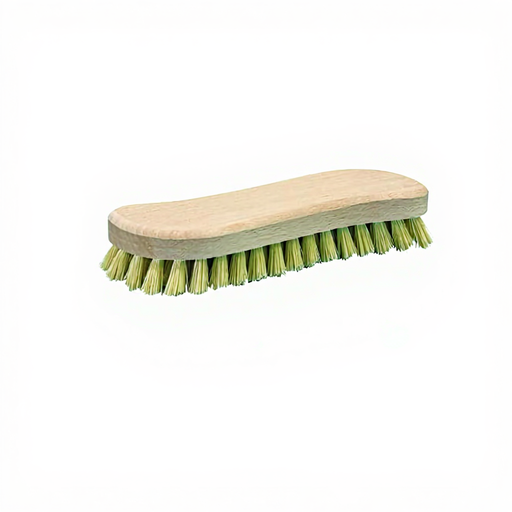
Why This Fits Their Persona: A practical choice for manually cleaning smaller areas like balconies, steps, or for targeted touch-ups in corners and along edges that a larger device can't reach. Suitable for users who prefer a cost-effective, simple solution.
Being purely manual, there is no risk of material damage from excessive pressure or incorrect machine settings. You have full control over the contact pressure and water supply.
Very affordable to purchase and maintain. The ergonomic S-shape allows for good power transmission. The robust polypropylene bristles are suitable for intensive wet cleaning.
For specific cleaning tasks or manual alternatives, we have compiled a selection of products that meet our criteria for material and workmanship.
Yes, it can be used on stone surfaces. According to the manufacturer, special brush rollers for smooth stone and tile surfaces are available as an optional accessory for the K?rcher PCL 6 (part number 2.644-476.0). The standard wood brushes should not be used on stone, as they will wear out faster and are not optimised for the hardness of the material.
According to the technical data, the water consumption of the K?rcher PCL 6 is a maximum of 180 litres per hour at a pressure of 4 bar. This is comparatively economical. A standard garden hose without a nozzle often delivers 1,000 litres or more per hour. The adjustable water supply on the device allows consumption to be further tailored to actual needs, which additionally increases efficiency.
Yes, for wood and WPC surfaces, mechanical cleaning with a rotating brush using a low-pressure method is significantly gentler. A pressure washer hits the surface with high kinetic energy, which can split soft wood fibres and damage the protective layer of WPC decking. A brush, on the other hand, lifts dirt from the surface with a shearing, abrasive motion without attacking the material's underlying structure.