
Lieferung heute & morgen

Qualitätsgarantie

Willkommens-Angebote freischalten: KOSTENLOSE Lieferung | Bis zu 80 % RABATT | Kostenlose 30-Tage-JoyPlus-Testphase
App herunterladen
Regularly cleaning a wooden or WPC terrace with a scrubbing brush and garden hose can take a great deal of time. The Kärcher PCL 6 patio cleaner is designed for homeowners, tenants and DIY enthusiasts who want to tackle moss, algae and ingrained dirt with an electric patio brush.
However, it is worth taking a close look at the technical specifications before buying. Not every appliance with rotating brushes is suitable for delicate surfaces, and some advertising claims leave important details about water consumption, brush materials or connection requirements unclear.
High water pressure may initially sound powerful. On wood and WPC, however, an excessively strong jet can roughen the surface, damage coatings or force water into joints. For these materials, controlled cleaning with rotating brushes and low pressure is often more suitable than an aggressive high-pressure jet.
According to the product specifications, the Kärcher PCL 6 operates in the low-pressure range, with a maximum of 10 bar. The brushes perform a substantial part of the mechanical cleaning work.
The claim ‘water-saving’ is only meaningful when the actual flow rate is known. The Kärcher PCL 6 has a maximum water consumption of 180 litres per hour at 4 bar. In purely mathematical terms, this equates to up to 90 litres during half an hour of use. In practice, actual consumption depends on how far the valve is open, the level of dirt and the speed at which you work.
A continuously adjustable valve on the handle is therefore more important than a general statement about water consumption.
Brushes for wood and WPC are not automatically suitable for stone. Hard or unsuitable rollers can cause scratches. Before using the appliance over a large area, test it in an inconspicuous spot. Loose dirt should also be removed first, and the surface checked for damaged boards, protruding screws or loose elements.
The 300-millimetre working width determines how much surface can be cleaned in a single pass. According to the product description, four counter-rotating brush rollers can cover up to two patio slabs at once. A greater width can reduce cleaning time, but makes the appliance less manoeuvrable on narrow balconies or between furniture.
The counter-rotating design is intended to make the cleaner easier to guide evenly. Even so, you should move the patio cleaner slowly and without applying heavy pressure.
The Kärcher PCL 6 has a specified brush speed of 600 to 800 revolutions per minute. Speed alone does not indicate whether a surface is suitable, however. The supplied brush rollers and the care instructions provided by the terrace manufacturer are the decisive factors.
The package includes four brush rollers for wooden and WPC surfaces. Separate brush roller accessories with accessory number 2.644-476.0 are specified for smooth, fine-pored stone surfaces. These accessories are not included in the package described here.
The PCL 6 is supplied with water via a garden hose and requires a wired power supply of 230 volts. The power cable must be kept outside the working area and away from standing water. According to the safety instructions, the appliance is not designed to be used in the rain or immersed in water.
Weighing 4.5 kilograms without accessories, with an adjustable handle angle and a working width of 300 millimetres, the appliance is designed for regular work around balconies and terraces. After use, it should be cleaned, stored in a frost-free place and placed in the designated protective position.
The following products are designed for different tasks. Only the Kärcher PCL 6 is described in this selection as an electric patio cleaner for wood and WPC. Depending on the condition of the surface, the other products may be useful as manual additions or for finishing work.
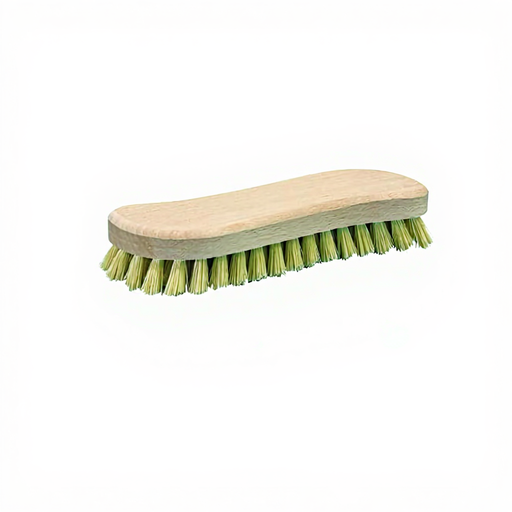
Why this product suits the profile: This manual brush is suitable for small balconies, spot cleaning and users who would initially prefer to work without an electrical appliance.
There are no claims about excessive water pressure or a power connection. Cleaning is carried out in a controlled manner by hand.
S-shaped wooden handle and dense PP bristles for manual cleaning work on hard surfaces.
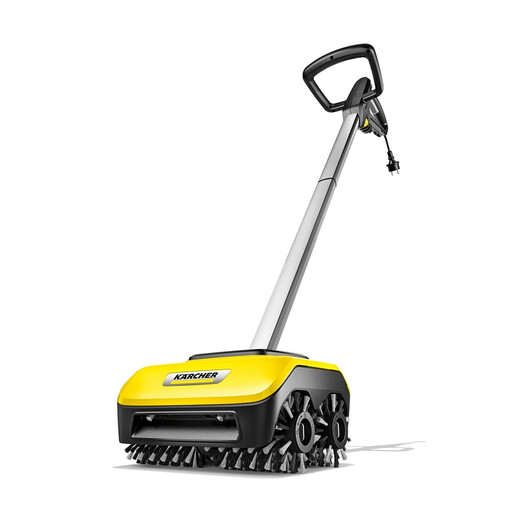
Why this product suits the profile: For regular cleaning of larger wooden or WPC surfaces, this appliance offers defined technical specifications and a combined brush-and-water function.
The specified low-pressure range of up to 10 bar defines the intended use more clearly than general high-pressure claims. The valve allows the water supply to be adjusted to your needs.
300 mm working width, four counter-rotating brush rollers, 600–800 rpm and integrated water jets.
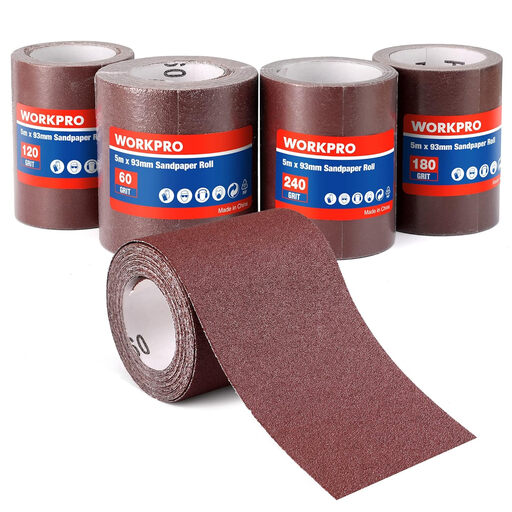
Why this product suits the profile: For DIY enthusiasts who want to prepare damaged or weathered areas of wood after cleaning, this set is a useful addition for finishing work.
It is not presented as a patio cleaner, but is specified for dry sanding. This keeps its intended use clearly separate from wet cleaning.
Four grades from 60 to 240, plus a width of 93 mm for hand sanding or use with compatible sanding tools.
Before starting, remove loose leaves, sand and coarse dirt. Then wet the surface with water. With the Kärcher PCL 6, you can regulate the water supply using the valve on the handle. Guide the Kärcher patio brush slowly and evenly in the direction of the decking boards.
For a wooden terrace:
When cleaning a WPC terrace, you should also follow the manufacturer’s care instructions. WPC profiles can differ in colour, texture and surface coating. Cleaning products should only be used if they have been approved for the specific material.
To remove moss and algae from the terrace, a single pass is not always sufficient. Heavily overgrown areas may require pre-treatment. Residue should then be collected using plenty of water and must not be washed into drains or bodies of water.
We have put together a complete, regularly updated list of products that fully meet these strict selection criteria and the safety regulations applicable in the EU.
The appliance is supplied with brush rollers for wooden and WPC surfaces. According to the product specifications, separate brush roller accessories are available for smooth, fine-pored stone surfaces. Before use, you must check that the surface and brush roller are compatible.
The maximum water consumption is specified as 180 litres per hour at 4 bar. The maximum pressure is 10 bar. The motor has a rated power consumption of 0.3 kW. Actual consumption depends on the valve setting and how long you use the appliance.
It is not possible to give a reliable fixed service life without information about the surface area, level of dirt and frequency of use. After every use, the rollers should be rinsed and stored in a frost-free place. Brushes that are visibly worn or damaged should be replaced. Finally, it is advisable to check the terrace for loose boards, gaps and any remaining residue.