
Lieferung heute & morgen

Qualitätsgarantie

Willkommens-Angebote freischalten: KOSTENLOSE Lieferung | Bis zu 80 % RABATT | Kostenlose 30-Tage-JoyPlus-Testphase
App herunterladen
Every home baker knows the struggle: the kitchen drawer is overflowing with loose dough hooks and whisks, and when you need the hand mixer, the right attachment is nowhere to be found. Or the old appliance gets so loud under load that the whole family can hear it, and it splatters batter halfway across the kitchen when you start it. The selection of hand mixers is vast, but many models prove to be impractical in daily use.
Before you make a purchasing decision, it's helpful to know the typical pitfalls that often lead to frustration.
To avoid a bad buy, you should focus on objective features that determine practical, everyday usability.
A quiet hand mixer for baking is often the result of a well-tuned interplay between the motor and gearbox, not just a high wattage number. For most household applications—from whipping cream to mixing batter—a power output of around 350 watts combined with a high-quality motor is perfectly sufficient. A "slow-start" function, which gradually increases speed, also prevents ingredients from splattering and ensures clean work.
A crucial factor for organization and longevity is the storage method. A compact mixer is characterized by not taking up more space than necessary after use. A hand mixer with a storage case is ideal, providing a secure and organized space for the unit itself, the mixing tools, and the cord. Such all-in-one solutions ensure that all parts stay together and the appliance is always ready for immediate use.
The handling of a mixer determines the comfort of your baking experience. A well-balanced device fits comfortably in your hand and can be used for extended periods without fatigue. A critical safety detail is the eject button. Models where this button is intentionally placed away from the main grip or positioned to make accidental pressing nearly impossible offer a significantly higher level of operational safety.
Here are some recommendations tailored to different needs and use cases, specifically designed to avoid the pitfalls mentioned.
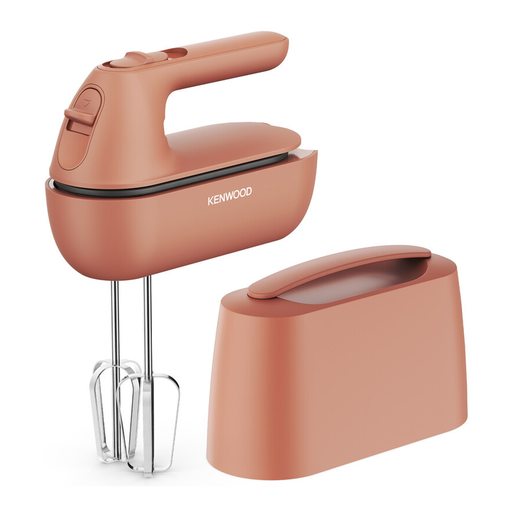
Why This Fits Their Persona: This model is designed for users who value organization, reliability, and a thoughtful design. It's ideal for regular baking projects without creating kitchen clutter.
The integrated storage case completely solves the accessory chaos. The SureEject system, with its forward-facing eject button, prevents accidental release of the mixing tools.
All-in-one storage: The unit, cord, and accessories clip together compactly. Quiet 350W motor: Sufficient power for most doughs at a comfortable noise level.
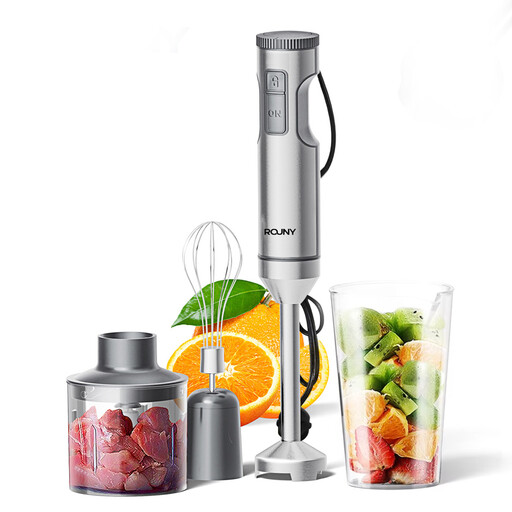
Why This Fits Their Persona: Ideal for users who not only bake but also want to purée soups, chop vegetables, and blend smoothies. This set bundles multiple functions into one device.
Instead of buying multiple individual appliances that fill up drawers, this set consolidates the most important functions. The whisk attachment covers basic mixing tasks.
4-in-1 functionality: Immersion blender, chopper, whisk, and beaker in one. Space-saving: Replaces multiple kitchen gadgets, creating more counter space.
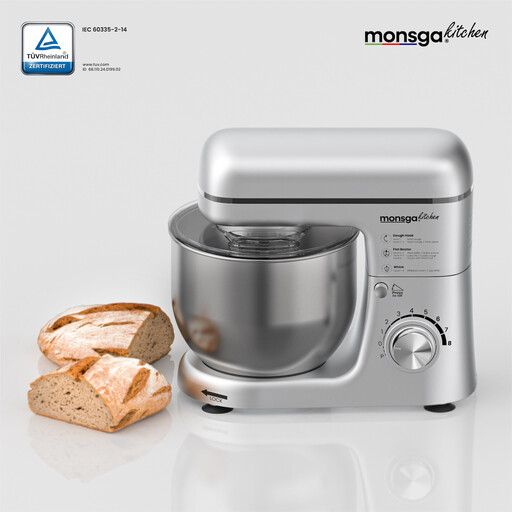
Why This Fits Their Persona: For anyone who regularly prepares heavy yeast or bread doughs or works with large quantities. This is where a hand mixer hits its limits, and a stand mixer is the logical next step.
This appliance bypasses the wattage fallacy by combining high power (1000W) with a planetary mixing action and a large capacity, which is necessary for heavy-duty tasks.
High capacity: The 5.0-liter bowl is designed for family-sized portions and large batches of dough. Powerful motor: The 1000W motor effortlessly handles even dense doughs.
We've compiled a complete, up-to-date list of products that fully meet these strict selection criteria and rigorous safety standards.
1. How do you properly clean and store a hand mixer with accessories? The mixing tools (whisks and dough hooks) of most modern appliances are dishwasher-safe. The motor housing should never be submerged in water but only wiped with a damp cloth. For storage, a model with an integrated storage case is ideal, as it keeps all parts clean and in one place.
2. Is 350 watts enough for making bread dough? For light to medium-heavy doughs, such as cake batter or shortcrust pastry, a 350-watt motor is generally sufficient. For very dense and heavy yeast or bread doughs that are made regularly, a hand mixer can reach its performance limits. In this case, a stand mixer with higher power and a larger capacity would be a worthwhile alternative to consider.
3. What is the advantage of a "slow-start" function? A "slow-start" function ensures that the mixer starts gently on the lowest setting instead of immediately at full speed. This prevents flour, powdered sugar, or liquid ingredients from splashing out of the bowl, allowing for more controlled and cleaner work from the very beginning.