
Lieferung heute & morgen

Qualitätsgarantie

Willkommens-Angebote freischalten: KOSTENLOSE Lieferung | Bis zu 80 % RABATT | Kostenlose 30-Tage-JoyPlus-Testphase
App herunterladen
Dry, brittle or colour-treated hair is often sensitive to blow-drying, straighteners, UV radiation and chemical treatments. Depending on the formulation, keratin hair care can help the surface of the hair feel smoother, improve manageability and visibly reduce frizz. However, the word ‘keratin’ on the packaging is not the only factor that matters.
Many unsuitable purchases result from three common marketing traps:
First, be clear about the role the product should play in your routine:
The description keratin treatment for damaged hair does not automatically mean a salon procedure. When using products at home, the instructions on the packaging should always take priority.
Hydrolysed keratin, amino acids and plant proteins are common ingredients in formulations for damaged hair. Additional ingredients perform different conditioning functions:
When choosing hair care for frizz, it is therefore not just the keratin that matters, but how the entire formulation works together.
A hair-care product with heat protection should include a corresponding claim and specific application guidance. A regular conditioning product does not automatically replace a heat protectant. UV filters are also not included in every keratin product. If you frequently expose colour-treated hair to the sun, you can add a separate protective spray to your routine.
Amount, processing time and styling-tool temperature also remain important. A conditioning product cannot completely eliminate the strain caused by heat. Hair should be completely dry before straightening, and the recommended appliance temperature should be kept as low as possible.
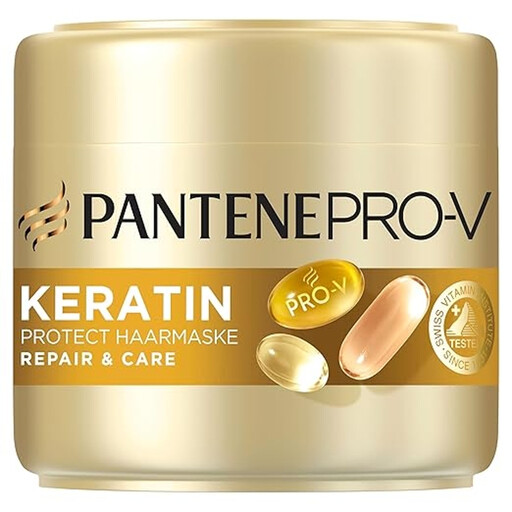
Why this product suits the profile: Apply the 300 ml mask to damp hair after shampooing, leave it on for a few minutes and then rinse it out. It is a straightforward introduction to a weekly hair-care routine.
The clear application instructions prevent the mask from being left in the hair like a leave-in product, which could otherwise make it feel unnecessarily weighed down.
300 ml contents; keratin and panthenol are included in the stated INCI list.
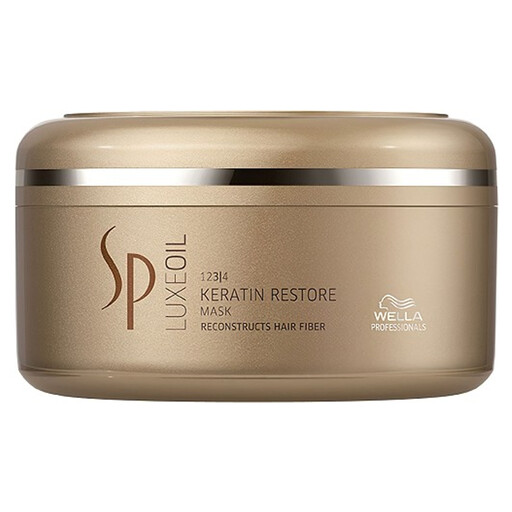
Why this product suits the profile: This mask is designed for targeted, intensive care after shampooing and contains hydrolysed keratin as well as argan, jojoba and almond oils.
The recommended use of once or twice a week reduces the risk of applying a rich mask every time you wash your hair.
Processing time of 5–10 minutes; product information lists hydrolysed keratin and several oils.
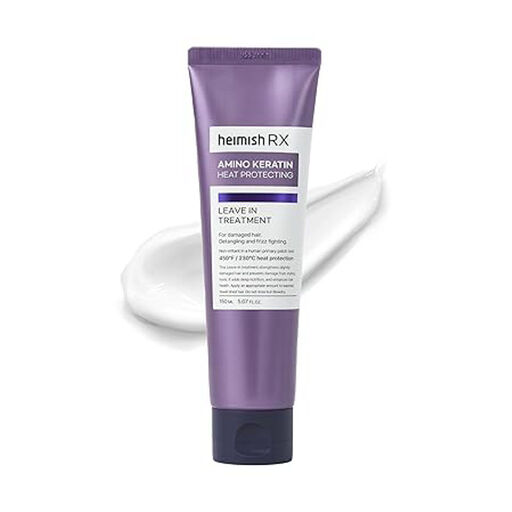
Why this product suits the profile: This leave-in cream is designed for use on towel-dried hair and, according to the product information, is positioned as a heat protectant for temperatures up to 230 °C.
The stated temperature rating makes the intended use when blow-drying or straightening clearer than a general conditioning claim.
Leave-in application; keratin and a complex of 17 amino acids are listed as key ingredients.
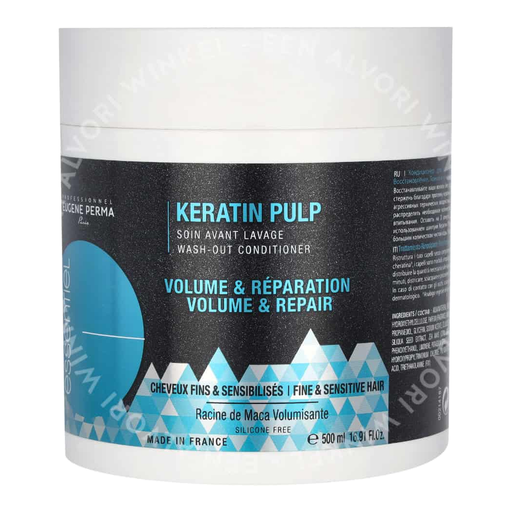
Why this product suits the profile: This conditioner is described as a pre-shampoo treatment. It may be interesting for fine hair when you want to condition the lengths without leaving a heavy feeling after washing.
The reverse-wash application puts conditioning before shampooing, addressing the common concern about residue or weighed-down roots.
500 ml contents; according to the product description, it contains keratin, amino acids, oligopeptides and maca.
We have put together a complete, regularly updated list of products that fully meet these strict selection criteria and the safety regulations applicable in the EU.
A simple routine could look like this:
When it comes to keratin hair repair, variety is useful: a rich mask does not need to be used every time you wash your hair. Fine hair often needs less product than thick, curly or highly porous hair. If irritation occurs, stop using the product and check the ingredient list.
This depends on the formulation and the condition of your hair. Many masks are designed for once or twice a week. For fine hair, start by applying a small amount to the ends. If your hair becomes dull or difficult to comb, reduce how often you use the mask.
In principle, conditioners, masks and leave-in products can also be used on colour-treated hair. The specific application instructions are what matter. For time spent in the sun, a separate spray with stated UV protection is a sensible choice, as not every keratin product contains UV filters.
The noticeable effect depends on your hair structure, how often you wash it, your styling routine and the type of product. Rinse-out products can affect how your hair feels and how easy it is to comb until the next wash or over several washes, while a leave-in product is reapplied each time you use it. This type of cosmetic care is not expected to cause permanent changes to the structure of the hair.