
Same-day & Next-day Delivery

Quality Guaranteed

Unlock Your Welcome Offers: FREE Delivery | Up to 80% OFF | Free 30-day JoyPlus trial
Download the APP
Dry, brittle or stressed hair does not automatically need the richest possible care. A keratin hair mask can improve manageability and leave the hair surface looking smoother – provided the formulation, application and hair type are a good match. If you regularly blow-dry, straighten, colour or bleach your hair, it is therefore worth paying closer attention to the product details than to eye-catching marketing claims.
Keratin is a protein. In cosmetic products, it is often used as hydrolysed keratin or as part of an amino acid complex. However, its effect on the hair depends on the formulation as a whole. A mask containing a high level of protein may be interesting for porous, damaged hair, while very fine or dry hair may also need moisturising ingredients.
So do not just look for the word keratin. Also check for ingredients such as glycerine, panthenol, plant oils, amino acids or cationic conditioning agents. The complete INCI list on the packaging is the authoritative source for the current formulation.
Claims such as “up to 20 times stronger” generally refer to a brand-specific comparison, for example with untreated hair. Such figures cannot be readily compared across different products. For SYOSS, the claim “up to 20x stronger” is explicitly described as a comparison with untreated hair.
For an objective choice, the following specific criteria are therefore more helpful:
A classic hair mask is rinsed out after use. It conditions the lengths, but is not automatically marketed as protection against straighteners or hairdryers. If you frequently style your hair with heat, you will need either a separate heat-protection product or a leave-in keratin treatment with the relevant manufacturer’s claim.
According to the product description, the heimish RX Amino Keratin Heat Protect Leave-In Treatment provides heat protection up to 230 °C. This temperature claim applies exclusively to this product and should not be assumed to apply to other keratin masks.
For a hair mask for damaged hair, formulations containing proteins, amino acids and smoothing conditioning ingredients are suitable. Dry and brittle hair also benefits from a moisturising base. Very rich formulations can weigh down fine hair, while lightweight conditioners may not be sufficient for heavily stressed lengths.
Look for the following characteristics:
A hair mask is usually worked into damp lengths and ends after shampooing. Depending on the product, the processing time is around two to ten minutes. Leaving it on for longer does not automatically produce better results. Follow the instructions on the packaging.
A conditioner for fine hair can also be used as a reverse-wash treatment: apply the conditioner first, followed by shampoo. This method can reduce the feeling of residue, but whether it is suitable depends on your individual hair type and the product instructions.
A 1,000-ml bottle may initially seem economical, but it can last considerably longer on very short hair than on long, thick hair. Therefore, compare:
For strengthening hair care, the shelf life, batch number and complete product labelling on the packaging are also relevant. Cosmetics are intended for external use only. In the event of contact with the eyes or skin, follow the manufacturer’s relevant warnings.
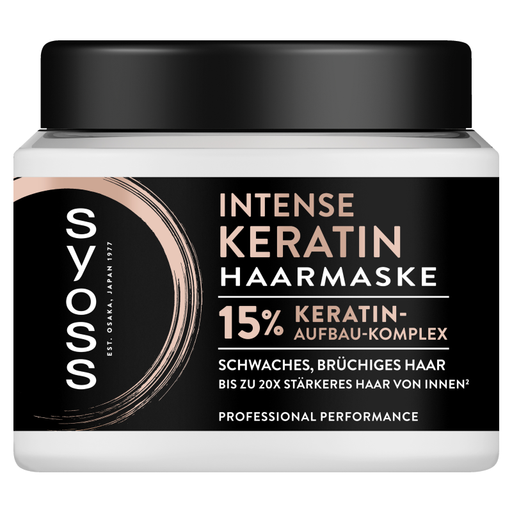
Why this product suits this profile: The mask is designed for regular use on weak and brittle hair and is rinsed out after shampooing following a 2- to 3-minute application.
The product information specifies the 15% Keratin Rebuilding Complex and recommends using it once or twice a week. This makes it easier to control the amount of care your hair receives.
300-ml container, hydrolysed keratin and a clear processing time of 2 to 3 minutes.
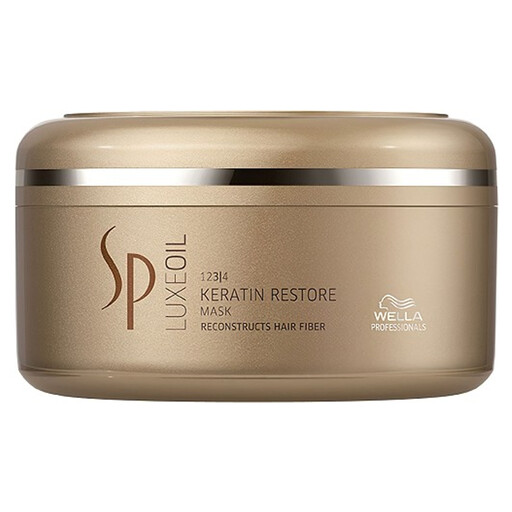
Why this product suits this profile: The 150-ml mask combines keratin with argan, jojoba and almond oils and is designed for weekly or fortnightly use.
The formulation and stated processing time of 5 to 10 minutes are described transparently. Even so, the product should only be applied to the lengths and ends.
Hydrolysed keratin, panthenol and several oils for targeted intensive care that is rinsed out.
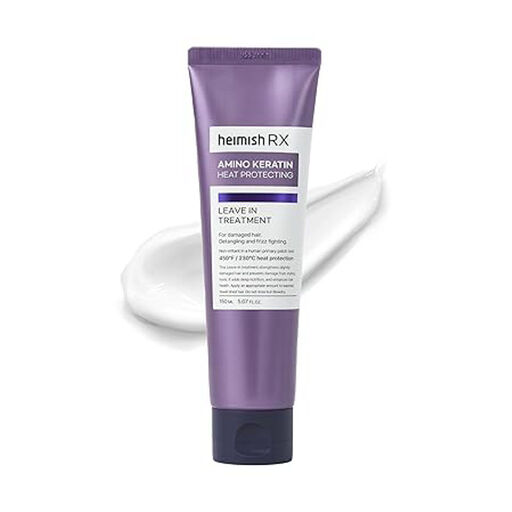
Why this product suits this profile: The leave-in cream is designed for people who regularly blow-dry their hair or use straighteners and do not want to apply an additional rinse-out mask after styling.
Unlike an ordinary mask, it is stated to provide heat protection up to 230 °C. The cream remains in the hair and is distributed through the lengths and ends.
Keratin, a complex of 17 amino acids, 150 ml contents and an application that does not require rinsing.
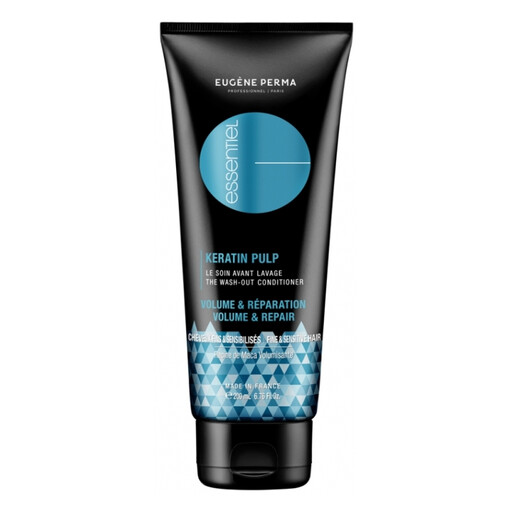
Why this product suits this profile: The product description is aimed at fine, brittle hair and mentions the reverse-wash method as a possible way to avoid a weighed-down feeling.
Applying it before shampooing may be more practical for fine hair than using a heavy mask after washing. The stated processing time is three minutes.
Keratin and maca root in a 200-ml pack; according to the product description, dermatologically tested and made in France.
We have compiled a complete, regularly updated list of products that fully meet these strict selection criteria and the safety regulations applicable in the EU.
This depends on the formulation and your hair type. Many products recommend using them once or twice a week. Fine hair may need a smaller amount or a shorter processing time. The instructions for the individual product are the deciding factor.
Yes, provided the texture is not too rich and the application is adapted accordingly. A conditioner for fine hair that is used before shampooing can be a practical alternative. A mask that is very rich in oils or particularly heavy should initially be tested sparingly.
A keratin conditioner is generally designed for a shorter processing time and more frequent use. A hair mask often contains a more intensive conditioning base and is used less often. A conditioner may be sufficient for your daily routine; for heavily stressed lengths, a mask can be a useful addition to professional hair care.