
Lieferung heute & morgen

Qualitätsgarantie

Willkommens-Angebote freischalten: KOSTENLOSE Lieferung | Bis zu 80 % RABATT | Kostenlose 30-Tage-JoyPlus-Testphase
App herunterladen
A kettle is a daily kitchen essential in many British households. But when it comes to buying one, it’s not just about high wattage or a striking design. What really matters is capacity, material, ease of use and safety features – and how well they actually suit your everyday needs.
A kettle with 2200 watts can heat water quickly. However, the actual time depends on the amount of water you fill, the starting temperature and the design of the heating element. If you regularly only make a single cup, you don’t need a full kettle either. A suitable minimum fill level helps to avoid unnecessary energy consumption.
A 1.7 litre kettle is ideal for several cups and family households. For a single person, a compact model with 1.0 or 1.5 litres can save space. Important: never exceed the maximum mark, as boiling water can overflow. At the same time, the water level should not fall below the minimum mark.
A kettle with temperature control or a keep-warm function can be handy for tea and coffee. But if you only ever boil water, you may not need these extras. Conversely, a basic model can be impractical if you drink different types of tea that require different recommended temperatures. So the features should match your personal usage habits.
For families, home offices or making several drinks in a row, 1.7 litres is often a suitable size. Models with 1850 to 2200 watts are designed for quickly heating larger volumes of water. In smaller kitchens or for occasional use, 1.0 to 1.5 litres may be sufficient.
Look out for:
A stainless steel kettle is usually opaque, robust and less prone to visible discolouration on the outside. Double-walled models can keep the exterior cooler than single-walled ones. Claims like “BPA-free” should ideally apply to all plastic parts that come into contact with water – check the manufacturer’s description to be sure.
A glass kettle lets you see the water level and the boiling process directly. Tempered glass or heat-resistant borosilicate glass is specified for many models on offer. However, glass surfaces can make limescale deposits more visible and require regular cleaning.
A kettle with automatic shut-off stops the heating process once the set temperature is reached or after boiling. A kettle with boil-dry protection switches off if there is too little or no water inside. These features don’t replace safe use: the appliance should always stand on a stable, dry and heat-resistant surface.
Other practical features for everyday use include:
For tea and coffee lovers, a kettle with temperature control lets you choose between several target temperatures. A keep-warm function keeps the water at a set temperature for a limited time after boiling. The exact duration and available settings vary by model.
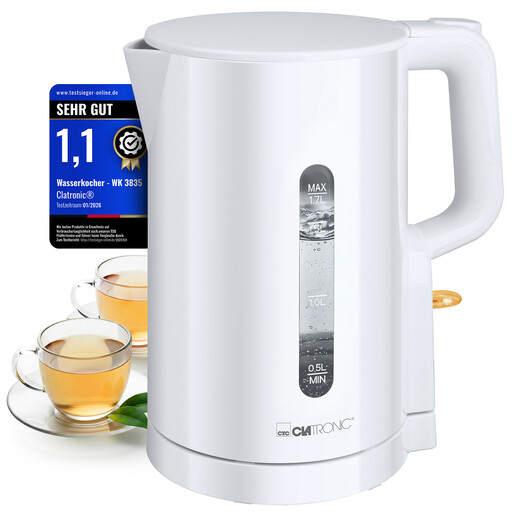
Why this product fits the profile: This model combines a large capacity with basic functions for daily use, making it suitable for households that don’t need temperature selection.
The specifications clearly state 1.7 litres, 2200 watts, water level indicators, automatic shut-off and boil-dry and overheat protection. This makes the key basic data easy to see.
1.7 litre capacity, removable limescale filter, cordless use and one-handed operation according to the product specifications.
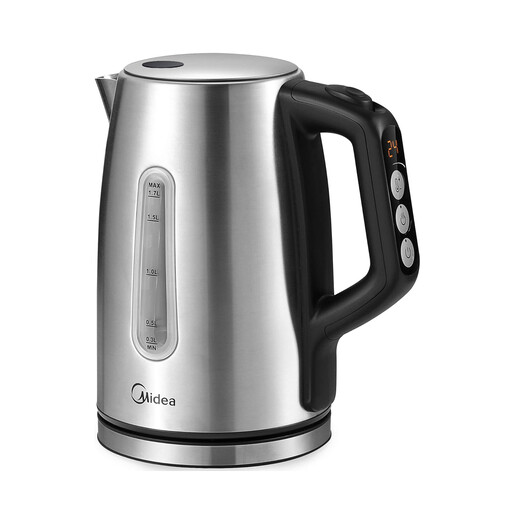
Why this product fits the profile: For users who don’t always want to heat water to boiling point for different types of tea or coffee, this model offers several temperature settings.
The temperature selection from 40 to 100 °C and the keep-warm function for up to 60 minutes are clearly specified. This allows buyers to check whether the features match their own drink-making routine.
Six temperature settings, 1.7 litre capacity, limescale filter, automatic shut-off and boil-dry protection according to the manufacturer’s description.
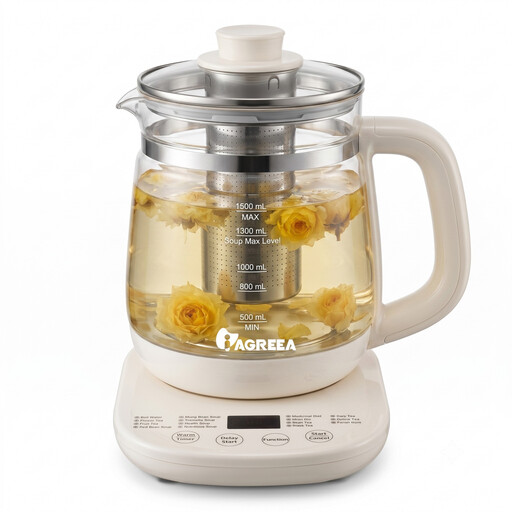
Why this product fits the profile: This model is aimed at households that plan to use a removable infuser for tea infusions or other preparations, as well as hot water.
At 1.5 litres and 800 watts, it’s not designed for maximum heating power. The choice is therefore understandable when features for infusions are more important than particularly fast boiling.
Borosilicate glass, 14 pre-set programmes, six temperature settings and a large stainless steel tea infuser according to the product description.
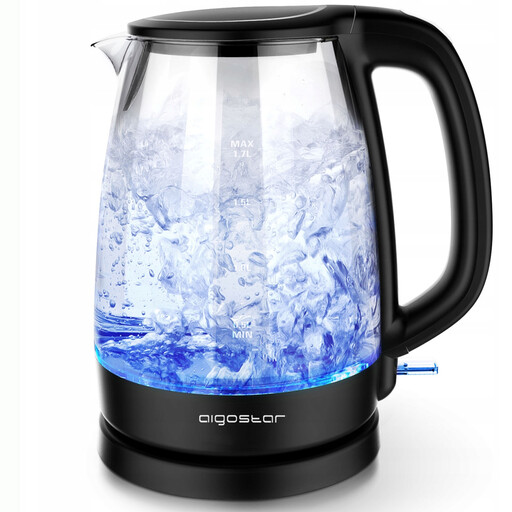
Why this product fits the profile: The combination of a large volume, visible water level and blue interior lighting suits families who want to make several cups in one go.
The product details list both the heating power and automatic shut-off and boil-dry protection. The transparent housing makes water level checking visible.
1.7 litres, 1850 to 2200 watts, heat-resistant borosilicate glass, detachable 360-degree base and BPA-free claim.
We’ve put together a complete, regularly updated list of products that fully meet these strict selection criteria and the safety regulations in force in the EU.
Limescale can affect heating performance and noise levels. Descale the appliance depending on your water hardness and the manufacturer’s instructions. Only use suitable descalers and rinse thoroughly afterwards.
Also bear in mind:
For a larger household model, 1850 to 2200 watts is a common power rating. A higher wattage doesn’t automatically mean the same boiling time, as water volume, temperature and design also play a role.
The lifespan depends on factors such as frequency of use, water hardness, cleaning and materials. Regular descaling, correct filling and avoiding running it dry can support daily use. Without specific manufacturer information, it’s not possible to give a reliable general lifespan.
The consumption depends mainly on the amount of water heated and the temperature required. Only heat as much water as you actually need, and pay attention to the minimum mark. A keep-warm function can be practical, but it keeps the appliance active for a longer period and should be used selectively.