
Lieferung heute & morgen

Qualitätsgarantie

Willkommens-Angebote freischalten: KOSTENLOSE Lieferung | Bis zu 80 % RABATT | Kostenlose 30-Tage-JoyPlus-Testphase
App herunterladen
A kettle is a staple in many British households, used every day in the kitchen. It heats water for tea, coffee, instant meals or food preparation, usually more conveniently than a saucepan. The choice ranges from compact 1-litre models through the classic 1.7-litre kettle to designer retro-style kettles.
However, eye-catching product claims don't automatically lead to the right buying decision. Three common pitfalls are particularly worth noting:
For singles or individual cups, a 1-litre kettle may be sufficient. It takes up less worktop space and stops you from regularly heating larger amounts of water unnecessarily. Couples and families often choose a 1.7-litre kettle, as it can prepare several cups or a larger quantity for instant meals in one go.
The minimum and maximum markings are important. If you put in too little water, the boil-dry protection may activate or the heating element may be unnecessarily strained. Overfilling risks boiling water or steam escaping from the spout.
An electric kettle with 1850 to 2200 watts is a common range for many households. Models with 2400 watts can also work quickly, but they need a suitable circuit. The power consumption should match the details on the rating plate and the instruction manual.
For running costs, it's not just the wattage that matters. The amount of water heated and how often you use it are also key. If you're only making one cup, don't automatically fill to the maximum mark.
A kettle with automatic shut-off stops the heating process as soon as the water reaches boiling point. Additional features include boil-dry protection, automatic switch-off when lifted from the base, and a heat-resistant handle. However, these don't replace safe operation: the appliance should stand on a stable, dry surface and not be left unattended while in use.
A kettle with a limescale filter catches some dissolved limescale particles when you pour. The filter must be removed and cleaned regularly. A concealed heating element and a wide lid opening also make maintenance easier. If you have hard tap water, regular descaling may be necessary; always follow the manufacturer's instructions.
The following selection matches specific models to different usage situations and verifiable product features. Details such as power, capacity and functions are based on the available product data.
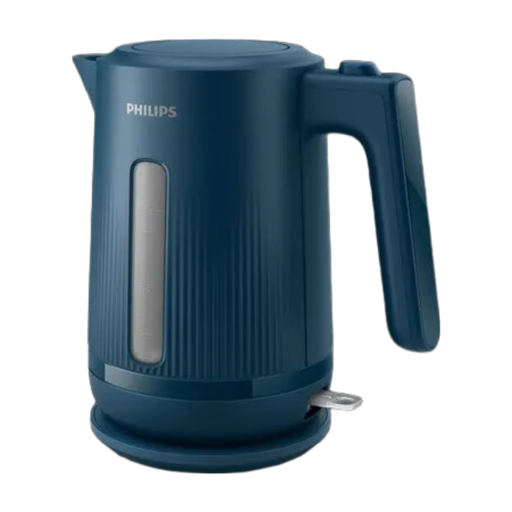
Why this product fits the profile: This model offers 1.7 litres capacity, a power range of 1850–2200 watts and an illuminated water level indicator, making it suitable for everyday use in a private household.
The automatic shut-off and boil-dry protection address the often-overlooked safety features; the visible water level makes measured filling easier.
1.7-litre capacity, 1850–2200 watts, automatic shut-off and cordless lifting from the base.
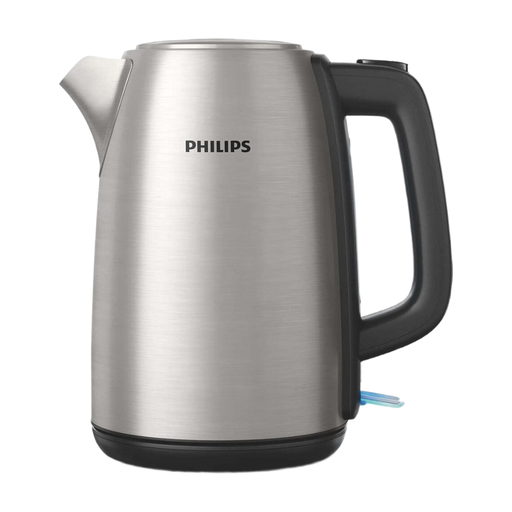
Why this product fits the profile: The stainless steel housing, removable micro-filter, concealed heating element and keep-warm function appeal to users who care about both materials and maintenance.
The removable 200-µm micro-filter and wide lid opening make maintenance more concrete than pure design promises.
1.7 litres, 1740–2060 watts, stainless steel housing, keep-warm function and 360-degree base.
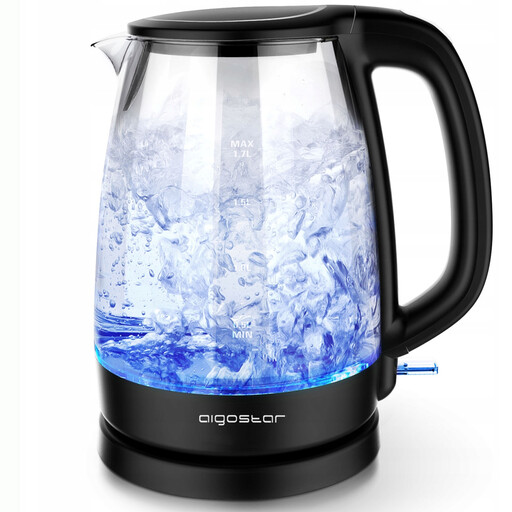
Why this product fits the profile: The glass body makes the water level and boiling process visible. 1.7 litres and 1850–2200 watts are suitable for multiple servings in a family household.
Alongside the LED lighting, automatic shut-off and boil-dry protection are specified. The glass surface still needs careful handling and regular descaling.
High borosilicate glass, blue LED lighting, 2200-watt range, 360-degree base and boil-dry protection.
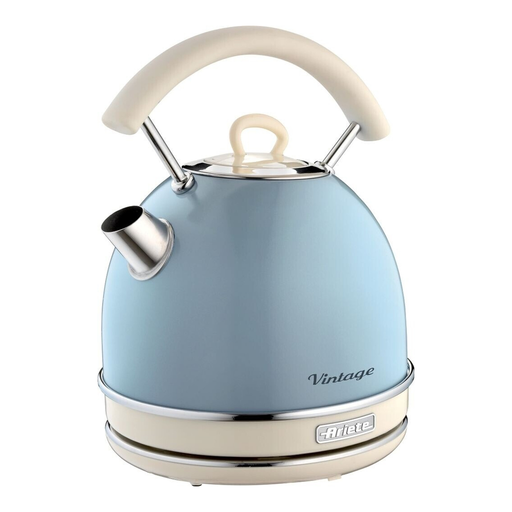
Why this product fits the profile: This model combines a retro casing with 1.7 litres capacity, 2200 watts, a visible water level and a removable filter.
The striking design is complemented by concrete everyday functions: automatic shut-off, 360-degree base, water level indicator and removable limescale filter.
1.7 litres, 2200 watts, removable filter, automatic shut-off and cordless serving via the 360-degree base.
We've put together a full, regularly updated list of products that fully meet these strict selection criteria and the safety regulations in force in the EU.
The amount of water should be between the stated minimum and maximum markings. For a single cup, you usually need much less than the maximum capacity. This saves heating time and avoids unnecessary energy consumption.
The lifespan depends on the material, frequency of use, limescale build-up and care. Regular descaling, a dry base and following the instruction manual can help maintain usability. If you notice cracks, damaged cables or unusual behaviour, replace the appliance or contact customer service.
The consumption mainly depends on the power rating, water volume and operating time. A 2200-watt kettle doesn't automatically use more energy than a lower-powered model if it heats the water faster. The most important thing is to only fill the amount you actually need.