
Lieferung heute & morgen

Qualitätsgarantie

Willkommens-Angebote freischalten: KOSTENLOSE Lieferung | Bis zu 80 % RABATT | Kostenlose 30-Tage-JoyPlus-Testphase
App herunterladen
A kettle is part of the everyday kitchen equipment in many British households. Tea, coffee, instant meals and hot water for cooking can all be prepared quickly with one. However, wattage alone does not determine whether a model will suit your daily routine in the long term. A kettle that is too large uses unnecessary amounts of water and takes up valuable worktop space, while a small kettle can quickly reach its limits when serving several people.
Product claims such as “particularly fast”, “safe” or “durable” should also be checked against specific product details. As a Joybuy Product Recommendation Officer, I assess market information using transparent criteria and show you what really matters when buying a kettle.
A fast 2,200-watt kettle can heat large amounts of water quickly. For a single cup, however, maximum power is less important than the amount of water added. If you regularly heat only 300 to 500 millilitres, look for a clearly marked minimum fill level and avoid filling the kettle with more water than necessary. This can reduce heating time and electricity consumption per use.
A 1.7-litre kettle is suitable for families or making several cups one after another, but it requires more worktop space. A 1.5-litre kettle is often sufficient for couples and smaller households. Singles, offices and small kitchens, on the other hand, can often benefit from a small 1-litre kettle. Very compact models with a capacity of 0.4 litres are also available for personal use.
Blue lighting or a modern housing says nothing about how well the appliance is protected during use. Look for an automatic switch-off, boil-dry protection or overheating protection, a securely closing lid and a stable base. With conventional appliances, a cordless design usually means that the jug can be removed from a mains-powered 360-degree base. The appliance is therefore not automatically battery-powered.
The following simple guide can help you choose:
The actual boiling time also depends on the amount of water, its starting temperature, the design of the kettle and limescale deposits. Manufacturer claims such as “4 to 5 minutes for 1.5 litres” should therefore be understood as product-specific information, not as a general industry standard.
A glass kettle lets you see the water level and boiling process directly. Borosilicate glass is listed as the material for several models available. Nevertheless, it remains susceptible to impact and should be handled with care.
A stainless-steel kettle is often robust on the inside, while double-wall construction can help keep the outer surfaces cooler. Check which parts actually come into contact with water. For example, the Midea model is specified as having a 304 stainless-steel interior and BPA-free plastic parts that do not come into contact with water.
Plastic models can be lighter. Here, clear material information, a secure lid design and care instructions are particularly important. The description BPA-free kettle should be explicitly stated in the product details rather than appearing only in a promotional image.
A kettle with temperature selection is useful if you prepare different types of tea or coffee, or if you do not always want to heat water to boiling point. The Midea model is specified as offering a temperature range of 45 to 100 °C with seven preset settings. A keep-warm function lasting up to one hour is also listed.
A keep-warm function is practical when several cups are served at different times. However, it uses energy over a longer period. For simple everyday use, a kettle with automatic switch-off and no additional temperature control is often sufficient.
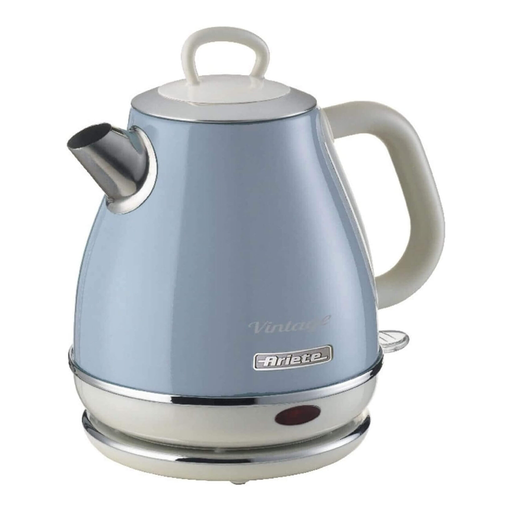
Why this product suits the profile: The 1-litre model is designed for singles, couples and small kitchens. Its 1,600 watts and 360-degree base support the daily preparation of tea, coffee and instant meals.
The limited capacity helps prevent too much water being heated regularly for individual cups. Automatic switch-off is specified.
1-litre capacity, stainless-steel housing, 1,600 watts and cordless 360-degree base.
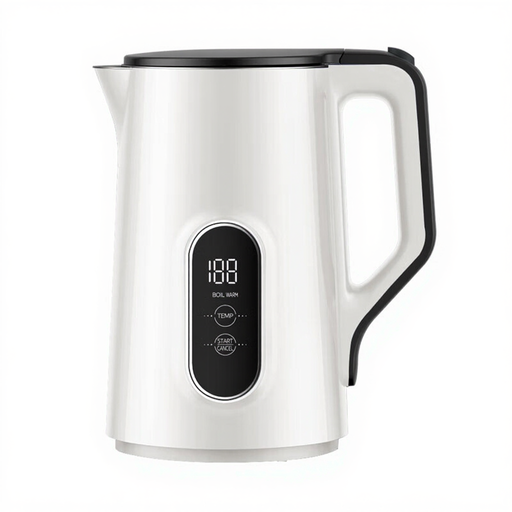
Why this product suits the profile: Temperature selection from 45 to 100 °C, a digital display and the specified keep-warm function offer more control than a basic boiling model.
The temperature is not judged solely by an inaccurate guess while the water cools. The product description specifies seven temperature levels and automatic switch-off.
1.5 litres, 2,200 watts, double-wall construction, 304 stainless steel inside and BPA-free plastic parts without water contact, according to the product description.
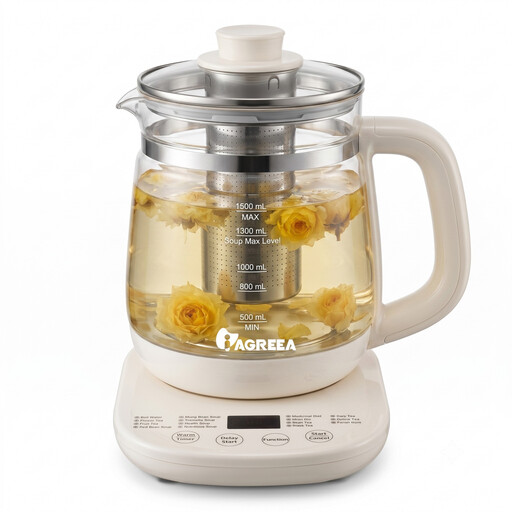
Why this product suits the profile: The combination of a glass jug, removable tea strainer, 14 preset programmes and six keep-warm levels is aimed at users who want to do more than simply boil water.
The wide opening and removable components make cleaning easier. However, the glass is susceptible to impact and should therefore be handled with care.
1.5 litres, 800 watts, six temperature levels from 40 to 90 °C according to the product description, plus a large stainless-steel tea strainer.
We have put together a complete, regularly updated list of products that fully meet these strict selection criteria and the safety regulations applicable in the EU.
Descale the kettle regularly according to the water hardness in your area. Limescale can affect heating performance and extend heating times. Unplug the appliance before cleaning; the base, cable and plug must not come into contact with water. Fill the appliance only between the minimum and maximum markings, and do not open the lid while the water is boiling. Boil-dry protection does not replace correct operation.
Only add the amount you need, but at least up to the stated minimum mark. Depending on the size of the cup, around 250 to 350 millilitres is usually enough for a single cup. The water-level indicator makes it easier to judge the amount.
Its service life depends on how often it is used, limescale levels, the material, care and how glass or plastic parts are handled. Regular descaling, avoiding boiling the kettle dry and keeping the base dry can help extend its useful life. A fixed number of years cannot be applied reliably to every model.
Consumption mainly depends on the power rating and the amount of water. A 2,200-watt appliance uses its rated power only while heating. If you always heat only the amount of water you need and disconnect the appliance from the power supply after it switches off, you can avoid unnecessary heating and standby periods.