Large flask
If you want to fill your flask in one go, compare its capacity with the kettle’s maximum fill level. Bosch states that the TWK7L467 has a capacity of 1.7 litres and a water-level gauge.


A kettle with a stated capacity of 1.7 litres may be suitable for filling a large flask, provided the appliance’s maximum fill level is sufficient. For smaller flasks and limited worktop space, a more compact model may be a better choice. Look for a water-level gauge, a well-designed spout and automatic shut-off. Temperature control is most useful if you also make drinks that need to be prepared at different temperatures. The product features mentioned are manufacturer claims, not the results of comparative hands-on testing.
If you want to fill your flask in one go, compare its capacity with the kettle’s maximum fill level. Bosch states that the TWK7L467 has a capacity of 1.7 litres and a water-level gauge.
For a smaller flask or limited worktop space, a compact model may be a good fit. WMF states that its KÜCHENminis kettle has a capacity of 0.8 litres, while Severin lists 1 litre for the WK 3411. Also check the minimum fill level.
If you make drinks at different temperatures as well as filling your flask, temperature control may be useful. Haier states that the I-Master Series 5 HKE5A 011 offers seven temperature settings.
The percentages refer to consumers choosing a kettle to fill a flask at a holiday cottage. Each figure represents the most important buying consideration for that group.
| Consideration | What to look for | Who it matters most to |
|---|---|---|
| Enough capacity for a large flask | Compare the flask’s capacity with the kettle’s stated capacity and maximum fill level; check the water-level gauge. | If I want to fill a larger flask in one go in the morning, having enough water is my main concern. Around 36% of consumers prioritise capacity for a large flask. |
| Smaller quantities and limited space | Check the stated capacity and the minimum and maximum fill levels of the specific model. | With limited worktop space and a smaller flask, I don’t want to choose an unnecessarily large appliance. Around 29% of consumers prioritise smaller quantities and a compact footprint. |
| Controlled pouring and easy cleaning | Check the spout, lid opening, automatic shut-off and how easy it is to access the limescale filter. | When pouring water into a flask, I want to control the flow easily and clean the kettle without fuss. Around 21% of consumers prioritise ease of use and cleaning. |
| Temperature control for other drinks | Check that the temperature settings suit the drinks you make and the quantities you need. | If I regularly make drinks at different temperatures as well as filling my flask, having the right settings matters to me. Around 14% of consumers prioritise variable drink temperatures. |
A large kettle doesn’t have to be filled to the maximum mark. What matters is the amount of water you actually need, within the appliance’s fill markings.
Check your flask’s capacity and heat only as much water as you need and as the manufacturer allows for the appliance.
A kettle with a stated capacity of 0.8 or 1 litre may not hold enough water for a larger flask, meaning you may need to boil a second batch.
Compare the flask’s capacity with the kettle’s maximum fill level, and allow for a second boil if the capacity is limited.
Temperature control is most useful if you need water at different temperatures. Haier bases its advertised saving on a comparison between 0.25 litres in its own model and an assumed minimum fill of 0.5 litres in other kettles. This is not a comparison using the same amount of water.
Choose according to the quantities and temperatures you need. If you only fill your flask with boiling water, temperature control isn’t essential.
The TWK7L467 is an option for larger quantities, without temperature control.
The 0.8-litre KÜCHENminis kettle may suit smaller flasks and limited worktop space.
The WK 3411 and WK 3409 models offer different stated capacities.
The I-Master Series 5 HKE5A 011 combines a stated maximum capacity of 1.7 litres with temperature control.
This selection includes kettles with stated capacities of 1 to 1.7 litres, as well as a 4-litre hot water dispenser. Temperature control is also listed for some models.
 No image available
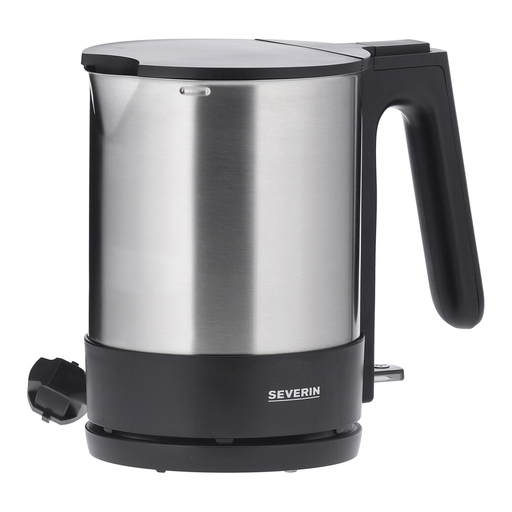
With a stated capacity of 1.7 litres, this model may suit larger flasks. Check the fill markings on the appliance.
Listed features include 2,200 W, a water-level gauge and automatic shut-off.
 No image available
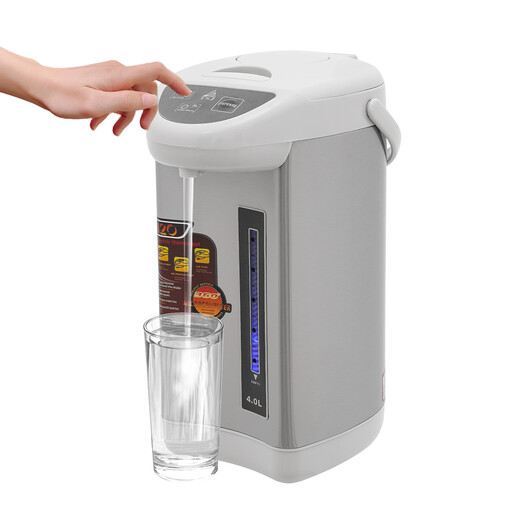
This appliance is described as a 4-litre hot water dispenser and warmer. Before buying, check that its outlet is compatible with the opening of your flask.
Features listed include automatic, cup-operated and manual dispensing, plus a 220-V EU plug.
 No image available
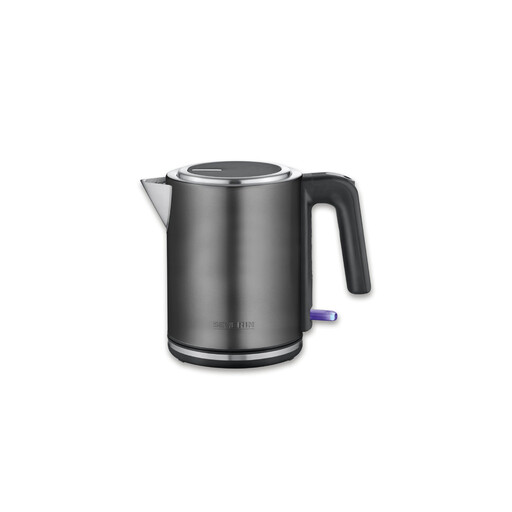
With a stated capacity of 1 litre, this model may suit smaller flasks. Compare its capacity with the amount of water you need.
Features listed include a water-level gauge, automatic shut-off, a limescale filter and a cordless 360-degree base.
 No image available
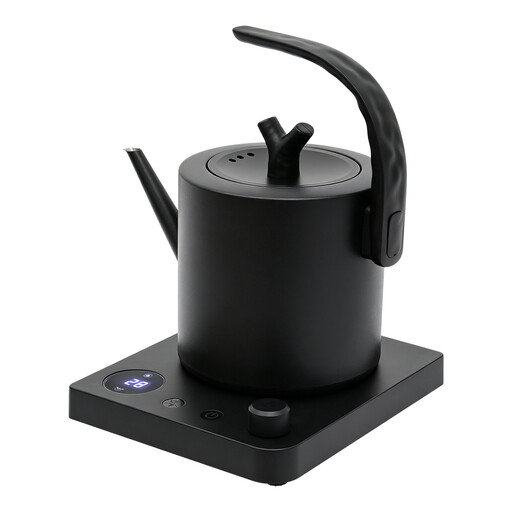
The stated capacity of 1 litre may suit a smaller flask. Check the maximum fill level of the specific appliance.
The description lists adjustable temperatures from 40 to 100 °C and a keep-warm function.
 No image available
The stated capacity of 1.7 litres may suit larger flasks. Check the fill markings against the amount you need.
Features listed include 2,200 W, six temperature settings from 40 to 100 °C, keep-warm for up to 60 minutes, a water-level gauge, automatic shut-off and a limescale filter.
Use your flask’s capacity and the kettle’s minimum and maximum fill markings as a guide. Don’t routinely heat the full stated capacity if you need less. Severin also advises keeping within the minimum and maximum fill levels and leaving the lid closed while boiling and pouring.
The German Environment Agency recommends running drinking water that has been standing in the plumbing for more than four hours before using it for food or drinks, until fresh, noticeably cooler water comes through. This is advice on drawing water from the tap; boiling it won’t reliably resolve problems with the property’s plumbing.
A wide opening that’s easy to reach and a removable limescale filter are useful features to compare. Severin lists both for the WK 3409. Follow the instructions for your chosen model when selecting a descaler and cleaning the kettle.
In Germany, statutory consumer rights against the seller are separate from a voluntary guarantee. The Verbraucherzentrale explains that, as a general rule, the retailer is responsible for goods being free from defects when they’re delivered for two years after purchase. If a product is faulty, repair or replacement may be the first remedy.
As part of its market surveillance, the Bundesnetzagentur lists points to check including correct CE marking, identifiable manufacturer details and instructions in German. CE marking is the manufacturer’s declaration that the product complies with applicable EU requirements; it isn’t an independent quality mark.