
Lieferung heute & morgen

Qualitätsgarantie

Willkommens-Angebote freischalten: KOSTENLOSE Lieferung | Bis zu 80 % RABATT | Kostenlose 30-Tage-JoyPlus-Testphase
App herunterladen
A kettle with temperature control does more than simply heat water to boiling point. Depending on the model, you may be able to select temperatures such as 40, 60, 80 or 95 °C. This is useful for tea, filter coffee, baby food or drinks that should not be prepared with boiling water. However, kettles differ considerably in terms of operation, temperature settings, keep-warm time and cleaning.
Claims such as ‘precise temperature control’ or ‘multiple programmes’ may sound convincing at first glance. However, the key question is which specific temperature settings are actually available. A kettle with three fixed settings may be sufficient for tea and coffee, while anyone who enjoys different types of tea may benefit from five or more settings.
It should also be clear whether the kettle displays the target temperature or merely offers a programme selection. A kettle with a display or a temperature indicator makes it easier to monitor the temperature while the water is heating.
A keep-warm function does not maintain the selected temperature for the same length of time on every model. Depending on the kettle, it may be designed to keep water warm for 30 minutes, several hours or longer. A lengthy keep-warm period can be convenient for families and people with busy working lives, but it uses more electricity than heating the water just once.
It is also important to distinguish between an electric kettle and a thermal jug. A kettle with a keep-warm function is designed to maintain the temperature temporarily. Liquids such as milk or baby food should not be stored in the appliance for long periods unless the instructions expressly permit this.
A glass kettle gives you a direct view of the water level and the heating process. Borosilicate glass is used in several models because of its temperature resistance. Nevertheless, the surface remains hot during operation and may be damaged by knocks.
Plastic housings can be lighter and, depending on their design, may feel less hot to the touch. Stainless steel is durable, but often makes the water level less visible. Regardless of the material, the kettle should have boil-dry protection, overheat protection, automatic switch-off and a removable limescale filter.
First, consider what you will mainly use the kettle for:
A rotary dial is quick to understand, while touch controls and displays can provide more information. Look for clearly legible symbols and a temperature display in degrees Celsius.
A 1.7-litre kettle is suitable for several cups or a family household. For one person, a smaller capacity may be more energy-efficient, provided you only fill the kettle with the amount of water you actually need.
The power consumption of the models featured ranges in some cases from 800 to 2,400 watts. A higher wattage can speed up the heating of larger quantities of water, but it is not an indicator of quality on its own. For running costs, what matters most is how much water you heat and how often the keep-warm function remains active.
Limescale deposits affect heat transfer and can make the kettle more difficult to operate. A wide lid, a removable filter and an easily accessible interior make cleaning easier. The base station must not be immersed in water. Before cleaning, unplug the appliance and allow it to cool down completely.
If the kettle has a glass container, check it regularly for cracks. Never exceed the maximum fill mark and do not operate the appliance without water.
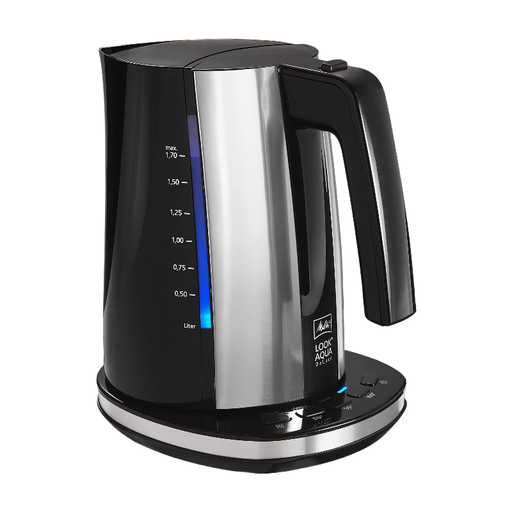
Why this product suits this profile: Three selectable temperatures from 80 to 100 °C, a 1.7-litre capacity and a 30-minute keep-warm function cover typical everyday needs.
The specific temperature settings and keep-warm time are clearly stated rather than simply promoting a general temperature-control feature.
2,400 watts, dual-sided water-level indicator, removable limescale filter and boil-dry protection.
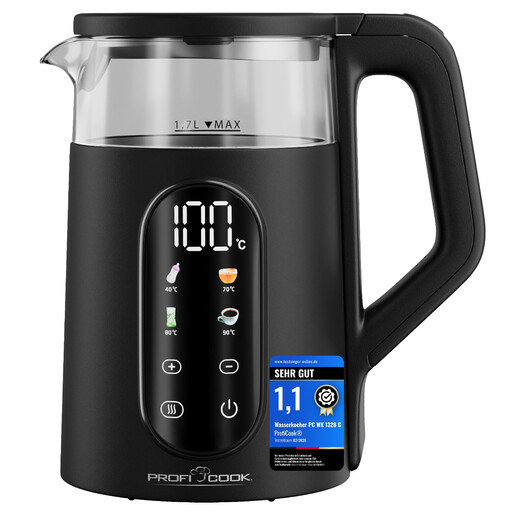
Why this product suits this profile: This glass kettle has a 1.7-litre capacity, a temperature range from 40 to 100 °C and a display showing the temperature in real time.
The temperature range is not restricted to just a few high settings. The display shows the current temperature while the kettle is in use.
Touch controls, keep-warm function, heat-insulated glass container, plus boil-dry and overheat protection.
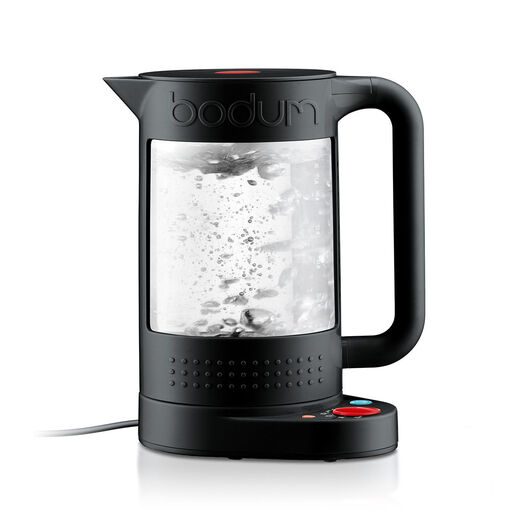
Why this product suits this profile: Five fixed temperatures between 60 and 100 °C support different preparation methods, while the 1.1-litre capacity is well suited to smaller households.
All five selectable settings are clearly named. The temperature control replaces vague phrases such as ‘intelligent heating’.
Double-wall construction, 30-minute keep-warm function and concealed heating element with boil-dry and overheat protection.
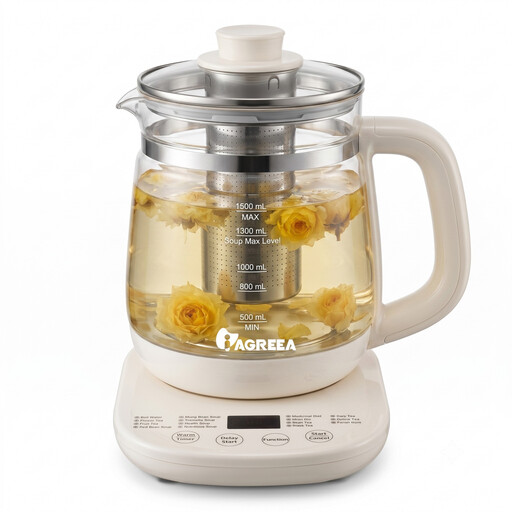
Why this product suits this profile: With 14 programmes, six constant temperature settings from 40 to 90 °C, a removable tea filter and keep-warm and delayed-start functions, it is designed for versatile households.
Alongside the programmes, the product specifies concrete temperature ranges, a display and wide access for cleaning.
Borosilicate glass, 1.5-litre capacity, stainless-steel tea filter and automatic keep-warm function.
We have put together a complete, regularly updated list of products that fully meet these strict selection criteria and the safety regulations applicable in the EU.
This depends on the type of tea and the information on the packaging. Many people choose lower settings for more delicate teas and higher temperatures for black tea. A kettle with temperature control from around 60 °C offers more choice than a model with a boiling-only function.
It can make heating water to a selected temperature easier. However, the preparation instructions for the specific product always take priority. The temperature must be checked before consumption. Baby food should not be stored in the kettle or kept warm for long periods.
Consumption depends on the amount of water, power rating, starting temperature and keep-warm time. A 2,200- or 2,400-watt kettle uses more power while heating, but often runs for a shorter time. To keep energy use down, fill the kettle only with the amount you need and switch off the keep-warm function when it is not required.