
Lieferung heute & morgen

Qualitätsgarantie

Willkommens-Angebote freischalten: KOSTENLOSE Lieferung | Bis zu 80 % RABATT | Kostenlose 30-Tage-JoyPlus-Testphase
App herunterladen
A kettle is an essential kitchen appliance. But anyone who has tasted the difference between green tea brewed at 70°C and a bitter infusion scalded with boiling water knows: the right temperature is crucial. A kettle with temperature control promises exactly this precision. However, not all models are created equal, and some marketing promises hide costly defects.
Before you make a decision, you should be aware of the most common pitfalls that can lead to a bad purchase:
To avoid these problems, you should focus on three objective criteria. These parameters determine the longevity, safety, and functionality of your new kettle.
The kettle's material is crucial for water quality and your health. Look for appliances where the parts that touch water are made from safe materials.
The core function is precise heating. There are two main approaches here:
A kettle with a keep-warm function is also a practical feature. It holds the water at the selected temperature for a set period, which is convenient if you want to pour a second cup of tea or can't get to the water right away.
The kettle's size should match your household. For a single person or for travel, a model with less than 1 litre is sufficient. For families or offices, a 1.7-litre kettle or larger is the more sensible choice.
The power, specified in watts, determines how quickly the water boils. A fast-boil kettle typically has a power rating of 2000 to 2400 watts. However, note that good insulation also contributes to efficiency and reduces energy consumption.
Instead of making a blanket recommendation, we have identified models that are tailored to specific user profiles and meet the criteria mentioned above.
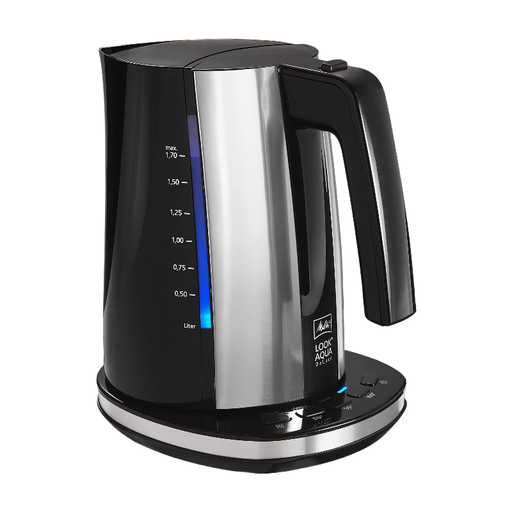
Why This Fits Their Persona: This model is a reliable all-rounder for daily family life. With a 1.7-litre capacity, practical temperature settings, and a 30-minute keep-warm function, it covers all common needs—from a quick coffee in the morning to tea water in the afternoon.
The Melitta kettle offers three sensible, practical temperature levels—80°C, 95°C, and 100°C—thus avoiding the trap of useless presets. The explicit BPA-free specification directly addresses material safety concerns.
The combination of 2400 watts for rapid heating, a large volume, and a practical keep-warm function makes it an efficient and versatile kitchen assistant.
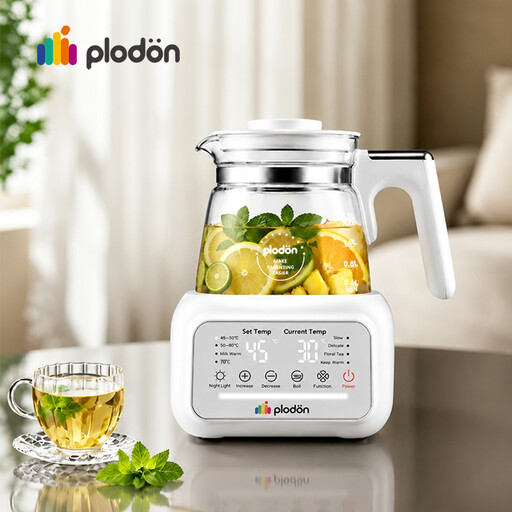
Why This Fits Their Persona: For parents who need a kettle for baby formula, precision is essential. This model offers degree-specific temperature control, a dechlorination function, and a milk-warming feature. The borosilicate glass body is also BPA-free and easy to clean.
It solves the problem of inaccurate temperatures with precise control. The borosilicate glass body and BPA-free construction guarantee the highest material safety, avoiding the pitfall of hidden defects.
Its multifunctionality, with special modes for baby formula and dechlorination, as well as a very long keep-warm time of up to 72 hours, offers significant practical benefits for daily family life.
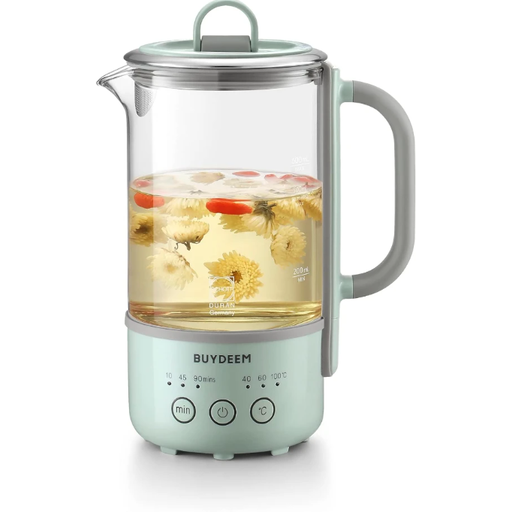
Why This Fits Their Persona: With a 0.6-litre capacity and a lightweight, compact design, this appliance is ideal for small kitchens, the office, or travel. Despite its size, it offers temperature control and a long 8-hour keep-warm function.
This model relies on high-quality materials like Schott-Duran glass and stainless steel to eliminate safety concerns. It is a specialised product that doesn't try to be an all-in-one solution and reliably fulfils its niche function.
The combination of portability, high-quality craftsmanship, and precise temperature control makes it an excellent choice for users who don't want to compromise on perfectly tempered water, even on the go.
A curated selection of appliances that meet the criteria mentioned here can significantly simplify the search for the right model. Discover more products that have been vetted for functionality and safety.
Descaling is crucial for the longevity and accuracy of the temperature sensors. Fill the kettle with a mixture of water and vinegar essence (1:1 ratio) or a commercial descaler. Let the solution sit (do not boil, unless otherwise specified by the manufacturer), then rinse the appliance thoroughly several times with clean water.
The keep-warm function consumes additional energy as the heating element activates intermittently to maintain the temperature. However, the consumption is significantly lower than completely re-boiling cold water. Therefore, use the function selectively when you know you will need the water again shortly (e.g., within 30 minutes).
A precise temperature setting is a major advantage here. The following are general guidelines: