
Lieferung heute & morgen

Qualitätsgarantie

Willkommens-Angebote freischalten: KOSTENLOSE Lieferung | Bis zu 80 % RABATT | Kostenlose 30-Tage-JoyPlus-Testphase
App herunterladen
By Joybuy Product Recommendation Officer, August 30, 2026
A kettle with temperature control is more than just a kitchen appliance—it's a precision tool for lovers of tea, coffee, and baby formula. However, the market is flooded with models whose advertised features often fail to deliver in practice. Many consumers discover after purchase that the temperature control is inaccurate or that low-quality materials compromise the taste of the water.
Before you make a decision, it's important to understand the most common pitfalls that can lead to a poor choice:
This guide will help you navigate these issues and find a model that meets your standards for precision, material quality, and functionality.
To avoid buyer's remorse, you should focus on a few crucial technical parameters. These features determine the performance, safety, and longevity of your kettle.
The material of the kettle directly impacts the purity of the water and the durability of the appliance.
Modern kettles do more than just boil water. The right additional functions can make daily life significantly easier.
The size and power should suit your household.
Here are some models tailored to specific user profiles that meet the criteria mentioned above.
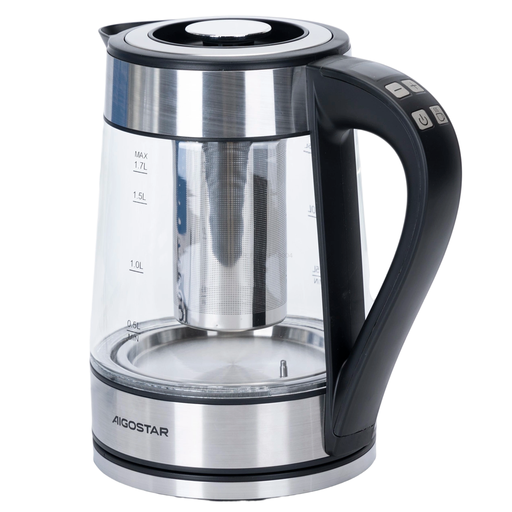
Why This Fits Their Persona: Ideal for users who prepare various types of tea. The precise temperature selection and integrated tea filter allow for brewing directly in the device, which simplifies the process and ensures optimal flavor extraction.
The 13-step temperature control and the digital display of the current temperature counteract the problem of inaccurate settings, giving the user full control.
Combines a glass kettle, a kettle with a tea filter, and a keep-warm function in one device. The glass and stainless steel body ensures a pure taste.
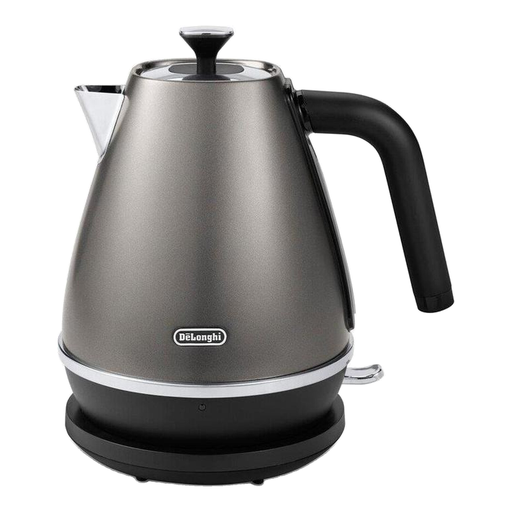
Why This Fits Their Persona: For users seeking a kitchen appliance that is both functional and an aesthetic statement. The Italian design and matte metallic finish fit perfectly into modern kitchens.
The stainless steel body and the explicit BPA-free declaration address concerns about low-quality materials. The 3-level safety system ensures durability and safe operation.
A classic designer kettle with a large 1.7L capacity and a robust stainless steel kettle body. The removable anti-limescale filter simplifies maintenance.
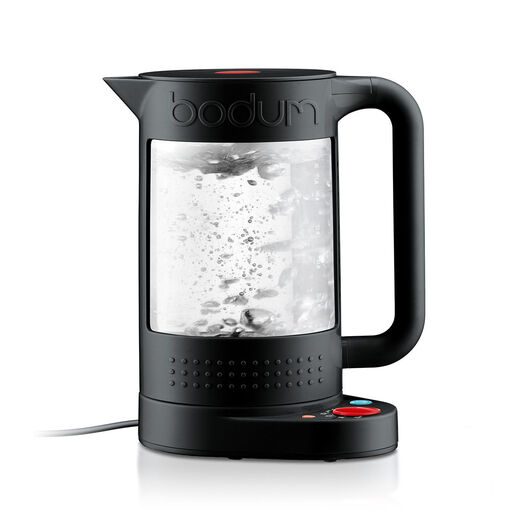
Why This Fits Their Persona: Perfect for users who need reliable and precise temperature control for various beverages without unnecessary features. The double-walled construction insulates well and maintains the temperature.
Offers five clearly defined temperature levels (60°C, 70°C, 80°C, 90°C, 100°C), enabling simple and repeatable precision without the complexity of variable control.
The double-walled construction acts as insulation, and the 30-minute keep-warm function is practical. The concealed heating element prevents direct contact with water and simplifies cleaning.
We have compiled a complete, up-to-date list of products that fully meet these strict selection criteria and German safety regulations.
The frequency of descaling depends on the water hardness in your area. For hard water, monthly descaling is recommended to maintain heating performance and extend the appliance's life. With soft water, descaling the kettle every two to three months is usually sufficient. A limescale-covered heating element can impair temperature measurement and increase energy consumption.
A higher wattage (e.g., 2200 W or more) means the water heats up faster. Although the instantaneous power draw is higher, the operating time is shorter. A lower-wattage device consumes less power per minute but takes longer to bring the water to a boil. The total energy consumption for one boiling cycle is often very similar for both variants. Therefore, higher wattage primarily offers a time advantage.
Modern glass kettles are made from borosilicate glass, which is heat-resistant and more resistant to thermal shock than regular glass. Nevertheless, glass is inherently more susceptible to breaking from impacts or drops than stainless steel. A stainless steel kettle is generally the more robust and durable choice, especially in households with children or with heavy use.