
Lieferung heute & morgen

Qualitätsgarantie

Willkommens-Angebote freischalten: KOSTENLOSE Lieferung | Bis zu 80 % RABATT | Kostenlose 30-Tage-JoyPlus-Testphase
App herunterladen
A kettle with temperature control can do more than simply boil water. Depending on the model, you can select the ideal temperature for green tea, coffee, baby food or warm water. To ensure this feature genuinely adds value in everyday use, however, you should look more closely at the technical specifications than at eye-catching displays or LED marketing.
A model with 13 settings may initially sound more versatile than a kettle with three options. What matters, though, is whether the temperature settings suit your needs and whether the display shows the current water temperature or merely the target temperature. For most households, fixed options such as 40, 60, 70, 80, 90 and 100 °C are sufficient.
A 2200-watt kettle can heat water quickly, but the actual time also depends on the amount of water added, the starting temperature and the heating technology. If you regularly prepare just one cup, a large capacity does not automatically save time. You should measure out as much water as you need.
A kettle with a keep-warm function maintains the selected temperature for a limited period. The duration varies from one appliance to another – some models keep water warm for 30 minutes, while others last up to 60 minutes. An insulated thermal jug can work in a fundamentally different way. It is therefore worth checking the exact keep-warm duration and how the function is operated before you buy.
For a tea kettle, several temperature settings are useful, as different types of tea are often brewed with water at different temperatures. A kettle with a temperature display shows the current temperature while the water is heating or afterwards. This is helpful when you do not want to heat the water all the way to boiling point.
For baby food, the instructions on the packaging take priority. Follow the water temperature specified by the manufacturer and check the drinking temperature before feeding. A kettle does not replace hygiene requirements for preparation or storage.
A 1.7-litre kettle is suitable for several cups and family households. In a one- or two-person household, a smaller appliance may take up less space and be more efficient for smaller quantities. Common capacities range from 1.1 to 1.7 litres.
The power rating of many electric kettles is between 1500 and 2400 watts. It is important to check the specifications of the particular model and avoid loading the socket with several high-powered appliances at the same time.
A glass kettle lets you see the water level and the heating process. Glass can become hot, however, and should be protected from knocks. A double-walled kettle with a stainless-steel inner container can separate the outer surface from the temperature of the water. Even so, the lid, spout and steam remain hot.
You should also look for:
A kettle with a tea infuser or a removable infuser can be useful for tea. However, these models should only be used in accordance with the instructions, as not every electric kettle is designed for other liquids or for keeping drinks warm for extended periods.
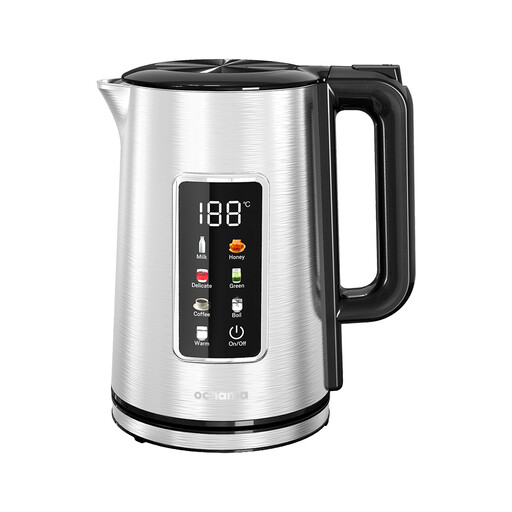
Why this product suits the profile: The 1.7-litre capacity is ideal for households with several people. The 2100-watt power rating and real-time display support simple everyday use.
The double-walled construction and automatic switch-off address hot outer surfaces and unattended continued boiling.
1.7-litre capacity, 2100 watts, LED colour display and boil-dry protection according to the product description.
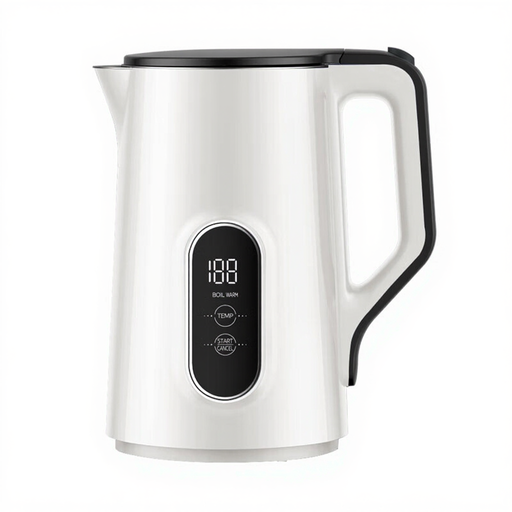
Why this product suits the profile: Seven temperature settings from 45 to 100 °C, a digital display and a keep-warm period of up to one hour provide plenty of flexibility for tea and coffee.
Both the target temperature and the current water temperature are visible. This means selection is not controlled solely through an unclear LED display.
Double-walled design, 2200 watts, BPA-free materials according to the product specifications, plus automatic switch-off.
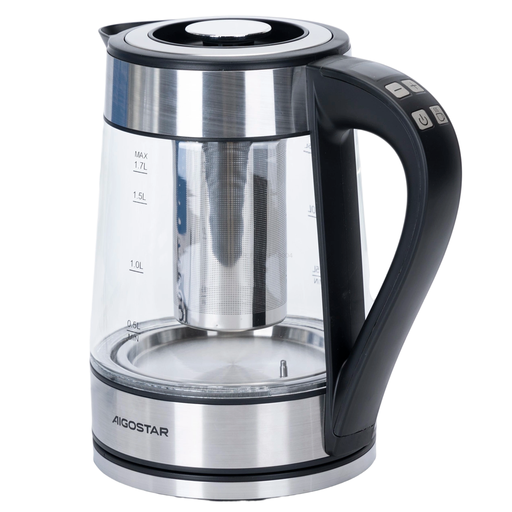
Why this product suits the profile: The glass body, removable tea infuser and 13-stage temperature control appeal to households that prepare a variety of hot drinks.
The current temperature is shown on the display. The removable filter, boil-dry protection and overheat protection make safe use and maintenance easier.
1.7 litres, 1850–2200 watts, 13 temperature settings and one-touch keep-warm function according to the manufacturer’s description.
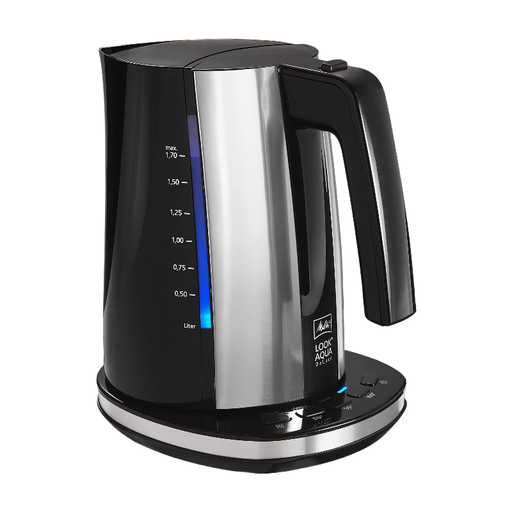
Why this product suits the profile: Three fixed temperatures – 80, 95 and 100 °C – make it easy to use. The 1.7-litre capacity is suitable for preparing several cups at once.
The selection is limited to three clearly defined temperatures. According to the product specifications, the keep-warm function runs for up to 30 minutes, avoiding unrealistic expectations about maintaining the temperature indefinitely.
2400 watts, BPA-free construction, boil-dry protection and removable limescale filter according to the manufacturer’s specifications.
We have put together a complete, regularly updated list of products that fully meet these strict selection criteria and the safety regulations applicable in the EU.
Limescale can affect heating performance and the taste of the water. Depending on the hardness of your water, the kettle should be descaled regularly. Use only suitable products and follow the instructions. A removable filter makes cleaning easier, but it does not replace descaling the inside of the kettle.
Electricity costs depend mainly on the power rating, the amount of water and how frequently the kettle is used. For a single cup, it is generally sensible to add only the amount you need. The keep-warm function uses additional energy over longer periods; if you will not need the water straight away, check whether reheating it would better suit your usage and cost less.
This depends on the type of tea and the instructions on the packaging. Many appliances offer 70 to 80 °C for more delicate teas and 90 to 100 °C for other preparations. The tea manufacturer’s instructions should be the deciding factor.
Its lifespan is affected by the materials, care, water hardness and frequency of use. Regular descaling, filling the kettle correctly between the minimum and maximum levels, and emptying it after use can help maintain reliable everyday performance. If the glass is cracked, the cable is damaged or the appliance makes unusual noises, it should no longer be used.
For people who regularly prepare tea, coffee or hot drinks at different target temperatures, the display can be a practical feature. If you only need boiling water, a model without variable temperature control may be sufficient. The key consideration is therefore whether you will regularly use the temperature settings, capacity and keep-warm function.