What to look for when choosing
First decide whether key feel, hand position, desk space or customisable inputs matter most for your day-to-day documentation work. Then you can focus on finding the right form factor and features.
Low-profile standard or TKL keyboard
A good fit if: You prefer a familiar layout and mainly write longer passages of text.
Trade-off: A TKL model does away with the number pad, so check whether you need it for working with numbers.
Low-profile keyboard with extra features
A good fit if: Repeated inputs are part of your work and the available features are compatible with your working environment.
Trade-off: Check whether you’re allowed to use any required software on your work computer and whether it’s compatible with the version you’ve chosen.
Programmable mechanical keyboard
A good fit if: You want to choose and customise your switches or key assignments.
Trade-off: Options and setup vary; mechanical keys aren’t automatically quiet.
Split ergonomic keyboard
A good fit if: Hand and arm position is your top priority during long typing sessions and you’re open to trying a different layout.
Trade-off: Split keyboards vary in shape and positioning; getting used to one and finding the right fit is a personal matter.
The proportions refer to consumers choosing a keyboard for writing longer API documents while working from home in Germany.
| Priority |
What to check before buying |
Who should pay particular attention |
| Key feel and noise |
Key type, layout and key feel; don’t treat manufacturer claims about noise levels as measured results. |
If you write longer passages and want to limit typing noise at your own workstation, this will be your main priority. Around 30% of consumers focus primarily on key feel and quietness. |
| Hand and arm position |
The shape and position of the keyboard, plus room for your forearms and mouse; consider the keyboard as part of your whole workstation. |
If your hand and arm position matters during long typing sessions, check whether a split keyboard is right for you. Around 30% of consumers put hand and arm position first. |
| Layout and desk space |
Check the layout you’re actually choosing, whether it has a number pad, and how much room you’ll have for your mouse and documents. |
If you need a familiar layout or work at a small desk, the layout and form factor matter. Around 20% of consumers prioritise layout and available space. |
| Customisable inputs |
Check that any required software is compatible and that you’re allowed to use it, as well as the features included with the specific version. |
If repeated inputs or switching between devices shape your workflow, the customisation features should suit your needs. Around 20% of consumers prioritise customisable inputs or switching between devices. |
Joybuy products for working from home
This selection includes keyboards with a German layout for typing, including compact and mechanical models, as well as a keyboard with extra control features.
 No image available
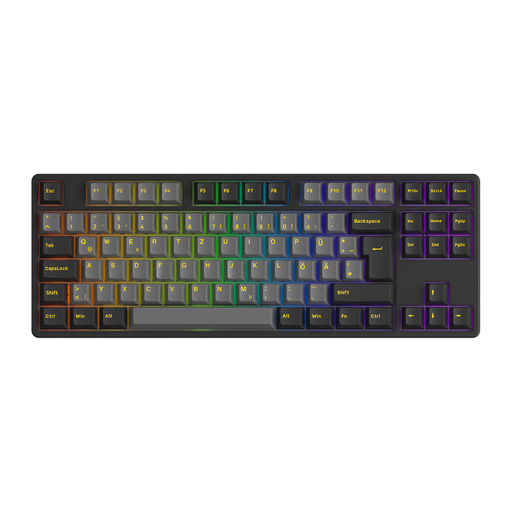
Akko 5087S V1 TKL, ISO-DE QWERTZ
A good fit if you’re looking for a mechanical keyboard with a German layout and hot-swappable switches.
Product details: Akko V3 Pro Cream Yellow switches, hot-swap and RGB; ISO-DE QWERTZ; black and gold.
Joybuy
 No image available
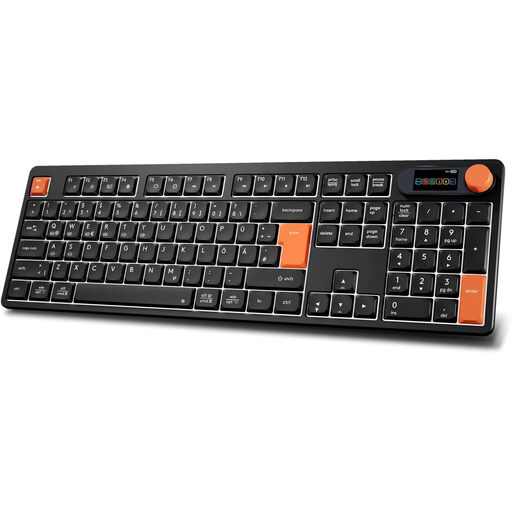
Wireless keyboard with LCD display and rotary dial, QWERTZ
Worth considering if you’re looking for a QWERTZ keyboard with extra controls and several connectivity options.
Product details: LCD display, rotary dial, Bluetooth, 2.4 GHz, USB-C, 2,000 mAh battery and backlighting.
Joybuy
 No image available
CHERRY MX-LP 2.1, 65%, German QWERTZ
A compact option if you’re looking for a mechanical keyboard with a German layout and several connectivity options.
Product details: low-profile MX Speed switches, RGB, Bluetooth, 2.4 GHz and USB-C; white.
Joybuy
 No image available
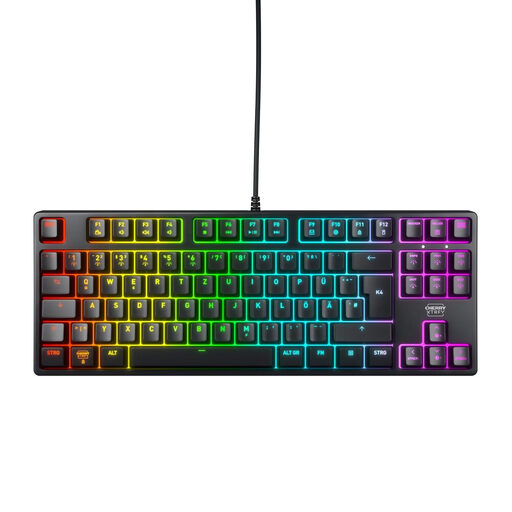
CHERRY XTRFY K4V2 TKL, German QWERTZ
A good fit if you’re looking for a compact mechanical keyboard with a German layout and a wired connection.
Product details: TKL, MX2A Red linear switches, RGB and USB; no number pad.
Joybuy
 No image available
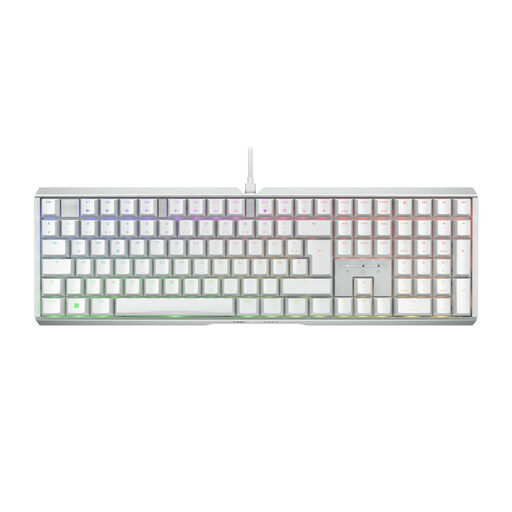
CHERRY XTRFY MX 3.1, German layout
Worth considering if you’re looking for a mechanical keyboard with a German layout and a wired connection.
Product details: MX2A Brown switches, RGB, USB and white finish.
Joybuy
Frequently asked questions
Do I need a QWERTZ keyboard for writing API documentation in German?
No, there’s no requirement to use a particular layout. However, check that the version you choose suits your German text, special characters and typing habits; a product range may include several layouts.
How should I set up my workspace with a new keyboard?
Arrange your keyboard, desk, chair and screen so that your shoulders and upper arms can stay relaxed. The BAuA describes this as a useful setup principle for flexible working locations; changing your keyboard alone won’t replace arranging your workstation properly.
What are my rights if I return an online purchase or find a fault?
When buying online from a business based in the EU, you generally have 14 days from delivery to cancel; exceptions and return costs may apply. For new goods bought from a trader, Your Europe, the European Union’s consumer information service, states that the legal guarantee for faulty goods lasts for at least two years. These consumer rules do not automatically apply to purchases made as a business.
Do the same employment regulations apply to every keyboard used for working from home?
No; this depends, among other things, on how the workstation is set up and agreed. The BAuA distinguishes between teleworking workplaces and mobile work. According to its scope, ASR A6 does not apply to the occasional use of portable display devices away from a fixed location. So the term ‘home office’ alone doesn’t mean that one set of rules applies to every keyboard bought for personal use.


