For code reviews, your keyboard layout should suit the characters and shortcuts you actually use in your applications. In Visual Studio Code, the shortcuts displayed depend on the active keyboard layout. A compact, low-profile or split design may work well depending on your desk space, typing feel and preferred hand position, but each comes with its own trade-offs. The DGUV recommends being able to position your screen, keyboard and mouse separately when working from home.
Which keyboard suits which reviewer?
Shortcut-focused code reviewers
If you often switch between files and comments, the characters and keyboard shortcuts should suit your operating system and application setup. Visual Studio Code displays shortcuts to match the current keyboard layout.
Reviewers who spend long hours at a desk
If you want to arrange your hands and input devices thoughtfully, separately positionable devices or an unusual keyboard shape may be worth considering. The DGUV looks at the screen, keyboard and mouse together from an ergonomic perspective when it comes to working from home.
Reviewers sharing a home office
If you want to keep disruption to others to a minimum and make connecting your keyboard straightforward, check the key feel and connection type of the specific model. Logitech describes the MX Keys S as having quiet keys; this is a manufacturer claim, not the result of a comparative test.
What to look for when buying
Start by checking the layout and the keys you need for your review tools. Then weigh up the design, connection and customisation options against your workspace.
| What matters |
What to check when buying |
Who it matters most to |
| Layout and navigation |
Compare the special characters and navigation keys you need with the specific layout option; test important shortcuts in your application. |
When I switch between files and comments during a review, I want to reach the right characters and commands straight away. Around 36% of consumers put layout and navigation first. |
| Hand position and setup |
Check whether you can position the keyboard, mouse and screen separately, and whether the keys remain within easy reach. |
During long sessions, I want to position my keyboard and mouse to suit my workspace. Around 29% of consumers prioritise hand position and setup. |
| Key feel and connection |
Check whether the keyboard is wired or wireless and whether its connection works with your computer; also consider the key feel of the specific model. |
When I work in a shared space, I pay attention to how the keys feel; with a wired keyboard, I also need to make sure the connection is compatible. Around 21% of consumers put key feel or connection first. |
| Key customisation |
Check whether your application lets you customise shortcuts and whether any additional keyboard software works with your operating system. |
If I find frequently used review commands hard to reach, I want to be able to customise shortcuts in the application or with compatible software. Around 14% of consumers prioritise key customisation or switching between devices. |
Visual Studio Code has built-in settings for changing, removing and resetting keyboard shortcuts. You don’t automatically need a programmable keyboard to get the shortcut layout you want.
Avoid common buying mistakes
-
Confusing a model name with its keyboard layout
Similar model names don’t guarantee the same regional layout. CHERRY offers different versions of the KC 6000 SLIM; the Joybuy listing specifies US/EU rather than the separately listed German version. In Visual Studio Code, the shortcuts displayed depend on the current layout.
Before you buy, compare the full model number and regional layout with the shortcuts and special characters you actually need.
-
Assuming an ergonomic shape will solve discomfort
A split or contoured keyboard is only one part of your workspace setup. The DGUV also takes the screen and mouse into account when considering positioning. An unfamiliar layout may also take time to get used to.
Consider your keyboard, mouse and screen together, and don’t assume that marketing claims will have a medical benefit for you.
-
Assuming a configurable split keyboard comes as a complete package
With the Dygma Raise 2, wireless connectivity, tenting angle and additional German-labelled keycaps are optional extras. F.A.Z. Kaufkompass also points out that it doesn’t have separate arrow or F keys.
Before deciding, check which connection, positioning options and key labels are included in the specific configuration, and whether the key layout suits your review shortcuts.
Notable brands to consider
Logitech
The MX Keys S is a low-profile keyboard with customisable actions, while the ERGO K860 is a fixed-shape, split alternative.
- Logitech describes Smart Actions for the MX Keys S; the relevant software needs to work with the system you use.
- F.A.Z. Kaufkompass notes that the ERGO K860 lacks key backlighting and wired connectivity. These features aren’t necessarily the same across other Logitech models.
Keychron
The K8 Pro combines a compact mechanical design with a range of ISO options, including DE-ISO.
- Keychron lists QMK/VIA for the K8 Pro versions described.
- Check the layout, switches and keycaps for the specific version; the compact design doesn’t have an integrated number pad.
CHERRY
The KC 6000 SLIM is a low-profile, wired standard keyboard with scissor-switch technology.
- CHERRY’s model overview includes the JK-1600DE-2 version, which has a German layout.
- A similar series name doesn’t guarantee the same layout. Check the model number and regional layout of the specific listing.
Perixx
The PERIBOARD-512 B is a wired, contoured keyboard with a split key field and a German layout option.
- Perixx lists USB-A as the connection and notes that the unfamiliar shape may take some getting used to.
- Manufacturer claims about relieving discomfort aren’t independent evidence of an individual benefit.
Dygma
The Raise 2 is aimed at buyers who want to position the two keyboard halves separately and customise the specification.
- F.A.Z. Kaufkompass highlights its flexible design.
- F.A.Z. Kaufkompass notes that it lacks separate arrow and F keys. According to Dygma, German-labelled keycaps and certain features are available as separate options.
Joybuy keyboards for code reviews
The Joybuy listings below include compact and full-size mechanical keyboards, models with customisable keys, and a split ergonomic design. For each version, check that the layout, connection and features suit your workspace.
 No image available
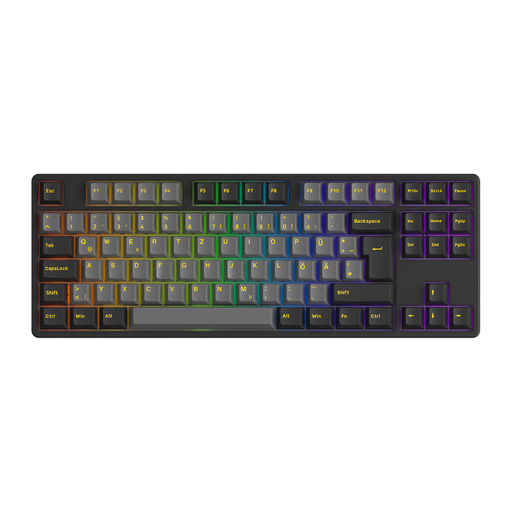
Akko 5087S V1 TKL, Cream Yellow Pro, ISO-DE QWERTZ
A compact choice if you prefer a German layout and want to leave room for your mouse.
TKL design; ISO-DE QWERTZ; wired; Cream Yellow Pro switches; hot-swappable keys and RGB are listed for this product.
View at Joybuy
 No image available
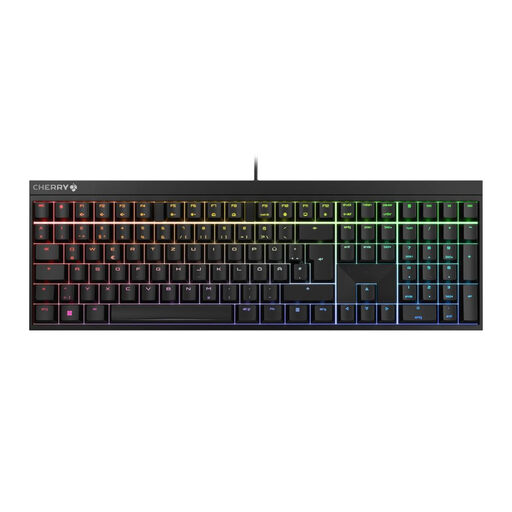
CHERRY MX 2.0S, German QWERTZ layout
The full-size key layout may suit you if you want plenty of keys within easy reach for navigation and typing.
110 keys; German QWERTZ layout; wired USB-A connection; linear CHERRY MX2A Red switches and RGB lighting are listed for this product.
View at Joybuy
 No image available
Ticktype EVO75 Custom, ISO-DE, VIA-compatible
A compact mechanical option if you’re looking for a German layout and customisable key mappings.
75% layout; ISO-DE; VIA compatibility and hot-swappable keys are listed for this product. Connectivity options include Bluetooth, 2.4 GHz wireless and USB-C.
View at Joybuy
 No image available
Logitech ERGO K860, QWERTZ
The split, contoured design may be worth considering if you want to try a different keyboard layout during longer sessions.
Full-size split key field; QWERTZ layout; Bluetooth or USB receiver; padded palm rest and adjustable feet are listed for this product. According to F.A.Z. Kaufkompass, this model has neither wired connectivity nor key backlighting.
View at Joybuy
 No image available
Logitech MX Mechanical, Tactile Quiet, German QWERTZ
A mechanical option if you want to pair a German layout with Tactile Quiet switches and wireless connectivity.
Bluetooth and Logi Bolt are listed as connection options; the product listing includes Smart Backlighting and switching between up to three devices. Customisation via Logi Options+ requires compatible software on your system.
View at Joybuy
Frequently asked questions
Do I need programmable keys for code reviews?
Not necessarily. Visual Studio Code has built-in settings for changing, removing and resetting keyboard shortcuts. Check the options in your review application first; additional keyboard software is an option, not a general requirement.
How can I check whether the keyboard layout suits my shortcuts?
Compare the regional and layout details for the specific model with the characters and navigation keys you use. Visual Studio Code displays keyboard shortcuts to match the current keyboard layout.
How should I position a separate keyboard when working from home?
The DGUV recommends being able to position your screen, keyboard and mouse separately for a flexible setup. Also check that the keyboard fits your desk and that its connection works with your computer.
Does German workplace law require a specific keyboard for working from home?
You can’t generally infer a specific brand or design from the regulations. Their expressly stated requirements apply to a teleworking workstation as defined by the Workplace Ordinance; ASR A6 from the Federal Institute for Occupational Safety and Health sets out requirements within its scope. Whether a home workspace legally counts as a teleworking workstation isn’t determined by simply calling it a home office.
What happens if the product develops a fault after purchase?
When you buy from a trader, European Union consumer information states that you generally have at least two years of statutory legal guarantee rights against the seller from the date you receive the goods. This is separate from any additional manufacturer’s warranty, whose terms depend on the specific offer.


