Coders who run tests frequently
If you want to trigger the same editor and test commands with ease, look for customisable key assignments that suit your workflow.


For a flashcard app with German text, code and repeated tests, choose a keyboard whose specific layout reliably includes the characters you need. Then decide whether you prefer customisable shortcuts, a low-profile feel or a split design. Programmable keys can trigger existing commands, but they won’t run tests by themselves. Also check the exact layout variant and connection.
If you want to trigger the same editor and test commands with ease, look for customisable key assignments that suit your workflow.
If you write questions and answers in German as well as code, the specific key layout, key feel and easy-to-reach function keys are all important factors to consider.
If you expect to spend long periods typing, you could consider a split design. It changes your hand position, but does not guarantee relief from any individual discomfort.
A good fit if: you use the same editor or test commands frequently and want to customise the key assignments yourself.
The trade-off: setup is still required, and programmable keys won’t run tests automatically.
A good fit if: you prefer low-profile scissor switches, a number pad and a wired connection.
The trade-off: it requires USB-A and takes up more desk space than a compact keyboard.
A good fit if: a different hand position matters more to you during long sessions than a straight keyboard layout.
The trade-off: allow time to get used to the unfamiliar layout. No specific health benefit is guaranteed.
| What matters | What to check when buying | Who it matters most to |
|---|---|---|
| Layout for code and German text | Compare the full model number and check whether it is specifically listed as DE-ISO or has the US layout you have chosen. | If you switch between source code and German flashcard text, you’ll want to type familiar characters without having to adapt. That’s why around 27% of consumers put the right layout first. |
| Repeated commands | Check which key-assignment software is required and whether you can use it on your intended computer. | If you often run tests or use editor commands, you’ll want to be able to set up shortcuts that suit you. Around 27% of consumers prioritise customisable commands. |
| Hand position and key feel | Compare split designs with low-profile scissor switches. If possible, try an unfamiliar keyboard in the conditions you’ll use it in. | If you spend a long time typing, consider how the hand position and key feel work for you, without assuming any health benefits. Around 26% of consumers give this priority. |
| Connection and setup | Check for USB-A, wireless options and any software setup you may need on your work computer. | If you want to get started without extra pairing or configuration, an easy connection is important. Around 20% of consumers put this first. |
The CHERRY KC 6000 SLIM is available in a German variant, while a similarly named Joybuy version is listed with a US layout. The model name alone isn’t enough to identify the layout.
Before ordering, compare the full model number and the layout specified in the listing.
Customisable keys and actions can be assigned to existing commands, but they don’t provide a testing environment or run tests on their own.
First decide which existing test command or editor shortcut you want to trigger, then check how to set up the key assignment.
Allow time to set up and maintain your key assignments.
A split keyboard changes the layout of the keys, but doesn’t guarantee any individual health benefit. Your workstation setup also matters.
Try the key layout and setup in the conditions you’ll use them in, rather than assuming the design will have a particular effect for you.
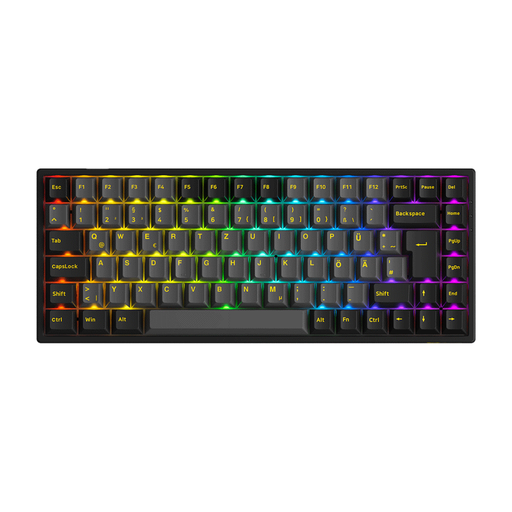
The V1 Max ISO combines a compact mechanical layout with a DE-ISO option and customisable key assignments.
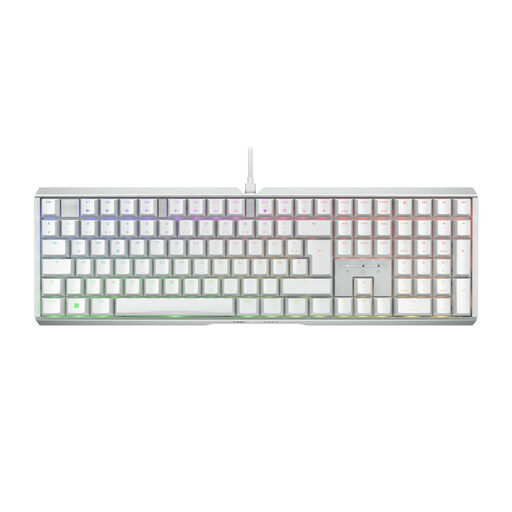
The KC 6000 SLIM is a low-profile, wired full-size option; CHERRY specifically lists a DE variant.
The ERGO K860 has a split design, while the MX Keys S offers low-profile typing with customisable keys.
The PERIBOARD-535II combines a split design with mechanical switches and a wired connection.
The models below include mechanical keyboards with a German layout, as well as a split QWERTZ option. Before buying, check the exact variant, connection and details of the specific listing.
 No image available
The ISO-DE layout is useful for German text and code characters, while the 75% format keeps the keyboard compact.
Tri-mode connection with Bluetooth, 2.4 GHz wireless and USB-C; hot-swappable. The Cream Blue switches are described as clicky.
 No image available
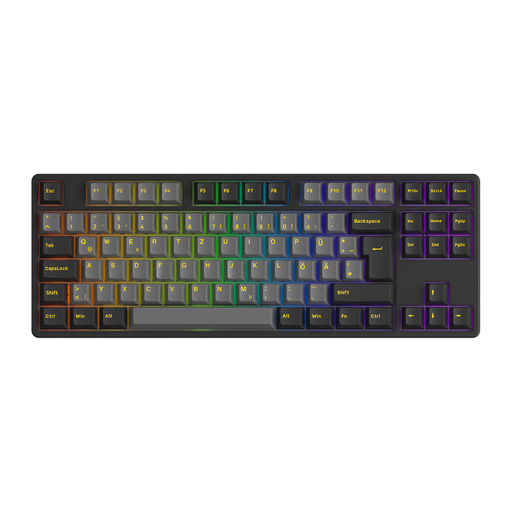
The listed ISO-DE QWERTZ layout is useful when switching between code and German study notes.
Mechanical keyboard with V3 Pro Cream Yellow switches, hot-swappable keys and RGB backlighting; listed as wired in the product name.
 No image available
The listed German QWERTZ layout is useful for German study notes and code characters.
Full-size mechanical keyboard with MX2A Brown switches, RGB backlighting and a wired USB connection.
 No image available
The ISO-DE layout and VIA compatibility listed in the product name are useful when choosing a keyboard for its layout and customisable key assignments.
75% format, Bluetooth, 2.4 GHz wireless and USB-C; hot-swappable. The product name also lists 8000 mAh.
 No image available
The split key layout offers an alternative to a straight keyboard. Try it if hand position matters to you.
Bluetooth and USB receiver; according to F.A.Z. Kaufkompass, it has no wired mode.
No. What matters is whether the specific layout lets you reliably type the code characters and German study notes you need. Check the variant, not just the model name: for example, the CHERRY KC 6000 SLIM is listed in both DE and US/EU variants.
Set up your keyboard and workspace so you can keep your arms in a relaxed position. The Federal Institute for Occupational Safety and Health recommends a distance of 10 to 15 cm between the keyboard and the edge of the desk for flexible working locations. This is a setup recommendation, not proof that a particular model prevents discomfort.
In Germany, online consumer contracts generally come with a 14-day right to cancel, and you must notify the seller that you’re cancelling. If goods are faulty, the right to cancel and statutory rights relating to defects are separate: Section 439 of the German Civil Code (BGB) covers subsequent performance, while Section 438 generally sets a two-year limitation period from delivery for these types of goods. The consumer advice centre explains the right to cancel; the statutory rules are set out in the German Civil Code.
The Federal Network Agency outlines requirements for sellers of electrical and electronic equipment, including correct CE marking, product identification and instructions for use in German. Check the details of the specific listing; a model description alone doesn’t independently confirm that all requirements have been met.