Developers who use lots of shortcuts
If you regularly work with code and test cases, customisable keys can make repetitive inputs easier. Check that the configuration works with the operating system and software on your work computer.


For a recipe organiser involving frequent coding and test inputs, the main things to look for are a suitable German ISO layout and keys you can customise when needed. A compact or low-profile keyboard may be more practical on a shared desk; if you spend long periods typing, a split layout is another option, though you’ll need to factor in the time it takes to get used to and the space it requires. Macros can trigger inputs, but they don’t run automated tests or replace test scripts.
If you regularly work with code and test cases, customisable keys can make repetitive inputs easier. Check that the configuration works with the operating system and software on your work computer.
If you switch between recipe text, code and other documents, a compact format or a quieter keystroke, as described by the manufacturer, may be worth considering. However, a TKL keyboard doesn’t have a number pad.
A split keyboard has a different layout from a straight keyboard. It’s worth considering the adjustment period and your overall workstation setup too; a particular health benefit can’t be assumed.
| Buying criterion | What to check before buying | Who is it important to? |
|---|---|---|
| Customisable shortcuts | Check that the specific model is compatible with your operating system and permitted software; continue to manage test runs using suitable testing tools. | If I want to trigger recurring commands more quickly in my editor or while working on tests, customisation is essential. Around 33% of consumers rank shortcuts as their top priority. |
| Familiar key layout | Check the German ISO or QWERTZ labelling, as well as the arrow, function and number pad keys, for the specific version. | If you often switch between recipe text and code, you’ll want to reach the characters and navigation keys you need without having to adjust to a new layout. Around 27% of consumers put a familiar key layout first. |
| Desk space and typing noise | Compare the footprint and keyboard size; don’t treat the manufacturer’s claims about noise levels as comparative measurements. | If I share my desk or don’t want to disturb others while typing, I pay particular attention to the size and keystroke. Around 20% of consumers make space and quiet their main priorities. |
| Hand position during long typing sessions | If possible, try a split layout and consider the dimensions, connection and space for your mouse and keyboard together. | During long typing sessions, a different hand position may matter more to me than a compact format; the rest of my workstation setup matters too. Around 20% of consumers say hand position is their top priority. |
Layout and specification can vary across a model range. The name alone doesn’t always tell you whether you’re getting the German ISO version you want.
Before buying, check the exact version name and the key layout shown in the product images.
A different layout may take extra time to get used to.
A customisable key can trigger an input or action, but it can’t create or run a reliable test suite.
Plan your test automation separately and use keyboard shortcuts only as a way to control your setup.
Setting up the key mapping may take extra time.
A TKL keyboard doesn’t have an integrated number pad. This can be inconvenient when entering recipe quantities if you regularly use the number pad for figures.
Before buying, think about how often you use the number pad.
You may need a different keyboard or a separate number pad.
A split keyboard may take some getting used to. Your workstation ergonomics also depend on your desk, chair, screen and mouse.
Check the design and footprint, and consider the keyboard as part of your overall workstation.
You may need time to adjust, and some models also take up more desk space.
The Q1 Max is an option for buyers looking for a mechanical keyboard with a German ISO layout and customisable keys.
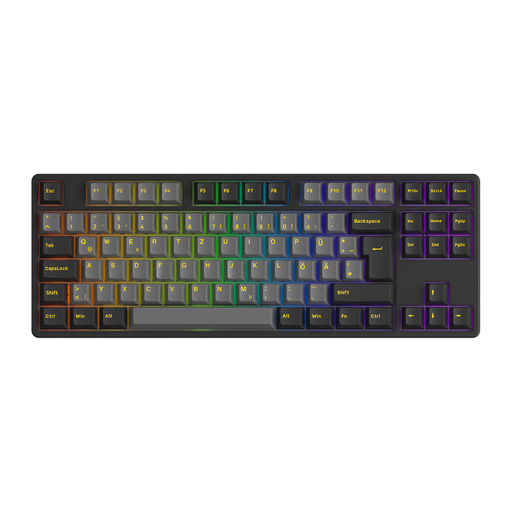
The STREAM KEYBOARD TKL is a wired office option without a number pad, making it suitable for a small or shared desk.
The MX Keys S offers customisable Smart Actions, while the ERGO K860 is a separate option with a split keyboard.
The PERIBOARD-512 B is a wired alternative with a split keyboard and a German QWERTZ option.
This selection includes keyboards for German coding and recipe text, customisable shortcuts and split layouts.
 No image available
The listed ISO-DE QWERTZ layout and macro function may be useful for German coding and recipe text involving repetitive inputs; macros don’t replace test scripts.
Wired TKL format; hot-swappable; Akko Macro V1.0; V3 Pro Cream Yellow Switches.
 No image available
The listed ISO-DE layout and VIA compatibility are useful for German text and customisable inputs; macros don’t replace test scripts.
75% layout; Tri-Mode connection; hot-swappable; VIA-compatible.
 No image available
The split keyboard is an alternative if you’d like to try a different layout for long typing sessions; make sure the design suits your workspace.
QWERTZ layout; split keyboard; palm rest; adjustable tilt; 456 × 233 mm.
 No image available
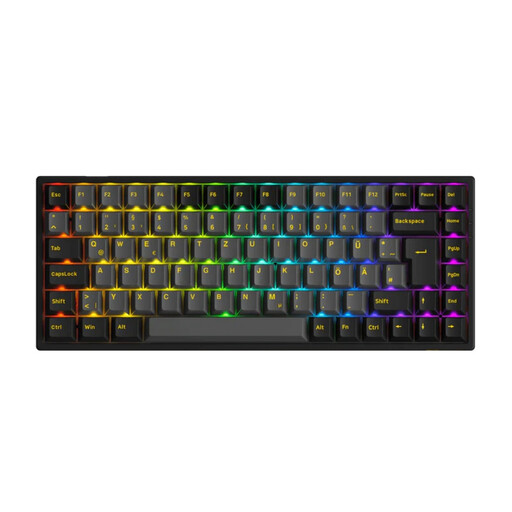
The ISO-DE layout and listed macro function may be useful for repetitive coding and recipe text inputs; macros don’t run automated tests.
75% layout; Tri-Mode connection; hot-swappable; Akko Macro V1.0; V3 Pro Cream Yellow Switches.
 No image available
The listed shortcut customisation may be useful for repetitive workflows; according to the product description, it requires Logi Options+ and doesn’t replace test scripts.
Tactile Quiet Mechanical Switches; Bluetooth and Logi Bolt; Smart Backlighting.
No. Once configured, customisable keys can trigger inputs or actions; whether tests run correctly and consistently still depends on the test scripts and development environment.
Check the connection and footprint before buying. Perixx lists USB-A for the PERIBOARD-512 B and notes that it may take some getting used to. When setting it up, leave enough room to use your mouse comfortably, and follow the care instructions for the specific model.
When you buy from a trader, you’re generally entitled to a statutory guarantee of at least two years from the date you receive the goods. Distance contracts generally come with a 14-day right to cancel from the date of delivery; exceptions and any return costs should be checked on a case-by-case basis. Your Europe, the European Union’s information portal, distinguishes these statutory rights from a voluntary manufacturer’s guarantee.
No. According to the European Union, CE marking is required for products covered by relevant harmonised EU rules; it means the manufacturer declares that the product meets the applicable requirements. It isn’t a comparative assessment of typing feel or ergonomics. The rules that apply depend on the specific electrical or wireless model.