If you often add waypoints or move routes around the map while planning, a compact keyboard without a number pad is a good place to start. It can free up space for the mouse, which you’ll still need for this task. If you type longer notes or prefer a particular hand position, consider a full-size or split keyboard. Wireless connectivity and programmable keys are most useful when they’re supported by your devices and the software you use.
Which keyboards are right for you?
Map planners with limited mouse space
If you often add waypoints and adjust your route with the mouse, a compact keyboard can free up space beside the main keys. Komoot explains how to add and move waypoints on the map; according to BG BAU, a compact keyboard can make it easier to position the mouse comfortably when you use it on the right.
Frequent typists looking for comfort
If you write detailed route notes, consider how the keyboard and your hands sit on your desk. A split layout may be worth considering if you’re happy to adjust to a different key arrangement; Perixx notes that the PERIBOARD-512 B may take some getting used to.
Planners using multiple devices or shortcuts
If you switch between computers or want to use commands you rely on regularly, check the connection type and whether your planning software supports the key customisation you want. Logitech and CHERRY describe connectivity and customisation features for selected models.
What should you look for when buying?
First, decide whether you’d rather have more room to move the mouse or a separate number pad. Then check the hand position, connection and software features to make sure they suit your workspace and the tasks you actually do.
When planning on a map, the mouse remains important for adding and moving waypoints, as Komoot’s guide explains. BG BAU notes that a compact keyboard can help bring the mouse closer to the main keys when it is used mainly on the right.
| What matters |
What to check when buying |
Who it matters most to |
| Mouse space |
Compare the keyboard width, the space available for your mouse and whether you need a separate number pad. |
If I often reach for the mouse to add and move waypoints, I need room to move it beside the keyboard. Around 31% of consumers put having clear mouse space first. |
| Hand position |
Check the keys, wrist rest, dimensions and layout on your own desk. |
For longer typing sessions, I want to choose a key arrangement that works well for me at my desk. Around 25% of consumers prioritise hand position when typing for longer periods. |
| Connection |
Check the specific model’s USB connection, Bluetooth support, required receiver and power supply. |
If I want to use the keyboard with my existing devices, the connection needs to be compatible. For around 19% of consumers, device connectivity is the main consideration. |
| Shortcuts and layout |
Check which commands your planning software supports, as well as the key arrangement and DE-ISO variant. |
If I can actually trigger frequently used commands from the keyboard, a customisable key mapping may be useful. Around 13% of consumers put these shortcuts first. |
| Typing noise |
Check the specific model and switch variant, and try it out yourself if possible. |
If I share my workspace or care about typing noise, I want to be able to assess the exact variant. Around 12% of consumers prioritise quieter typing. |
Avoid common buying mistakes
-
Confusing TKL, full-size and wireless models in the same product range
A TKL keyboard does away with the separate number pad; wired full-size and wireless versions may have different features.
Check the full model name, layout and connection type for the specific product you’re considering.
-
Assuming the German layout from the model name alone
The Keychron K3 Pro collection includes different ISO layouts, so the layout you select may not have a German key arrangement.
Check the exact variant and, if available, an image showing the key legends.
-
Taking manufacturers’ ergonomic claims as a personal health guarantee
Split keyboards vary in shape and the space they take up; a different key arrangement may also take time to get used to. Manufacturers’ claims don’t guarantee that a keyboard will prevent or treat discomfort.
Check whether the model suits your desk and preferred hand position, and don’t consider a keyboard a medical treatment.
A guide to the leading brands
CHERRY
The models featured here include wired TKL and full-size keyboards, as well as a slim wireless option.
- CHERRY says the STREAM KEYBOARD TKL retains the main keys but does away with the number pad. According to the manufacturer, the KW 9100 SLIM offers Bluetooth or 2.4 GHz wireless connectivity.
- CHERRY describes some keyboards as quiet, but this isn’t an independent comparison of their noise levels. Also compare the specific design and connection type.
Logitech
The relevant product ranges here include a wireless, standard-size keyboard and a split keyboard.
- Logitech says the MX Keys S has customisable keys through Logi Options+; the ERGO K860 has a split keyboard layout.
- Check the exact layout and connection variant. Ergonomic claims made by the manufacturer aren’t a personal health guarantee.
Perixx
The PERIBOARD-512 B is an example of a wired keyboard with a split, full-size layout.
- Perixx lists a German QWERTZ option, USB-A, a number pad and a wrist rest for this model.
- The manufacturer notes that it may take some getting used to. Its stated width of 485 mm is worth bearing in mind when considering mouse space.
Keychron
The K3 Pro is an example of a compact mechanical keyboard with customisable keys.
- Keychron lists a 75% layout and VIA customisation for the K3 Pro; the collection includes various ISO layouts, including DE-ISO.
- The layout, keycaps and switches depend on the variant you choose. Check the exact key arrangement and what setup is required.
Joybuy keyboards for route planning
The following Joybuy products feature different layouts and connection types, including compact mechanical models and a Bluetooth keyboard.
 No image available
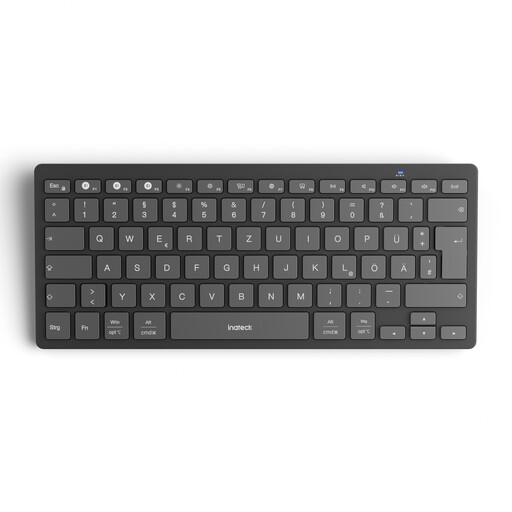
Inateck Bluetooth Keyboard KB01003G, QWERTZ
An option if you’re looking for a QWERTZ layout and a Bluetooth keyboard.
QWERTZ layout; Bluetooth; slim design according to the product name.
View at Joybuy
 No image available
Ticktype EVO75 Tri-Mode, ISO-DE, Creamy Rye Switches
A good fit if you want a compact layout with customisable keys and plan to use the configuration software specified for it.
ISO-DE layout; tri-mode; VIA-compatible; 8000 mAh; Creamy Rye switches.
View at Joybuy
 No image available
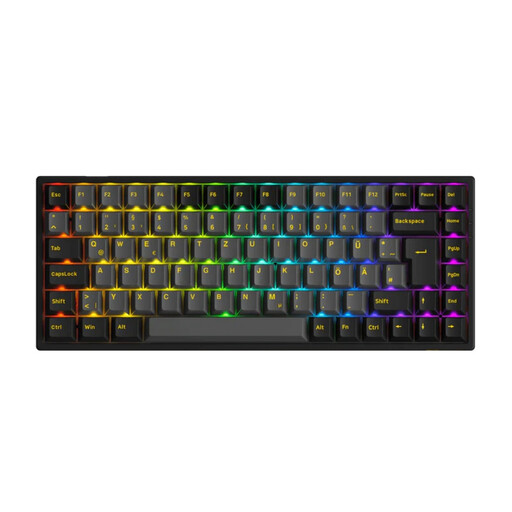
Akko 3084B Plus, 75%, ISO-DE, Black & Gold
A compact option if you’re looking for a German ISO layout and several connection options.
75% layout; ISO-DE; Bluetooth, 2.4 GHz wireless and USB-C; V3 Pro Cream Yellow switches; hot-swappable.
View at Joybuy
 No image available
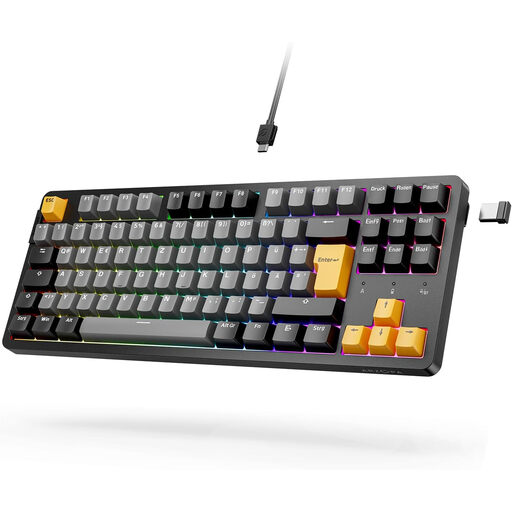
ARZOPA 80%, German layout, 87 keys
A compact option if you’re looking for a keyboard with a German layout and multiple connection types.
80% layout; 87 keys; German layout; Bluetooth and wired and wireless connections according to the product details; RGB; hot-swappable.
View at Joybuy
 No image available
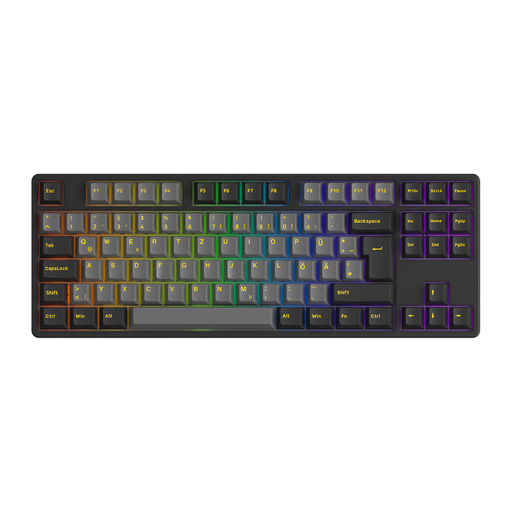
Akko 5087S V1 TKL, wired, ISO-DE
A wired TKL option if you want to free up space for your mouse beside the main keys and don’t need a separate number pad.
ISO-DE-QWERTZ layout; USB-C; hot-swappable; RGB. The TKL layout has no separate number pad.
View at Joybuy
Frequently asked questions
Can a programmable keyboard replace the mouse when planning routes?
Not in every case. Komoot explains that you add and move waypoints on the map by clicking and dragging. First, check which shortcuts are supported by the application you actually use.
What should I check before setting up a wireless keyboard?
Check that your computer supports the connection used by the specific model. Bluetooth requires compatible support; a wireless receiver needs a suitable free USB port. If the keyboard has a rechargeable battery, you’ll also need to allow time to charge it.
What are my rights if an online purchase is faulty in Germany?
If a product is faulty, your statutory rights against the seller under § 437 BGB may apply, particularly the right to have it put right. For an ordinary new keyboard, claims for defects generally expire two years after delivery under § 438 BGB. A voluntary manufacturer’s guarantee is separate; the relevant statutory conditions apply.
Does my keyboard need to comply with ASR A6 if I use it privately for cycling routes?
Not simply because you use it privately, outside a workplace or home-based workstation: ASR A6 excludes such use of screen equipment from its scope. It may be relevant to an employer where a home-based workstation has been set up. Its ergonomic advice on workstation layout can also be helpful for private use.


