Frequent treatment writers
If you write longer passages, you can choose a typing feel, noise level and keyboard size to suit your workspace. CHERRY describes its STREAM models as quiet to type on.


If you mainly write longer treatment passages, choose a keyboard to suit your typing feel, noise level and workspace. If you often switch between sections, easy-to-reach keys and shortcuts for your software matter too. A compact keyboard saves space, a split layout changes your hand position, and programmable keys can adapt to your workflow – each option may involve compromises in terms of getting used to it or compatibility.
If you write longer passages, you can choose a typing feel, noise level and keyboard size to suit your workspace. CHERRY describes its STREAM models as quiet to type on.
If you often switch between text and section structure, check which keys and shortcuts are supported by the writing software you actually use. Final Draft documents, among other things, using Tab and Return to work with outline elements.
If you want to try a different hand and arm position during long sessions, consider the keyboard’s shape alongside the space available at your workstation. Manufacturers’ ergonomic claims are no guarantee of individual relief.
First, decide whether typing feel and noise, using your outlining software, hand position or switching between devices matters most to you. Then check the layout, key arrangement and connection options against your specific workspace.
| What matters | What to check when buying | Who it matters most to |
|---|---|---|
| Quiet typing over long periods | Check the key mechanism and specific switch type; choose full-size or TKL according to the keys you need. | When I write long treatment passages, I want to choose a typing feel that’s comfortable and causes as little disturbance as possible at my workspace. Around 36% of consumers would prioritise quiet typing for longer texts as their main buying consideration. |
| Revising sections | Check the Tab, Return, arrow and function keys you need against the commands in your software and operating system. | When switching between treatment text and a section overview, I want to reach the keys I need without extra steps. Around 29% of consumers would put ease of use when outlining first. |
| Hand and arm position | Consider the dimensions, tilt and space for your mouse and documents; allow time to get used to a split keyboard. | During long sessions, I want to choose a keyboard shape that lets me try a different hand position without losing sight of the space available on my desk. Around 21% of consumers would prioritise hand position. |
| Switching between devices | Check the connection type, supported operating systems, German layout and any additional features you want separately. | When I work on my treatment across several devices, I want to choose a connection and key mapping to suit each one. Around 14% of consumers would make switching between devices their main buying consideration. |
A TKL keyboard doesn’t have a number pad. The arrangement of the other keys can also make a difference to your outlining workflow.
Check the shortcuts and key positions you need against the specific keyboard variant and your writing software.
Perixx lists Windows as the supported operating system for the downloadable configuration software for the PERIBOARD-335. Setup may therefore require some extra work.
Check basic keyboard functionality and configuration software separately for your operating system.
A product variant with a US layout isn’t automatically the same as a keyboard with a German layout.
Before buying, check the full model and layout description for the variant on offer.
The STREAM models are low-profile, wired scissor-switch keyboards. Choose the full-size version for a permanent workspace, or the TKL version to save space.
The K8 Pro is a mechanical TKL keyboard. Keychron lists QMK/VIA support and a German ISO version.
The MX Keys S is a low-profile wireless keyboard for switching between multiple devices; the ERGO K860 is a split alternative with a different key arrangement.
The PERIBOARD-335 is a compact split mechanical keyboard; the PERIBOARD-512 is a wired, full-size split alternative.
The Joybuy models below include compact and full-size keyboards for workspaces where you want a wired or wireless setup. For outlining, pay particular attention to the layout and the keys your software needs.
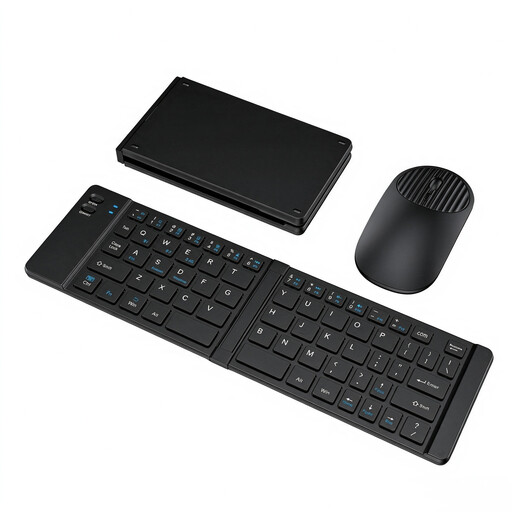 No image available
If you write longer texts across different devices, the foldable design, scissor keys and multi-device connection may be worth considering.
According to the product name: quiet scissor keys, three connection modes, connection to up to three devices and USB-C charging; compatible with Windows, Android and iOS.
 No image available
The ISO-DE layout is relevant for German-language treatment writing; VIA compatibility may be useful if you want to customise the key mapping.
ISO-DE layout, Tri-Mode, VIA-compatible, hot-swappable and Creamy Rye switches.
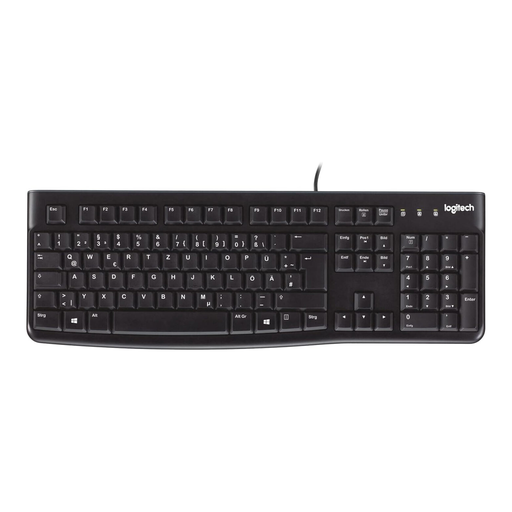 No image available
The wired full-size design with a German layout may suit a permanent workspace.
German QWERTZ layout, USB plug and play, full size.
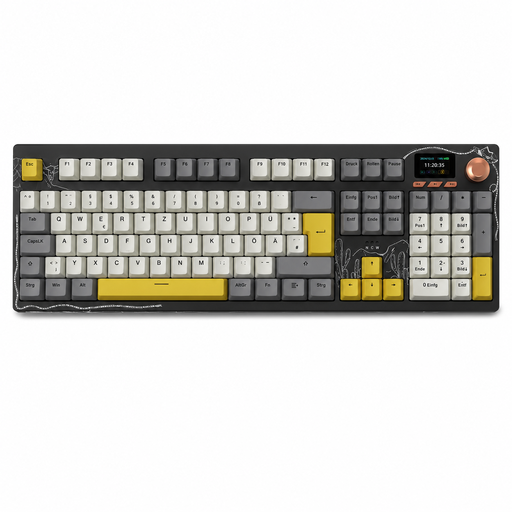 No image available
The German QWERTZ layout may be useful for treatment writing and working with navigation and function keys.
104 keys; Tri-Mode with Bluetooth, 2.4 GHz wireless or USB-C; hot-swappable.
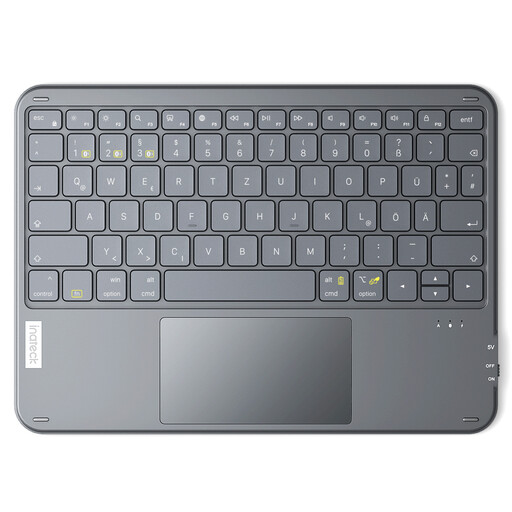 No image available
This compact wireless model may suit German-language writing on compatible tablets or computers.
Bluetooth, German QWERTZ layout and built-in touchpad; according to the product name, compatible with iPad, Android tablets, Windows, laptops and PCs.
No, macro keys aren’t essential. Final Draft documents, among other things, using Tab and Return with outline elements; check whether these and other standard keys are enough for your software. A programmable key is only useful if the command you want is actually available.
Allow for the space you’ll need and time to get used to it. Consider the position of your keyboard and mouse together. Germany’s ASR A6 workplace regulation sets out requirements for screen-based workstations within its scope, but it doesn’t prescribe a particular keyboard shape across the board.
If a product is faulty, statutory rights under German consumer law generally apply against the seller; a manufacturer’s guarantee is separate. Many online consumer purchases also come with a right to cancel, usually within 14 days. The Verbraucherzentrale explains these rights and highlights the applicable exceptions.
For relevant electronic or wireless products, the Bundesnetzagentur checks matters including CE marking, traceability, manufacturer details and required information. A CE statement on a shop listing does not, by itself, prove that a specific product has been independently tested.