Chart-makers with limited desk space
If you often position objects with your mouse, you’ll need enough room for both input devices. Consider whether you can manage without a dedicated number pad in your day-to-day work.


If you mainly use your mouse to create scientific charts and only enter numbers occasionally, a compact keyboard without a number pad is a good place to start. The German Federal Institute for Occupational Safety and Health recommends leaving enough space to arrange your mouse and keyboard flexibly. If you regularly enter measurements or spend long periods typing, a number pad or split design may be more important. Customisable keys are most useful when your software supports the commands you repeat and the required configuration software works on your computer.
If you often position objects with your mouse, you’ll need enough room for both input devices. Consider whether you can manage without a dedicated number pad in your day-to-day work.
If you repeat the same tasks often, check whether your software lets you use custom keyboard shortcuts or set up workflows. For example, Adobe describes custom keyboard shortcuts for aligning and distributing objects in Illustrator.
For long labels or frequent data entry, key layout, the time it takes to get used to it and whether you need a number pad are all important considerations.
First, think about whether mouse movement, repeated commands, longer typing sessions or number entry matters most to your work. Then check the software and layout of the specific keyboard you’re considering.
| What matters | What to check before buying | Who it matters most to |
|---|---|---|
| Room for your mouse and editing objects | Desk width, mouse position and whether you need a dedicated number pad. | When I switch frequently between my keyboard and mouse while editing, I want enough room for the mouse beside the keyboard. Around 36% of consumers put mouse space first. |
| Commands you use repeatedly | The commands and shortcuts available in your charting software, and whether its configuration software is compatible. | When I repeat tasks often, I want to use available shortcuts or set up workflows. Around 29% of consumers prioritise quick access to frequently used commands. |
| Typing comfort during longer sessions | Key layout, hand position, space in front of the keyboard and how long it may take to get used to it. | For longer stretches of writing, a typing layout that suits me matters more than keeping the keyboard close to the mouse. Around 21% of consumers put layout first. |
| Entering lots of numerical data | How often you enter measurements and whether a dedicated number pad would make your workflow easier. | When I regularly enter measurements, I want a dedicated number pad. Around 14% of consumers put number entry first. |
A TKL keyboard doesn’t have a dedicated number pad, which may make it less suitable for workflows involving frequent number entry.
Try entering typical chart data to see whether the number row is enough for you before choosing a TKL keyboard.
Keyboard software and the commands available in your charting application are two separate things. A configured macro can’t add a feature that the application doesn’t provide.
Make a note of the commands you repeat often, then check whether you can customise their shortcuts and whether the configuration software runs on your computer.
Allow time to set up and check the software.
Design, the time it takes to get used to the layout and the desk space required all vary. A product feature doesn’t prove how a keyboard will work for an individual.
Compare your hand position and how easily you can reach your mouse while typing. If you’re trying a new split layout, allow for a possible adjustment period.
The notes below apply to the product lines mentioned and their specific features, not to each brand’s entire range.
The STREAM KEYBOARD TKL is a wired, low-profile keyboard without a number pad, designed for desks with limited space beside the mouse.
The MX Keys S is designed for customisable workflows and low-profile typing, while the ERGO K860 combines a split full-size layout with a number pad.
The K8 Version 2 combines a TKL design with customisable key assignments and several connectivity options.
The PERIBOARD-512 B combines a split keyboard with a number pad and a USB-A cable.
The keyboards featured here include compact TKL and full-size models with a number pad, as well as options with features for frequently used commands.
 No image available
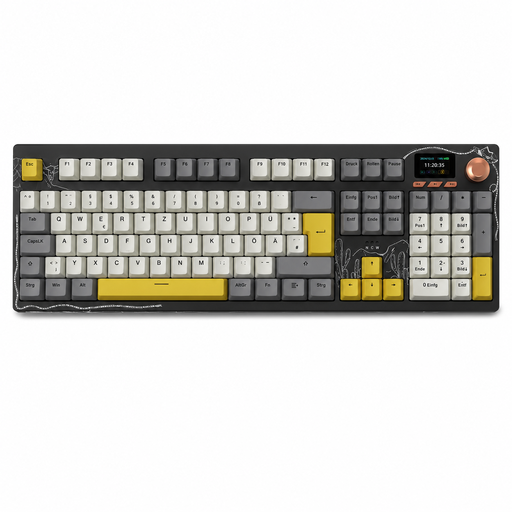
The split, full-size design with number pad suits workflows involving longer typing sessions and regular number entry.
QWERTZ layout; Bluetooth and a USB receiver are listed as connectivity options. The full-size design takes up more desk space than a compact keyboard.
 No image available
The full-size design with a dedicated number pad is an option if you regularly enter measurements.
Bluetooth, 2.4 GHz wireless and USB-C are listed as connectivity options. A split design isn’t specified for this model.
 No image available
The product description lists customisable shortcuts through Logi Options+, which may be useful for frequently repeated commands supported by the software.
Quiet tactile mechanical switches, Bluetooth and Logi Bolt are listed. You’ll need the configuration software to set up shortcuts.
 No image available
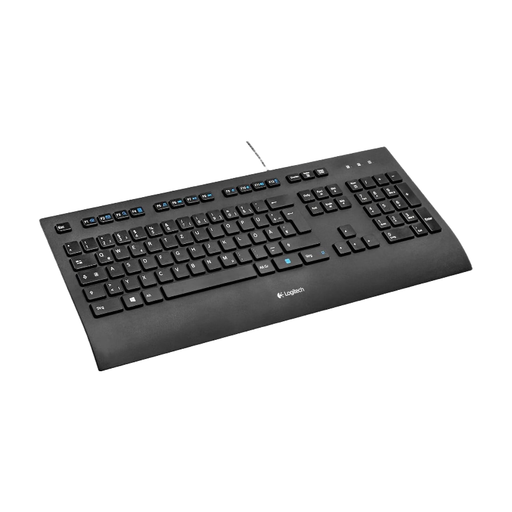
This wired keyboard is an option if you’re looking for a German layout and a palm rest for longer typing sessions.
A USB connection, single-colour backlighting and a spill-resistant design are listed.
 No image available
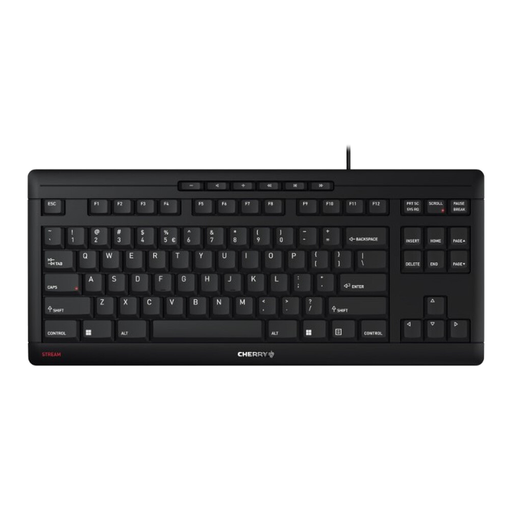
The TKL design without a number pad can leave more room for your mouse beside the keyboard; the listed layout is US English with a euro sign.
A USB connection and CHERRY SX scissor mechanism are listed. If you enter numbers often, check whether the number row is enough for you.
Not necessarily. Start by checking the shortcuts in the application you actually use: Adobe describes custom keyboard shortcuts for aligning and distributing objects in Illustrator. Extra key customisation is worth considering if you repeat these tasks often and can use the configuration software on your computer.
A number pad is particularly useful if you regularly enter measurements. If you only enter numbers occasionally and often work with a mouse, consider whether a more compact keyboard without a dedicated number pad would better suit your space.
Leave enough room to arrange your keyboard and mouse flexibly, and to rest your hands and arms. The German Federal Institute for Occupational Safety and Health recommends arranging desk space and input devices to suit the person and the task. This doesn’t mean that any particular keyboard model will prevent discomfort.
No. The term “working from home” alone doesn’t answer that question. The German Federal Institute for Occupational Safety and Health explains that German ASR A6 applies to display screen workstations in workplaces and teleworking spaces; private use outside teleworking spaces is excluded. Whether a particular setup falls within its scope depends on how it’s arranged and used.
No. According to the European Union’s guidance, the manufacturer uses the CE marking to declare that the product meets the relevant EU product rules. It isn’t a comparative ergonomic assessment; requirements should be checked for the specific wired or wireless version.