For recording letters and register entries
You enter lots of names, dates and short notes, and want to use the German key layout and number and navigation keys with confidence.


For recording family letters, a keyboard with the right German layout and easily accessible navigation and number keys is a sensible starting point. Check the exact variant and connection type before you buy. If you type for long periods, a split keyboard may be worth considering. Configurable keys can also help if you frequently switch between records and scans, provided your archive software supports the right functions. No keyboard automatically links source files – that’s handled by the software.
You enter lots of names, dates and short notes, and want to use the German key layout and number and navigation keys with confidence.
You often switch between a record, a scan and a source citation. Easily accessible shortcuts matter to you, although the shortcuts available will depend on your software.
You type for extended sessions and want to weigh up a split keyboard against the space it takes up and the time needed to get used to it.
First, decide whether the layout and key arrangement suit the letters you’re working with. Then check that the software workflow and connection type are right for your setup.
A good fit if: You mainly enter letters and metadata on one computer using a familiar full-size layout.
Things to consider: This is not a split design. The layout and connection type must suit the specific variant and your computer.
A good fit if: You want to trigger recurring steps supported by your software using shortcuts, or switch between devices.
Things to consider: Setup and usefulness depend on your software, permissions and workflow.
A good fit if: You regularly transcribe for long periods and want to try a split key layout.
Things to consider: The key layout and space needed may take some getting used to; there’s no evidence that it offers a particular health benefit.
| Buying criterion | What to check before buying | Who should consider it? |
|---|---|---|
| Layout and entering metadata | Check that the specific version has a DE-QWERTZ layout and the number and navigation keys you need. CHERRY lists the KC 6000 SLIM JK-1600DE-2 as a German variant. | When I enter lots of names and dates, I want a familiar German key layout and quick access to the number keys. Around 40% of consumers put a German layout and reliable metadata entry first. |
| Moving between a record and a source file | Check which shortcuts your archive software supports and how it links scans to a record. FamilySearch describes creating a source and attaching a file as separate steps. | When switching between a record, a scan and a source citation, I need shortcuts that my software supports too. Around 30% of consumers prioritise navigation between a register entry and its source file. |
| Comfort during long typing sessions | Compare the key layout, dimensions and wrist rest with your setup. Perixx notes that the PERIBOARD-512 takes time to get used to. | If you transcribe long letters, you’ll want the key layout to feel comfortable throughout a full session, and may need to allow time to adjust. Around 20% of consumers say comfort during longer typing sessions is their main concern. |
| Connecting to your computer | Check that USB-A or the specified wireless connection, as well as the supported operating system, are compatible with your computer. | If I want to start using it without extra pairing, it needs to connect to my computer. Wireless may be useful if I use several devices. Around 10% of consumers prioritise an easy connection to their existing computer. |
A model range may be available with different key layouts. CHERRY lists the KC 6000 SLIM JK-1600DE-2 as a German variant.
Check the layout stated for the specific version on sale rather than relying on the model name alone.
Configurable actions can trigger recurring steps, but linking a scan to a record still depends on your archive software. FamilySearch describes creating a source and attaching a file as separate steps.
First, try creating a complete record and linking a file in your software.
Setting up software and shortcuts takes extra time.
Split keyboards change the familiar key layout and may take time to get used to. A manufacturer’s claims are not proof of health benefits for any particular person.
Compare the design and dimensions with your setup, and see whether the layout feels right when you type.
The KC 6000 SLIM is a slim, full-size option for a Windows setup; the German variant is listed separately.
The MX Keys S and split ERGO K860 are separate models designed for different workflows.
The PERIBOARD-512 is a wired split keyboard available with a German QWERTZ layout.
The following Joybuy products offer German QWERTZ typing options, from full-size models to compact and split designs. Compare the layout, connection and key arrangement to find one that suits your workflow.
 No image available
If you’re recording German-language letters over long sessions, you can factor in the listed QWERTZ layout and the described wrist rest when choosing a keyboard.
This model is described as a full-size keyboard with Bluetooth, quiet membrane keys and a memory foam wrist rest. Multi-device connectivity is also listed.
 No image available
If you’re looking for a compact keyboard for German-language entries and use with multiple devices, check that the key layout suits the way you work.
Features listed include a 65% layout, Bluetooth, 2.4 GHz wireless and USB-C. The model is described as having low-profile MX Speed switches and RGB lighting.
 No image available
If you want to set up recurring steps supported by your software, the listed macros and configurable key assignments are features worth checking.
Features listed include an ISO-DE layout, Bluetooth, 2.4 GHz wireless and USB-C. The product name also mentions VIA compatibility, hot-swappable switches and an 8000 mAh battery.
 No image available
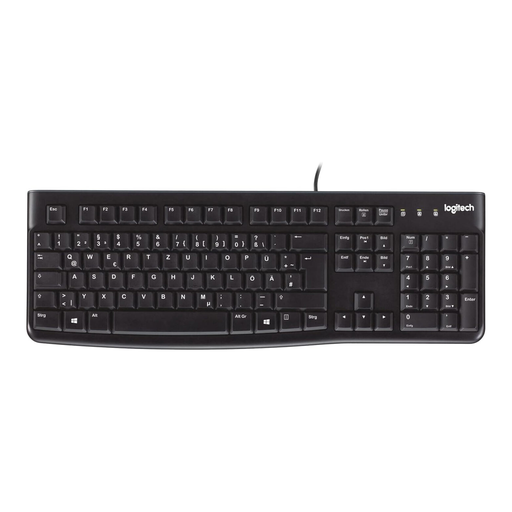
If you type on a Windows PC or laptop and need a number pad and function keys, you can check whether this full-size model suits your setup.
The product details list a German QWERTZ layout, USB plug-and-play and a full-size keyboard.
 No image available
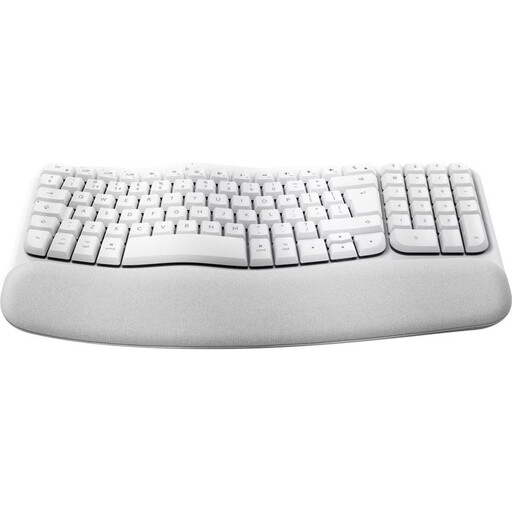
If you want to try a split key layout for longer typing sessions, consider the time it may take to get used to it and the space it needs on your desk.
Logitech lists an integrated number pad for the ERGO K860. The product details also include split keys, a wrist rest, adjustable feet, Bluetooth and a USB receiver.
No. In FamilySearch, creating a source, entering its title and date, and selecting or uploading the file are separate steps. Check how your software works before setting aside special keys for this.
Position it so you can reach the keys and mouse comfortably, and allow time to get used to the split layout. The German Federal Institute for Occupational Safety and Health explains workstation requirements in ASR A6; according to the authority, these requirements do not automatically apply to private screen use.
For a consumer purchase in Germany, the statutory warranty provided by the seller is separate from any voluntary manufacturer’s guarantee. The Verbraucherzentrale (German consumer advice centre) explains that the statutory warranty generally lasts for two years; individual claims depend on the purchase and the nature of the fault.
As part of its market surveillance, the German Federal Network Agency checks matters including CE marking, product identity and manufacturer information, as well as the relevant declaration of conformity for wireless products. CE marking is a declaration by the manufacturer, not an independent endorsement of typing comfort.
Processing information solely for personal or family purposes is different from publishing it for a wider audience. The State Commissioner for Data Protection and Freedom of Information of Rhineland-Palatinate notes that obligations under the General Data Protection Regulation may apply outside the household exemption. Whether and how you can publish particular letters depends, among other things, on who will be able to access them and what they contain.