Choose based on how the keys feel, your hand position and the keys you need when editing in your particular word-processing software. A keyboard won’t track changes for you. A compact design can free up space for your mouse, while a split keyboard or programmable features are only suitable if the hand position and any required software work for your setup.
Who should take care when choosing a keyboard?
Handbook writer with several rounds of edits
If you write longer sections and often switch between text and commands while editing, key feel and easy-to-reach keys for your particular software matter. Microsoft Support notes that the Word keyboard shortcuts in its documentation are based on the US keyboard layout.
Editor sharing a desk
For longer editing sessions, hand position, space for your mouse and noise in your workspace may all affect your choice. The Canadian Centre for Occupational Health and Safety recommends trying different keyboard designs and choosing one that suits your needs.
Writer with recurring editing tasks
If you carry out certain actions repeatedly, check whether your software and operating system support the customisation you want, and whether you’re allowed to install additional software on your work computer. Microsoft Support explains how to customise keyboard shortcuts in Word for Windows; the options may differ in Word for Mac or on the web.
What to look for when buying
First, work out which keys and layout your word-processing software requires for checking and editing. Then compare hand position, key feel and the space available on your desk.
| What matters |
What to check when buying |
Who it matters most to |
| Navigation and editing |
Check the layout and how easy it is to reach the arrow and function keys, then compare the key mapping with your application’s shortcuts. Microsoft Support notes that its list of Word shortcuts assumes a US layout. |
If I often switch between text and commands while checking a document, I need navigation keys that suit my software. Around 36% of consumers prioritise these editing keys. |
| Hand position during long writing sessions |
Try a split keyboard at your own desk and assess the position of your mouse and keyboard together. |
During long writing sessions, I want to find a keyboard shape that suits my hand position and workspace. Around 29% of consumers prioritise this. |
| Typing noise |
Try the keyboard yourself, and distinguish between manufacturer descriptions such as “quiet” and independent noise measurements. |
When I write in a shared space, I want quiet typing without compromising on a comfortable feel. Around 21% of consumers focus on this. |
| Space for your mouse and documents |
Measure the space available and consider whether you regularly need a number pad for figures, lists or tables. |
If I often reach for my mouse while editing and rarely enter figures, I want to keep my keyboard as compact as possible. Around 14% of consumers prioritise saving space. |
Avoiding common keyboard-buying mistakes
-
Assuming “ergonomic” means you won’t experience discomfort
A keyboard’s shape alone doesn’t prove that it will suit everyone or every workspace. The Canadian Centre for Occupational Health and Safety recommends trying different models.
Where possible, try the shape and key feel at your own desk, and take the position of your mouse and desk into account.
-
Assuming a German listing means a QWERTZ layout
The specific CHERRY STREAM KEYBOARD TKL listed at Joybuy has a US layout. A compact design tells you nothing about where the umlauts and special characters are.
Read the layout details for the version you’re considering, paying particular attention to umlauts, special characters and the shortcuts you use most often.
-
Confusing programmable keys with automatic Track Changes
Track Changes is enabled in your word-processing software. Customising your keyboard may require additional software, or could conflict with existing Word shortcuts.
Check whether you’re allowed to use any required software on your work computer, and test the key mapping in your word-processing software.
Keyboard brands worth considering
CHERRY
The STREAM KEYBOARD is a conventional wired office keyboard, while the STREAM KEYBOARD TKL does away with the number pad.
- CHERRY lists SX scissor switches for both models and describes their keystrokes as quiet.
- The TKL version has no number pad. The manufacturer’s claims about quiet typing are no substitute for an independent noise comparison or trying it out yourself.
Logitech
The MX Keys S is a low-profile keyboard with customisable features, while the ERGO K860 is a split full-size alternative.
- Logitech says Smart Actions for the MX Keys S are available through Logi Options+; this may be useful for recurring tasks if the software suits your workflow.
- F.A.Z. Kaufkompass described the ERGO K860 as comfortable to type on, but noted that it has no backlighting or wired mode. This assessment applies to that model.
Perixx
The PERIBOARD-512 B is a wired split keyboard with a number pad and a choice of German QWERTZ layout.
- Perixx lists a USB-A cable and an integrated palm rest.
- The manufacturer notes that it may take time to get used to the split keyboard. This does not confirm any health benefits.
Keychron
The German ISO versions come in different sizes and ranges for buyers specifically looking for this key type and layout.
- The range includes models with a German ISO layout.
- Check the layout, size and switches on the specific version you’re considering. A range that includes ISO-DE models doesn’t mean that every model has this layout.
Joybuy keyboards for writing and editing
The models below include programmable or mechanical keyboards, a conventional full-size keyboard and a split keyboard. Check that the layout, keys you need and any required software suit your workflow.
 No image available
Ticktype EVO75 Custom, ISO-DE, Creamy Rye Switches
This could suit you for recurring editing tasks, provided you’re allowed to use the required customisation software on your work computer.
75% layout; ISO-DE; Tri-Mode connection; hot-swappable; VIA Compatible; 8000mAh; RGB; Creamy Rye Switches.
View at Joybuy
 No image available
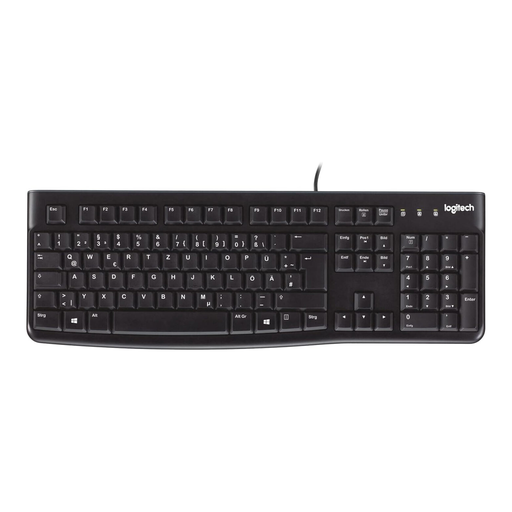
Logitech K120, German QWERTZ layout
The full-size design could suit you if you want a built-in number pad and a conventional keyboard layout.
USB connection; full-size format; Windows; spill-resistant; German QWERTZ layout.
View at Joybuy
 No image available
Logitech ERGO K860, QWERTZ
The split keyboard and palm rest are worth considering if you’d like to try a different keyboard shape for longer writing sessions.
Split keyboard; palm rest; QWERTZ layout; Bluetooth and USB receiver.
View at Joybuy
 No image available
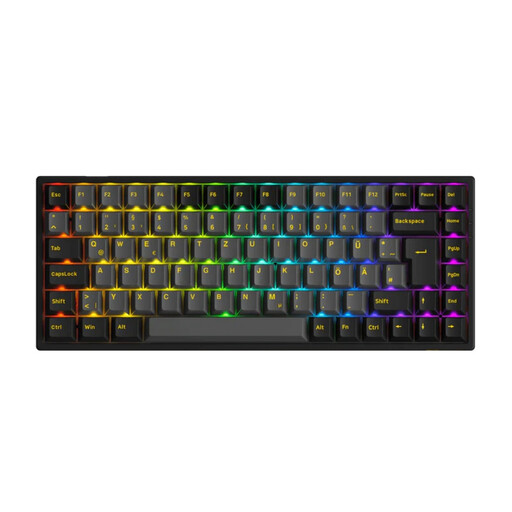
Akko 3084B Plus, 75% ISO-DE, Cream Yellow
The compact layout could suit your workspace if you want to use less desk space for your keyboard and the key mapping works for your writing tasks.
75% ISO-DE layout; Tri-Mode: Bluetooth, 2.4 GHz and USB-C; V3 Pro Cream Yellow Switch; hot-swappable; RGB.
View at Joybuy
 No image available
Logitech MX Mechanical, Tactile Quiet, German QWERTZ
Before choosing, check that the key customisation you want is possible on your work computer and works with your application’s shortcuts.
Mechanical Tactile Quiet switches; German QWERTZ layout; Bluetooth; Logi Bolt; smart backlighting.
View at Joybuy
Frequently asked questions
Can a specialist keyboard track changes automatically?
No. Track Changes is enabled in the word-processing software you use. In Word, you’ll find it under “Review”; extra keys can only trigger the relevant software commands.
Can I use Word keyboard shortcuts without checking them on a German keyboard or Mac?
Not without checking: Microsoft Support notes that its list of Word shortcuts is based on a US layout. The documented customisation of keyboard shortcuts applies to Word for Windows; the options may differ on Mac or on the web.
How can I tell whether a split keyboard is right for me?
Try the split keyboard at your own desk and see whether its shape and the position of your mouse work for you. The Canadian Centre for Occupational Health and Safety recommends trying different models rather than assuming one keyboard shape suits everyone.
What should I check before buying a keyboard with programmable keys?
Check whether you’re allowed to use the necessary customisation software on your work computer, and whether the key mapping conflicts with your word-processing software’s existing shortcuts. Also check that the feature works with your particular operating system and software.


