Frequent typists
If you write longer journal entries, key feel, noise and hand position are important things to consider when choosing a keyboard.


For long journal entries, start by considering key feel, noise and a hand position that feels comfortable for you. If you revise frequently, also check that the arrow, navigation and function keys suit the specific layout. Compact keyboards free up desk space, but may change the familiar key arrangement; customisable commands require compatible software and setup.
If you write longer journal entries, key feel, noise and hand position are important things to consider when choosing a keyboard.
If you often move between sections of text and add revision notes, pay particular attention to the navigation and function keys you need.
If you rarely use the number pad, a more compact layout can leave room for your mouse and paperwork. Just check that the remaining keys suit the way you work.
Start with the typing feel and the keys you use most when revising. Then consider hand position, the space you have available and, if you use several devices, whether the connection is right for you.
| What to consider | What to look for | Who it matters most to |
|---|---|---|
| Key feel and noise | Compare the key profile and the specific switch type; manufacturers’ descriptions such as “quiet” are not a like-for-like noise test. | When I write long passages, I want to choose a key feel that suits me. Around 30% of consumers put typing feel and noise at the top of their buying priorities. |
| Hand position | Consider the layout, angle and space at your desk together; no particular design guarantees a specific result for everyone. | For longer sessions, I want to position my keyboard and arms in a way that suits my workspace. Around 20% of consumers put hand position first. |
| Keys for revisions | Check that the arrow, navigation and function keys you use are easy to reach. Customisable commands require setup and compatible software. | When I often look up sections of text and add notes, direct access to the keys I need matters to me. Around 20% of consumers put editing keys and custom commands first. |
| Desk space and layout | Think about whether you need a number pad, and check the full layout against the keys you’re used to. | At a small desk, I want to leave room for my mouse and paperwork without losing access to important keys. Around 20% of consumers put available desk space first. |
| Connection and switching between devices | Check whether Bluetooth, a receiver or a cable will work with your devices, and whether the customisation software you need runs on your system. | When I switch between devices, I want a connection that suits my setup. Around 10% of consumers put switching between devices first. |
A TKL layout removes the number pad, while a 75% layout also arranges the keys more compactly. The two formats may differ in how you navigate while revising.
Before ordering, compare the full layout with the keys you use for your revision notes.
A different key arrangement may take some getting used to when editing.
A manufacturer’s description such as “whisper-quiet” doesn’t prove that the keyboard is quieter than others. An ergonomic design alone also can’t predict how well it will suit you at your desk.
Think of these claims as descriptions of the specific design, and also consider your hand position and workspace setup.
The K3 Max is available with different layout and switch options, so choosing the right version is a separate decision.
Before buying, check the selected layout and switch type against the product description.
The MX Keys S is aimed at writers looking for a low-profile keyboard and customisable actions. The ERGO K860 has a distinctly different, split design.
The STREAM KEYBOARD TKL is a compact, wired option for typing, with SX scissor-switch keys.
The K3 Max is a compact mechanical keyboard for writers considering customisable keys.
According to the manufacturer, the Pro Fit Ergo KB675 EQ TKL combines a compact ergonomic design with multi-device connectivity.
These Joybuy keyboards suit a range of writing and editing needs, from low-profile QWERTZ models to wired and mechanical options.
 No image available
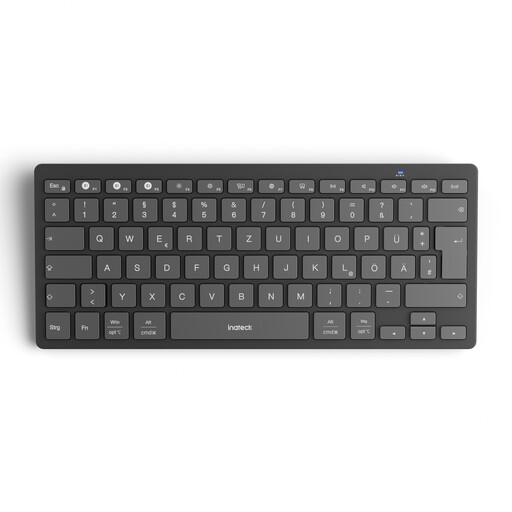
An option for longer writing sessions, with a low-profile design and the ability to switch between devices.
QWERTZ layout; Bluetooth connection for up to three devices.
 No image available
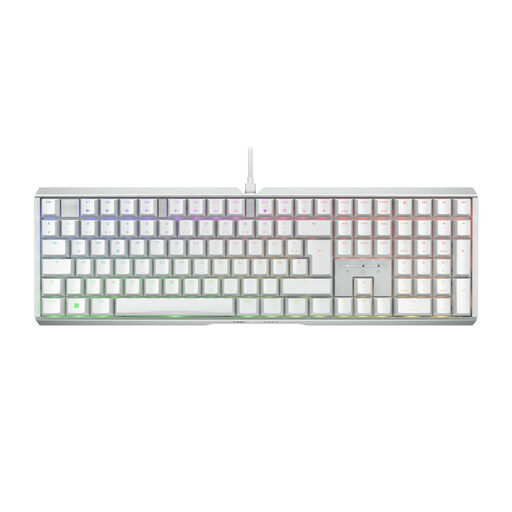
Could suit longer writing sessions if you’re looking for a German layout and tactile key feel.
MX2A Brown switches; wired; RGB backlighting; aluminium frame.
 No image available
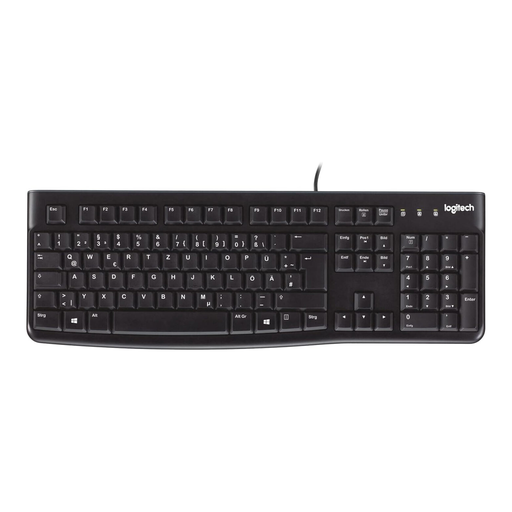
A wired option if you want a familiar full-size layout with function keys and a number pad when revising.
USB connection; low-profile keys; curved space bar.
 No image available
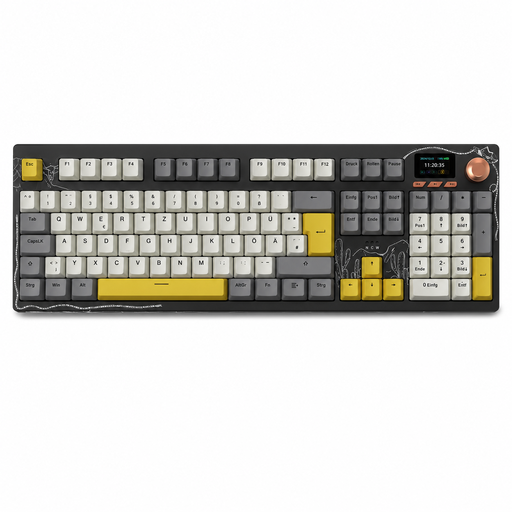
A mechanical option if you’re looking for a German layout and a dedicated navigation cluster when revising.
Bluetooth, 2.4 GHz or USB-C; hot-swappable switches; 1.14-inch TFT colour display.
 No image available
Could be a good fit if you’re looking for low-profile mechanical keys and the option to switch between devices.
Quiet tactile mechanical switches; Bluetooth and Logi Bolt; smart backlighting.
No, not necessarily. First check whether the existing keys and shortcuts in your writing software make it easy for you to navigate. If you want to assign recurring commands yourself, Logitech offers Smart Actions for the MX Keys S via Logi Options+; Keychron lists customisable keys for the K3 Max.
Allow space for your keyboard and mouse, and position your arms comfortably. The Federal Institute for Occupational Safety and Health recommends considering keyboard position and angle as part of your overall workstation setup; its guidance focuses in particular on fixed computer workstations.
If a product is faulty, you have statutory rights against the seller; these are separate from any manufacturer’s warranty. For a consumer purchase made remotely, you generally have a right to cancel, usually within 14 days of receiving the goods. Exceptions and the specific terms of the contract should be taken into account; the Verbraucherzentrale explains these rights.
The Federal Network Agency includes CE marking, product traceability and correct manufacturer details among the points it checks during market surveillance. A CE mark does not assess whether a model suits your typing style or workspace.
Electrical and electronic waste must not go in household rubbish. The Federal Environment Agency points to recycling centres and suitable take-back points at retailers; removable batteries should be handed in separately.