People who write a lot
If you write long passages at your desk, you can compare key feel and hand position before you buy.


For long writing sessions, the layout and feel of the keys should suit the way you work. When reviewing changes, easy-to-reach navigation and function keys also matter. Track Changes is controlled in your word-processing software, not by the keyboard. Before you buy, check the specific German layout, connection type and compatibility with your devices.
If you write long passages at your desk, you can compare key feel and hand position before you buy.
If you often move between text and commands when reviewing a draft, easy-to-reach keys and, where available, customisable key assignments are worth considering.
If you need room for papers or switch between devices, weigh up a compact keyboard against having all the keys readily accessible.
Start with your main task: writing for long periods or frequently navigating while editing. Then check the layout, device connection and the keys you use regularly.
| Consideration | What to look for when buying | Who is this most relevant to? |
|---|---|---|
| Typing comfort and hand position | Check the key mechanism, keyboard height and straight or split layout of the specific model. | If I write long documents, I want a key layout that feels comfortable to use. Around 36% of consumers would put typing comfort first. |
| Ease of use when editing | Look at the position of the arrow, navigation and function keys, and check whether programmable key assignments are supported. | When reviewing tracked changes, I want easy access to text and editing commands. Around 29% of consumers would prioritise ease of use when editing. |
| Layout and device compatibility | Check the specific DE/QWERTZ or DE-ISO version, operating system and connection type you need. | When writing in German, I want a suitable key layout and connection. Around 21% of consumers would give particular importance to layout and device compatibility. |
| Desk space and switching between devices | Compare the keyboard’s form factor, access to navigation keys and connections with your devices. | If I have limited desk space or switch between devices, the keyboard needs to fit my workflow. Around 14% of consumers would prioritise space requirements or switching between devices. |
A model may be available with different country layouts. For the CHERRY KC 6000 SLIM, the German version JK-1600DE-2 differs from the version JK-1600EU-2, which is described as having a US/EU layout.
Before buying, check the variant code and the layout specified for the particular offer.
A key assignment will not automatically turn on Track Changes in a document or reliably show you which mode is active.
Check the mode in your word-processing software first, then assign supported commands to keys.
A split layout changes your hand position, but that does not mean a keyboard will suit everyone equally well. The F.A.Z. Kaufkompass also notes that the ERGO K860 lacks backlit keys and wired operation.
Weigh up the key layout and features against the way you type and the functions you need.
The MX Keys S has a low-profile design and customisable keys, while the ERGO K860 has a split layout.
The KC 6000 SLIM is a full-size, low-profile keyboard with a wired connection.
The K3 Pro is a compact mechanical keyboard with programmable key assignments and a choice of ISO layouts.
According to the manufacturer, the PERIBOARD-535II combines a split layout with low-profile mechanical switches and a wired USB-A connection.
The Joybuy options below range from compact and foldable keyboards to full-size models. The key things to consider are the right layout, your preferred key arrangement and how the keyboard connects to your devices.
 No image available
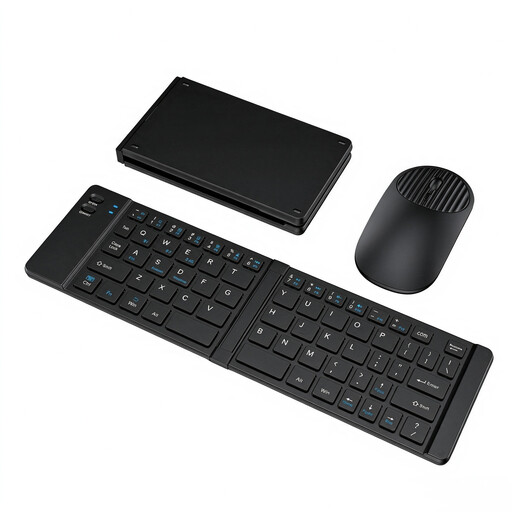
Ideal for travelling or a small workspace, this keyboard folds away and opens out to provide a full-size typing area.
Quiet scissor-switch keys; connects to up to three devices and charges via USB-C.
 No image available
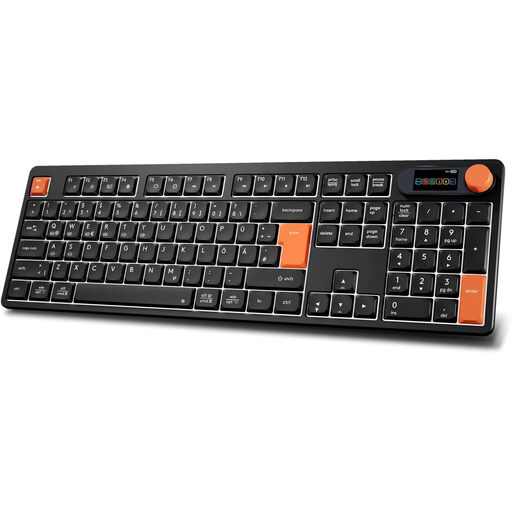
If you want extra controls and the ability to switch between devices, the product description lists an LCD display, a rotary dial and connectivity for up to four devices.
QWERTZ layout; listed connections include Bluetooth, 2.4G and USB-C, along with backlighting and a 2000 mAh battery.
 No image available
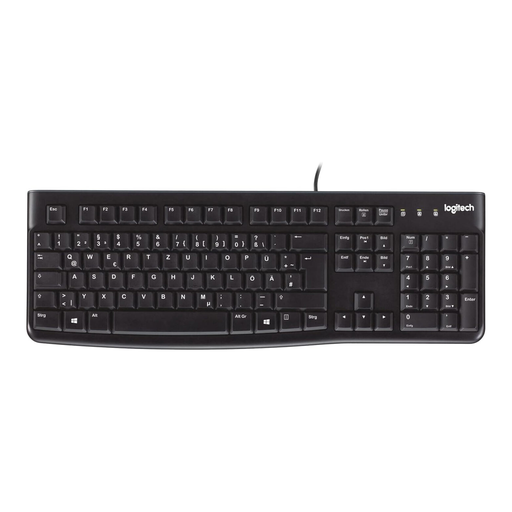
Designed for a permanent desk setup and typing in German, this full-size model is listed with a German QWERTZ layout.
Wired USB connection; low-profile keys, function keys and number pad. The product listing also describes it as spill-resistant, with a curved space bar.
 No image available
If you want to try a split key layout for writing, this model features a curved design and a palm rest.
QWERTZ layout; wireless connection via Bluetooth or USB receiver. The F.A.Z. Kaufkompass notes that it lacks backlit keys and wired operation.
 No image available
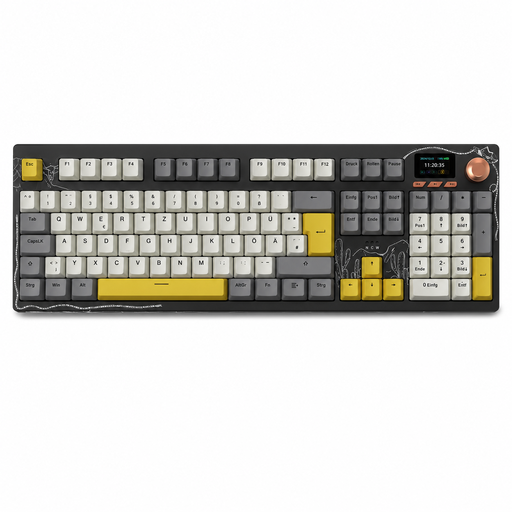
If you’re looking for a full-size mechanical keyboard with easy access to navigation and function keys, the description lists 104 keys and a German QWERTZ layout.
Programmable key assignments and three connection options: Bluetooth, 2.4G and USB-C. The listing also mentions hot-swap functionality, a 1.14″ colour TFT display and a 10000 mAh battery.
No. In Word, you can turn on Track Changes from the Review tab; the keyboard mainly affects text entry and access to commands. Microsoft Support notes that keyboard shortcuts can vary by layout, so check the shortcuts for your version of Word and your key layout.
First, check which commands your word-processing software and operating system support. Logitech describes customisation for the MX Keys S through Logi Options+; in Word for Windows, you can also assign keyboard shortcuts within Word. Before changing a key assignment, check whether the shortcut you want is already in use.
For private online purchases in Germany, you generally have a 14-day right to cancel; you must notify the retailer that you wish to cancel. The Verbraucherzentrale explains this rule. This is separate from your statutory rights if goods are faulty: Your Europe states that goods in the EU are covered for at least two years from receipt. A voluntary manufacturer’s guarantee is separate.
Check the information for the specific device rather than assuming it complies based on the product page alone. The Bundesnetzagentur lists a correct CE mark and identifiable manufacturer details among the things to check. If you are considering an import, take the product information provided into account too.
No. The Federal Institute for Occupational Safety and Health’s ASR A6 covers screen work within its scope, but excludes private use outside workplaces or teleworking arrangements. Its guidance can be useful as a reference, but it is not a blanket legal requirement for every home desk.