For longer pieces of writing, it mainly comes down to whether the key layout, hand position and desk space suit the way you work. A flat standard keyboard keeps the familiar layout; a split model changes your hand position, but takes up space and may take some getting used to. Then check for a German layout, a number pad and compatibility with your computer.
Which keyboard suits different users?
People who type a lot and want more comfort
If you write longer pieces of feedback in one go, consider your hand position, mouse space and how long it might take to get used to a different key layout. The DGUV recommends a separate keyboard and mouse as ergonomically sensible equipment for working from home.
Teachers who want to type quietly
If you share your workspace or find typing sounds distracting, pay attention to the key mechanism and how the keyboard actually sounds. CHERRY’s description of certain models as quiet is a manufacturer’s claim, not an independent noise comparison.
Teachers with limited desk space
If your laptop, papers and mouse are close together, a compact keyboard without a separate number pad could free up space. At the same time, check that the layout and connections suit your computer.
What to consider when buying
Flat standard keyboard
A good fit if: you want to keep the familiar key layout and prefer a low-profile feel when typing.
The trade-off: Your hand position will differ from that on a split keyboard. With wireless models, you’ll also need to check the connection and power supply.
Split keyboard
A good fit if: you’d like to try a different hand position during longer writing sessions and have enough desk space.
The trade-off: Perixx advises allowing time to get used to it. The PERIBOARD-512 B measures 485 × 236 × 44 mm, so you’ll need to make room for it.
Compact keyboard without a number pad
A good fit if: you rarely use a separate number pad and would like more space for your mouse.
The trade-off: The Kensington KB675 EQ TKL has no separate number pad. The manufacturer’s information about fit is no substitute for trying it out yourself.
| Buying priority |
What to check before buying |
Who it matters most to |
| Hand position and space |
Measure the space available, including room for your mouse; check the split layout and dimensions. |
When I’m typing longer pieces of feedback, I want to find a key layout that feels right for my hands and leaves room for my mouse. Around 31% of consumers put hand position first during longer writing sessions. |
| Quiet typing |
Consider the key mechanism and how it sounds; don’t treat a manufacturer’s “quiet” claim as equivalent to a measured comparison. |
When I’m in a shared room, I want to cause as little disturbance as possible while typing, rather than relying on the words “office keyboard” alone. Around 31% of consumers prioritise quiet typing. |
| Layout and number pad |
Check for German QWERTZ and the actual key layout; decide whether you need a separate number pad. |
When I’m writing in German and entering numbers regularly, I want to know in advance whether the layout and number pad suit the way I work. For around 23% of consumers, layout and desk space are the main priorities. |
| Connection to your computer |
Check whether the specific model uses USB or Bluetooth, and confirm the receiver and power supply. |
If I want to use the keyboard with one or more of my existing devices, the connection needs to be compatible. Around 15% of consumers consider the connection type or switching between devices their most important buying priority. |
Common buying mistakes
-
Taking “ergonomic” as a promise of personal benefits
A split keyboard changes the layout, but that doesn’t prove it will ease discomfort for any particular person. Perixx also advises allowing time to get used to the PERIBOARD-512 B.
Check the dimensions and key layout at your own workstation, and don’t treat a manufacturer’s claims about effects as a medical guarantee.
-
Looking only for “Bluetooth” or “wireless” on wireless models
Keyboards vary in how they connect and how they’re powered. A Bluetooth model, a USB receiver and a USB-A cable each have different requirements for your computer and workspace.
Check that the connection, receiver and power supply for the specific model work with your computer.
-
Choosing a compact layout without considering the number pad
A TKL keyboard doesn’t have a separate number pad, while a full-size model may include one. This affects both the space available for your mouse and how familiar entering numbers feels.
Before you buy, consider whether more room for your mouse or a separate number pad is more important for the way you work.
Key brands at a glance
CHERRY
The STREAM models are low-profile keyboards with scissor switches. Wired and wireless versions should be considered separately.
- CHERRY describes the keystrokes on the STREAM KEYBOARD and STREAM KEYBOARD WIRELESS as quiet. The wireless version uses a 2.4 GHz wireless connection.
- The noise description comes from the manufacturer; it’s not an independent comparison under standardised conditions.
Logitech
The ERGO K860 is a split wireless keyboard for people who want to try a different hand position when typing for longer periods.
- According to Logitech, it connects via Bluetooth or the USB receiver included and can switch between up to three devices.
- A review by F.A.Z. Kaufkompass notes that it lacks backlit keys and wired operation. The manufacturer’s claims about ergonomic benefits are not a personal health guarantee.
Perixx
The PERIBOARD-512 B combines a split key layout with German QWERTZ, a number pad and a USB-A cable.
- The manufacturer’s specifications include an integrated wrist rest and a German layout.
- Perixx advises allowing time to get used to it. Check you have enough desk space before buying: it measures 485 × 236 × 44 mm.
Kensington
The Pro Fit Ergo KB675 EQ TKL is a compact wireless option with a German layout and no separate number pad.
- Kensington says it can connect to up to three devices: two via Bluetooth and one via the 2.4 GHz USB-A receiver.
- The manufacturer’s recommendation about hand size is no guarantee that it will be the right fit for you.
Keyboards at Joybuy
Joybuy keyboards for writing at home, including compact and classic layouts. For each model, check that the German layout, number pad and connection suit your workspace.
 No image available
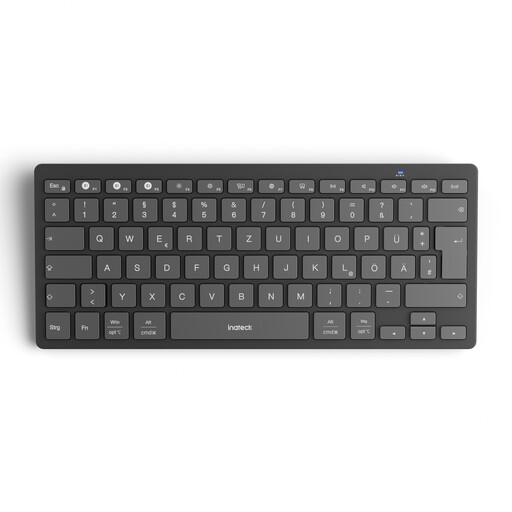
Inateck KB01003G Bluetooth keyboard, QWERTZ
For writing in German when you’re looking for a low-profile keyboard with a wireless connection.
German QWERTZ layout; Bluetooth 5.3; switches between three devices; 15 × 15 mm keycaps.
The description lists compatibility with iPad, Windows, Android and iOS. Check that the connection suits your device before buying.
View at Joybuy
 No image available
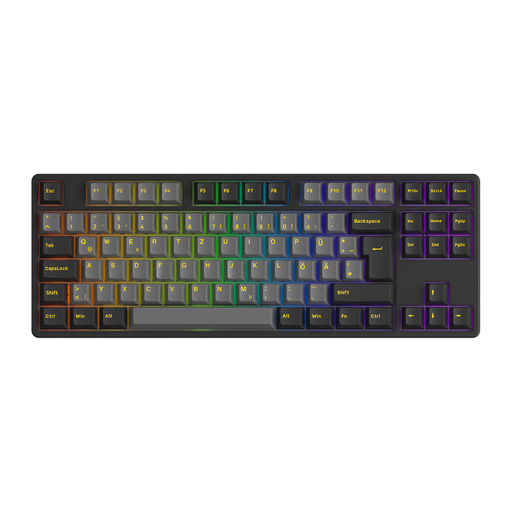
Akko 5087S V1 TKL, ISO-DE QWERTZ
For a desk where a compact wired keyboard without a separate number pad could be a good fit.
ISO-DE QWERTZ; USB-C connection; RGB lighting; replaceable switches.
The TKL design doesn’t include a separate number pad.
View at Joybuy
 No image available
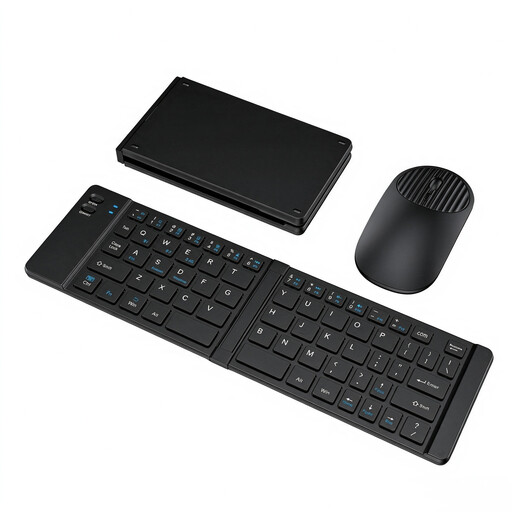
Foldable Bluetooth keyboard with wireless mouse
For a workspace where a foldable keyboard and connection to multiple devices could come in handy.
Quiet scissor switches; three connection modes; connects to up to three devices; USB-C charging.
The description lists Windows, Android and iOS as compatible systems.
View at Joybuy
 No image available
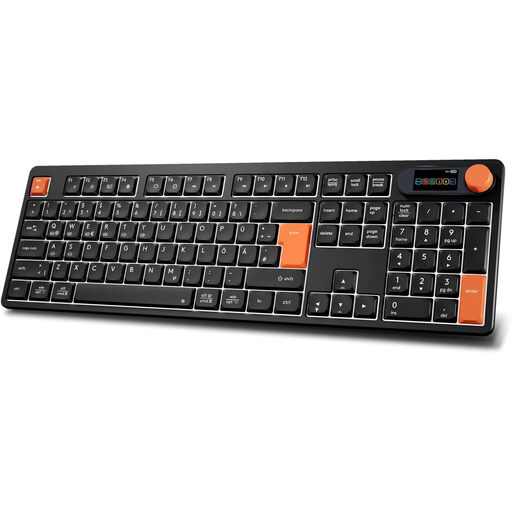
Wireless QWERTZ keyboard with LCD display
For writing at home when you’re looking for a QWERTZ keyboard with several connection options.
LCD display and rotary dial; up to four Bluetooth connections; 2.4 GHz connection; USB-C; 2,000 mAh battery; backlighting.
View at Joybuy
 No image available
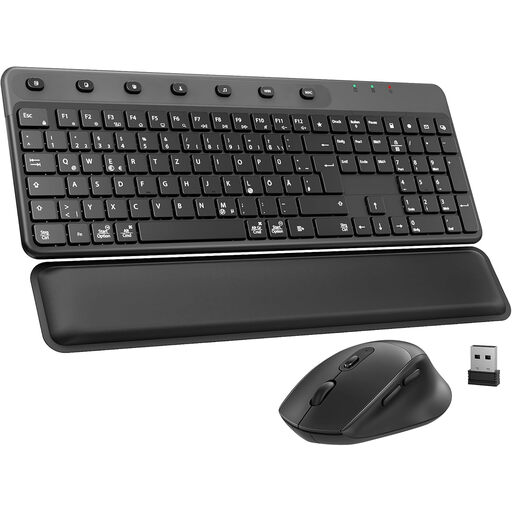
Wireless QWERTZ keyboard and mouse set with number pad
For writing in German and entering numbers when a full-size keyboard with a separate number pad suits your desk.
QWERTZ; 2.4 GHz connection; detachable wrist rest; quiet keys; mouse included.
The description lists compatibility with Windows and Mac.
View at Joybuy
Frequently asked questions
What should I check when connecting a keyboard to my laptop?
First, check whether the keyboard can connect to your laptop by cable, USB receiver or Bluetooth, and whether you have enough desk space. The DGUV recommends a separate keyboard and mouse as ergonomically sensible equipment for working from home. The ASR A6 from the Federal Institute for Occupational Safety and Health applies only within its scope, for example to screen work at workplaces and teleworking locations. It does not automatically apply to every home workspace.
How should I clean and care for my keyboard?
Follow the cleaning instructions for the specific model and, if necessary, disconnect it before cleaning. Kensington describes one model as having splash-resistant keys; this claim doesn’t apply to other keyboards.
Do I need an additional voluntary warranty?
A voluntary manufacturer’s warranty is separate from your statutory rights against the seller. The European Union’s consumer information states that consumers are entitled to a legal guarantee of at least two years. If your school or employer is buying the keyboard, check the contracting party and terms separately.
What should I look for on the labelling of a wireless keyboard?
The Federal Network Agency lists the CE marking and identification of the product and manufacturer among the checks it carries out during market surveillance. A product description alone doesn’t prove that a particular listing meets these requirements.


