Writers who spend hours at a fixed desk
If you write longer scenes at the same desk, start by comparing key feel, noise and hand position.


For long writing sessions, start by comparing key feel, noise and the German keyboard layout. If you switch between your manuscript, scene outline and notes, consider whether navigation keys or software shortcuts could make your workflow easier. A split keyboard may be worth considering if your hand position at your desk is a particular priority. Wireless or customisable features, on the other hand, may involve extra connection and set-up steps.
If you write longer scenes at the same desk, start by comparing key feel, noise and hand position.
If you often switch between your text, outline and notes while editing, easily accessible navigation keys and suitable software shortcuts are important.
If you use the same writing workflow on different computers, check the connection, layout and key assignments for each device.
Rank your requirements by what has the biggest impact on your writing routine: key feel, switching between work views, hand position or using multiple devices.
| Priority | What to check before buying | Who will find this particularly important |
|---|---|---|
| Key feel and noise | Switch or key type and noise in your own environment; layout of the specific version. | If I write long passages at a fixed desk, I want to choose key feel and noise to suit my surroundings. Around 33% of consumers in this writing scenario pay particular attention to key feel and noise. |
| Navigation between drafts and notes | How easy it is to reach the keys you need; whether your writing software and operating system support the shortcuts you want. | If I switch between my manuscript, scene outline and notes while editing, I want to access the views I need without taking a roundabout route. Around 25% of consumers prioritise navigation between drafts and notes when buying. |
| Hand position during longer sessions | Split or standard layout; the space required and how easy the keys are to reach at your desk. | If I spend a long time writing, I want a layout that suits my hand position and workspace. Around 25% of consumers prioritise hand position when choosing a keyboard. |
| Connection and layout for multiple devices | Connection type for each device; German layout and key assignments for every operating system you use. | If I switch between computers, I want to use my manuscript and commands as intended on each device. Around 17% of consumers put switching between devices first when buying. |
The CHERRY STREAM KEYBOARD and the STREAM KEYBOARD TKL are different model variants. Joybuy's TKL listing specifies a US layout with a euro symbol; this is not a German QWERTZ layout.
Before buying, compare the full model name, form factor and explicitly stated key layout.
Key assignment features do not automatically replace the commands in your writing software. The views and shortcuts available also depend on the software you use.
First try the software shortcuts already available, and only set up additional key assignments for tasks you actually need.
Setting up custom key assignments takes time.
F.A.Z. Kaufkompass rated the ERGO K860 in a test of ergonomic keyboards; the review also notes that it lacks backlighting and wired operation. The result does not automatically tell you whether its shape and features will suit your writing space.
Check the split layout, connection and space requirements against your own needs rather than treating a test verdict as a general recommendation.
The STREAM KEYBOARD is a low-profile, wired scissor-switch keyboard; its features should be considered in relation to the specific model.
The MX Keys S and ERGO K860 are different product lines, with different approaches to key actions and layout.
The K8 Pro is a mechanical TKL keyboard, with the model variant and layout determining which one to choose.
The Pro Fit Ergo K75401DE is a wireless split keyboard for a suitably arranged workspace.
The models below suit different writing situations, from QWERTZ and ISO-DE keyboards to a compact TKL keyboard with a US layout. So check the specific key layout before you decide.
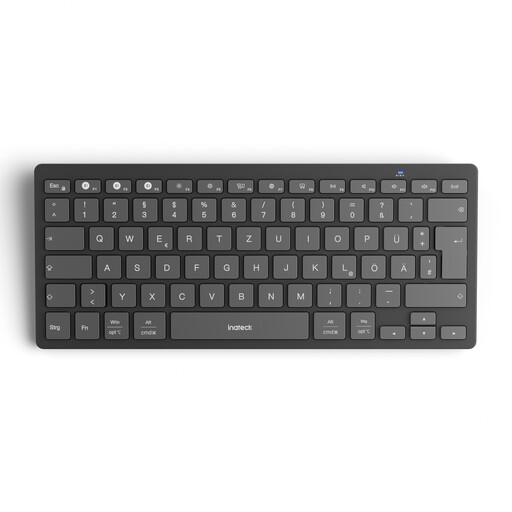 No image available
For writing a manuscript with a German layout and switching between devices: the product name specifies QWERTZ and Bluetooth for up to three devices.
Check that the operating system and key assignments you want are compatible with all the devices you write on.
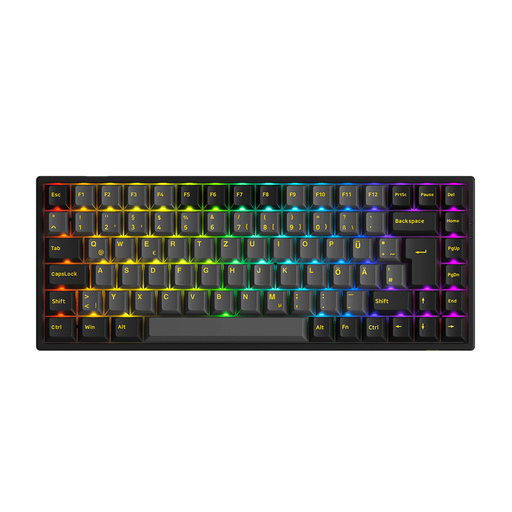 No image available
A mechanical option to consider if you want a compact ISO-DE keyboard with hot-swappable switches.
The product name specifies 75%, V3 Pro Cream Blue switches, Bluetooth, 2.4 GHz and USB-C. Check that the specific key layout and connection options suit your writing routine.
 No image available
For you if you are considering a split key layout with a German keyboard layout.
The product name specifies QWERTZ, Bluetooth and a USB receiver. Check that the shape and key layout are easy to reach at your desk.
 No image available
For writers who want to combine mechanical keys and wireless switching between devices in one keyboard.
The product name specifies quiet tactile mechanical switches, German QWERTZ and Bluetooth and Logi Bolt connections for up to three devices. Check whether you can use these connections with your devices.
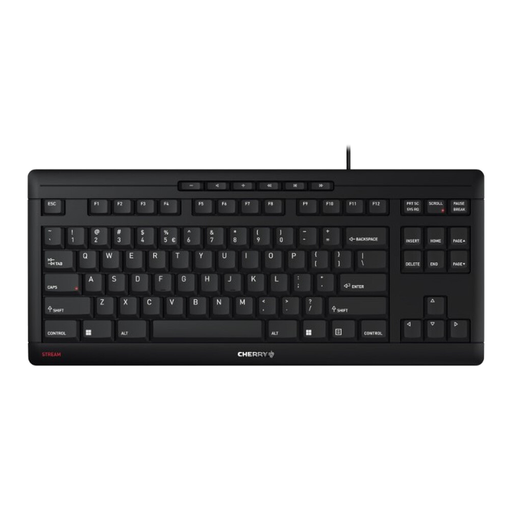 No image available
A wired option for a fixed desk, if you are considering a compact TKL form factor.
The product name specifies a USB cable connection and SX scissor keys. The stated US layout with euro symbol is not a German QWERTZ layout.
Not necessarily. First check the shortcuts in your writing software: Literature & Latte describes commands in Scrivener for switching between the editor, corkboard and outline, as well as showing the inspector. Additional key assignments are only relevant if the shortcuts already available do not cover your workflow.
First match the physical key labels to the operating system layout you have selected, then test your writing software. Microsoft Support explains that Windows lets you switch between enabled keyboard layouts using the language bar.
Bluetooth keyboards are generally classed as radio equipment and fall under the EU regulatory framework for radio equipment set out in Directive 2014/53/EU (RED), as the European Commission explains. According to Your Europe, CE marking is only required where the relevant harmonised EU rules call for it; check the details for the specific model.
Retailers required to accept returns must take back an old appliance of the same type and with essentially the same function free of charge when you buy a new electrical appliance, explains the stiftung elektro-altgeräte register. Other conditions apply to returns without a new purchase, including a size limit; check the return process with the retailer.
No. Verbraucherzentrale distinguishes the statutory consumer rights you have against the seller from a voluntary guarantee. If a product is faulty, repair or replacement may be available in the first instance; check the terms of any additional guarantee separately.