Choose a keyboard to suit your debugging workflow. A multi-device model is handy if you switch between compatible computers or mobile devices, while a wired TKL keyboard may be all you need for a fixed workstation. Also check the exact key layout, how easy it is to reach your shortcuts and how much room you need for your mouse. Google notes that Chrome’s device mode is an approximation and doesn’t replace testing on a real mobile device.
Which keyboard suits you?
Testers who switch between devices
If you switch between compatible computers or also use a mobile device while testing, check which connection types and switching channels the keyboard supports before you buy. Logitech says the MX Keys Mini can pair with up to three computers, while Keychron lists several connection options for the K3 Max.
Developers who use lots of shortcuts
If you regularly use browser and editor shortcuts, check how your go-to key combinations work with the layout you have in mind. A more compact arrangement can free up space beside your mouse, but may change where familiar keys are or how easy they are to reach.
Frequent typists with a fixed workstation
If you spend long periods typing and editing at the same desk, consider the key layout, room for your mouse and the style of keyboard you prefer. A split layout is a matter of personal preference, not proof of a general health benefit.
Key buying considerations
First, think about how you switch between devices and which shortcuts you use most. Then compare the layout and how much desk space the keyboard takes up.
| What matters |
What to look for |
Who should pay particular attention |
| Connectivity and switching between devices |
Check which devices support an external keyboard and whether you need Bluetooth, a USB receiver or a cable. |
If I switch between compatible computers and a mobile device while debugging, I need connections that suit my workflow. Around 31% of consumers say switching between devices is a top priority. |
| Shortcuts and desk space |
Check your frequently used function, navigation and editor shortcuts against the layout, and decide whether you need a number pad. |
If I use lots of shortcuts and need room for my mouse next to the keyboard, I need to choose the layout carefully. Around 25% of consumers prioritise shortcuts and desk space. |
| Key layout |
Compare the exact variant with the physical layout you want and the characters you type regularly. |
If I want to type code symbols and test copy using a familiar layout, I check the layout of the exact model. Around 25% of consumers prioritise having the right key layout. |
| Typing space and ergonomics |
Consider your desk space, mouse position and preferred hand position; a split design changes the layout. |
If I spend long periods typing at a fixed desk, I care about how the keyboard and mouse are positioned and whether a split design suits me. Around 19% of consumers prioritise typing space and their individual ergonomic needs. |
Common buying mistakes
-
Assuming Chrome’s device mode is the same as testing on real mobile hardware
Google describes device mode as a desktop approximation. If behaviour depends on the real mobile device, the simulation can’t replace testing on that device.
Plan to test on a real mobile device when checking device-specific behaviour, and choose a keyboard that suits the way you work.
Testing on a mobile device may take extra time in addition to your desktop work.
-
Assuming the model name tells you exactly which key layout you’ll get
The Keychron K3 Max is available in several ISO layouts. The model name alone therefore won’t tell you which exact layout the variant you choose has.
Before ordering, check that the variant specified is the physical key layout you want.
-
Confusing space-saving with personal ergonomics
A TKL keyboard is narrower because it has no number pad; a split keyboard changes the position of your hands. These are different reasons for choosing a keyboard.
Consider desk space, mouse position and your preferred typing posture separately, rather than assuming a particular design will suit everyone.
Key brands at a glance
Logitech
The MX Keys Mini is designed for a compact workspace where you switch between devices; the ERGO K860 is a split keyboard for those who prefer a different layout.
- Logitech lists three Easy-Switch channels for the MX Keys Mini.
- An independent review of the ERGO K860 notes that it has no backlighting or wired mode. Whether the split design suits you is a personal choice.
Keychron
The K3 Max is aimed at buyers looking for a compact mechanical layout and customisable key mappings.
- Keychron lists a 75% layout and Bluetooth, 2.4 GHz and wired connections for the K3 Max.
- There are different layout and switch variants. You’ll need to select the DE-ISO version you want on the specific product page.
CHERRY
The STREAM KEYBOARD TKL is a wired option without a number pad for a fixed workstation.
- CHERRY describes the TKL version as having the same main key area as the larger STREAM KEYBOARD, but without a number pad.
- The TKL version is wired, so it doesn’t offer the device switching of a wireless multi-device keyboard.
Rapoo
The 9300M is a keyboard and mouse set for buyers looking for several wireless modes in one package.
- Rapoo describes several connection modes and the ability to switch between devices.
- Check whether you need the extra mouse and which local keyboard layout the specific version has.
Keyboards at Joybuy
The Joybuy range includes compact multi-device models and a wired TKL keyboard. Pay particular attention to the exact key layout and the connections you need for your test devices.
 No image available
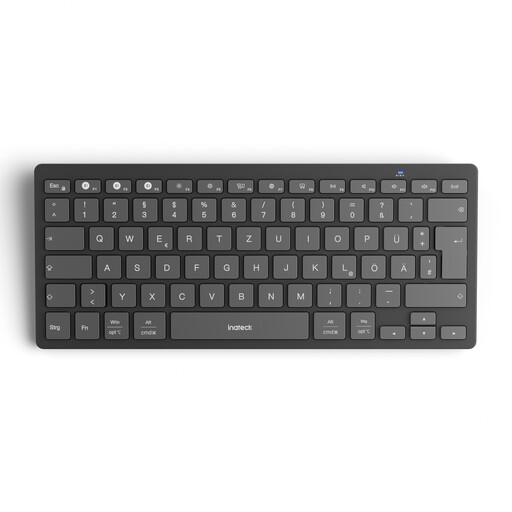
Inateck KB01003G Bluetooth keyboard, QWERTZ
A compact option if you want to switch between several devices and use a QWERTZ layout.
The product description lists Bluetooth, switching between up to three devices and compatibility with Windows, iPadOS, Android and iOS.
View at Joybuy
 No image available
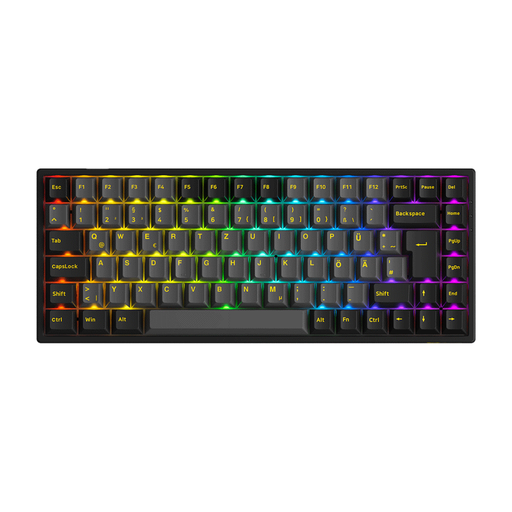
Akko 3084B Plus, 75%, ISO-DE, V3 Pro Cream Blue
A compact multi-device option if you’re looking for an ISO-DE layout and several ways to connect.
75% layout; Bluetooth, 2.4 GHz and USB-C; hot-swappable; V3 Pro Cream Blue switches.
View at Joybuy
 No image available
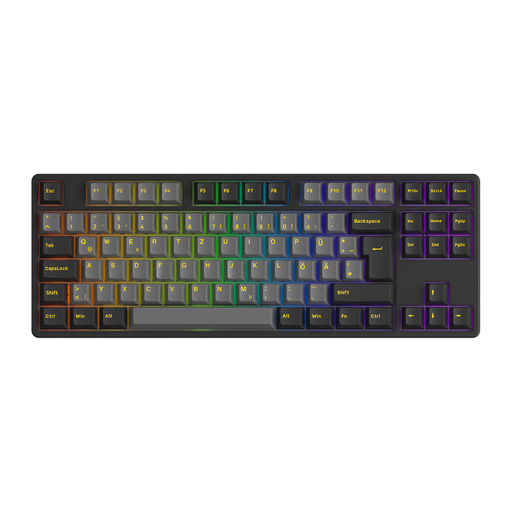
Akko 5087S V1 TKL, ISO-DE QWERTZ, V3 Pro Cream Yellow
A wired TKL option for a fixed workstation if you don’t need a number pad.
ISO-DE QWERTZ layout; USB-C connection; hot-swappable; V3 Pro Cream Yellow switches. A wireless multi-device mode isn’t listed for this model.
View at Joybuy
 No image available
Ticktype EVO75, ISO-DE, Creamy Rye switches
A compact option if you’re looking for an ISO-DE layout and customisable keys for your workspace.
75% layout; Bluetooth, 2.4 GHz and USB-C; programmable keys and macros; VIA compatible; Creamy Rye switches. The product title lists a capacity of 8000mAh.
View at Joybuy
 No image available
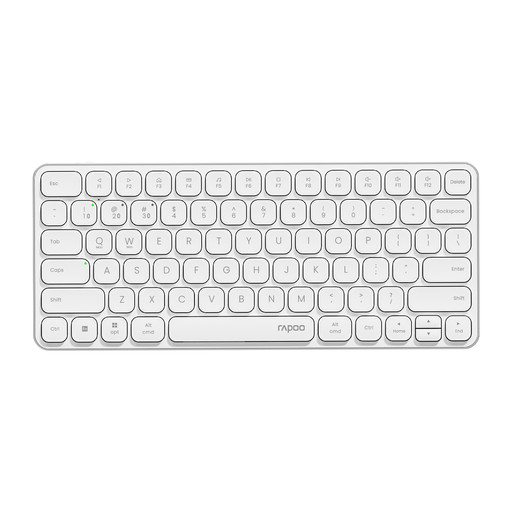
Rapoo E9050L, 78 keys, US QWERTY
A compact multi-device option if you want to use a wireless keyboard with a US QWERTY layout.
The product title lists support for four devices, as well as Bluetooth and 2.4 GHz. Please note: the listed US QWERTY layout isn’t the German QWERTZ version.
View at Joybuy
Frequently asked questions
Is the mobile view in Chrome DevTools enough to test on a smartphone?
No. Google describes device mode as an approximation; the code still runs on the desktop. If behaviour on a real mobile device matters, test on one as well.
How do I set up device switching on the MX Keys Mini?
According to Logitech, select an Easy-Switch channel and hold down its key for three seconds to pair. Once paired, briefly press the key to switch between the channels you’ve set up. Also check the Bluetooth settings on the device you’re using.
Will I lose the familiar main key area if I choose a more compact keyboard?
Not necessarily: CHERRY says its wired STREAM KEYBOARD TKL has the same main key area as the larger STREAM KEYBOARD, but without a number pad. Still, check that all the keys you need are included and easy to reach.
Do workplace screen setup rules automatically apply to every home office?
No. The Federal Institute for Occupational Safety and Health describes requirements in ASR A6 for certain screen-based workstations, including workstations in workplaces and teleworking setups. Whether they apply to a particular workstation depends on how it is classified; they aren’t a general product feature of a keyboard.


