For a permanent, shared testing station, a familiar keyboard with a suitable layout and easy-to-reach navigation keys is a sensible starting point. If you regularly switch between computers, a multi-device keyboard may be more practical. Connection type, key mapping and cleaning requirements matter too. Most importantly, test the application itself: the W3C Web Accessibility Initiative and the Federal Government’s Accessibility Portal treat keyboard operability and visible focus as properties of the interface, not as something proved by a particular input device.
Who is this keyboard comparison for?
Digital accessibility testers
If you test tab order, mouse-free operation and visible focus, you need navigation keys that are easy to reach reliably. The W3C Web Accessibility Initiative and the Federal Government’s Accessibility Portal describe these as aspects of keyboard operation and focus display.
Teams sharing a testing station
When several people use the same desk, a familiar layout, minimal disruption and a practical approach to keys touched by multiple people all matter. The right keyboard also depends on how often the station is cleaned.
Testers switching between computers
If you switch between test devices, consider the connection, pairing and Fn key mapping as well as the navigation keys. Extra programmable features should not silently alter the steps in a standard keyboard test.
What should you consider when buying?
At a shared testing station, your choice will largely depend on whether reliable navigation, quiet shared use, switching between devices, personal typing comfort or easy cleaning is your priority.
| Priority |
What to check before buying |
Who is this especially important to? |
| Navigation keys |
Check the German layout and how easy it is to reach the Tab, arrow and Escape keys; check the Fn key mapping too, if relevant. |
When I test tab order and focus across many interfaces, I need to be able to reach the keys I need reliably. Around 31 % of consumers put safe navigation first. |
| Quiet shared use |
Choose a familiar layout for people taking turns, and treat noise-level information as a manufacturer’s claim. |
When several people work at the same desk, I value a familiar keyboard and as little disruption as possible. Around 25 % of consumers prioritise quiet shared use. |
| Switching between computers |
Check connection compatibility and how pairing or switching devices works. |
When I regularly switch between test computers, I don’t want to have to reconnect every time. Around 19 % of consumers prioritise switching between devices. |
| Personal typing comfort |
Try split keyboard layouts before buying, and consider the space they need and the time it takes to get used to them. |
During longer testing sessions, I want a layout that suits me personally rather than relying on general claims. Around 13 % of consumers put personal comfort first. |
| Cleaning at the workstation |
Check the information for the specific model against the cleaning product and method you plan to use. |
If the keyboard needs regular cleaning, I want to know whether the planned method is suitable for that model. Around 12 % of consumers prioritise cleaning shared keyboards. |
Avoid common buying mistakes
-
Assuming a keyboard proves that navigation is accessible
Whether an interface works without a mouse and keeps focus visible depends on the application being tested, not just the input device.
Test the complete process in the actual application, and record focus and operability issues separately from keyboard settings.
-
Assuming similarly named STREAM models are the same
A similar series name is not enough to identify the layout and key arrangement of a particular variant.
Before buying, check the full model code, layout and required key arrangement against the specific product listing.
-
Assuming a split layout will suit everyone
Perixx notes that the PERIBOARD-512 B takes time to get used to. A layout that suits one person may not feel familiar to everyone sharing the desk.
Try split keyboards with the people who will use the station, and take the cleaning routine into account.
Key brands at a glance
CHERRY
The range includes both a standard wired keyboard and the KC 1068, a specialist option for workstations with more demanding cleaning requirements.
- The STREAM is available as model JK-8500DE-2 with a German layout; CHERRY describes its keystrokes as quiet.
- CHERRY describes the KC 1068 as a keyboard with a sealed protective membrane for cleaning.
- The manufacturer’s description of the keystrokes is not an independent noise comparison. Claims about the KC 1068’s cleanability do not automatically apply to other CHERRY keyboards.
Logitech
The MX Keys S is worth considering if you use several devices, while the ERGO K860 is designed for people who prefer a split keyboard.
- Logitech lists backlighting and programmable keys among the MX Keys S features.
- F.A.Z. Kaufkompass notes that the ERGO K860 cannot be used with a cable. This limitation does not apply to the MX Keys S.
Perixx
The PERIBOARD-512 B is a wired split-keyboard option for people who prefer this layout during longer testing sessions.
- Perixx lists USB-A, a split keyboard and an integrated palm rest as features of this model.
- The manufacturer notes that it takes time to get used to the split layout.
Joybuy product selection
This selection includes standard wired keyboards, wireless models for switching between devices, and a split ergonomic keyboard.
 No image available
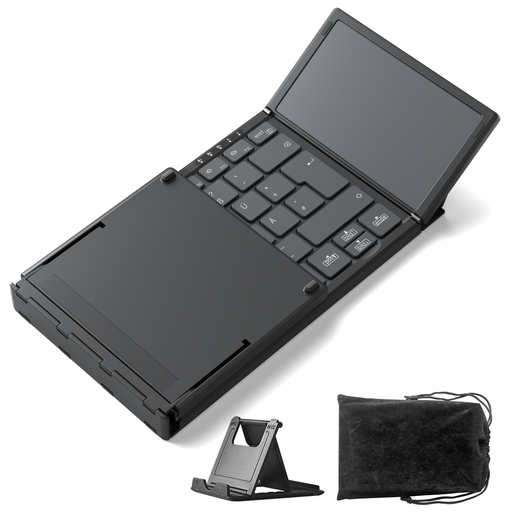
Inateck N0153BK Foldable Mini Keyboard with Touchpad, QWERTZ
For testing stations used with several computers, when you need a compact, foldable keyboard with a touchpad.
- Up to three Bluetooth channels, according to the product description.
- Compatible with Windows, Android and iPadOS, according to the product description.
View at Joybuy
 No image available
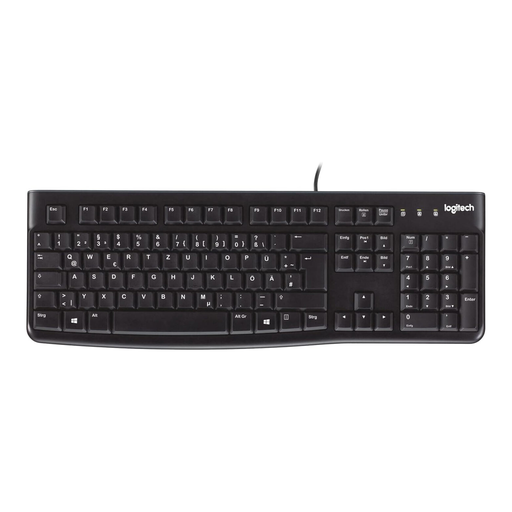
Logitech K120, wired keyboard, German QWERTZ
For a permanent testing station when you need a standard German layout and a wired connection.
- USB plug and play, according to the product description.
- Function keys and navigation block, according to the product description.
- Full-size layout and spill-resistant design, according to the product description.
View at Joybuy
 No image available
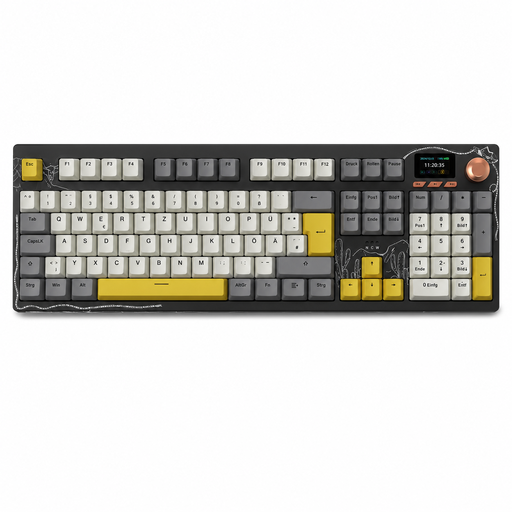
AJAZZ AK35I V4, mechanical keyboard, German QWERTZ
For switching between test computers when you need a German layout and a choice of connection types.
- Bluetooth, 2.4 GHz wireless and USB-C, according to the product description.
- Navigation key group and function row, according to the product description.
- Full-size layout with number pad, according to the product description.
View at Joybuy
 No image available
Logitech MX Mechanical, Tactile Quiet, German QWERTZ
For testing across several computers when you need a wireless keyboard that can switch between devices.
- Bluetooth and Logi Bolt connectivity, according to the product description.
- Connects to up to three devices, according to the product description.
- The switches are described as Tactile Quiet.
View at Joybuy
 No image available
Logitech ERGO K860, split keyboard, QWERTZ
For people who prefer a split keyboard during longer testing sessions and can try the layout beforehand.
- Bluetooth and USB receiver, according to the product description.
- Split keyboard, palm rest and adjustable tilt legs, according to the product description.
- F.A.Z. Kaufkompass describes the gap between the palm rest and keyboard as difficult to clean.
View at Joybuy
Frequently asked questions
Is a particular keyboard enough to confirm that keyboard navigation is accessible?
No. Test the application itself to check whether its features can be used without a mouse and whether keyboard focus remains visible. The W3C Web Accessibility Initiative describes these requirements for operability and focus; a keyboard is an input device, not proof of compliance.
What should a team set up before its first navigation test?
Check the layout and the actual function key mapping, and, for wireless models, make sure the keyboard is connected to the intended computer. Record any non-standard settings so that a shortcut being triggered is not mistaken for behaviour in the application.
Can any keyboard at a shared workstation be disinfected?
There is no general answer. Check that the cleaning product and method are suitable according to the information for the specific model. CHERRY describes the KC 1068 as easy to clean and says it is resistant to common disinfectants.
Does BITV 2.0 require a particular keyboard for every shared desk?
No. It does not set a general requirement for a specific keyboard model. The Federal Government’s Accessibility Portal describes BITV 2.0 as legislation for the German Federal Government’s public administration. Whether it applies to the particular service being tested depends on who provides it and its scope.


