What should you look for when buying?
First, check which layout and keys you’ll use most often when adding comments. Then you can choose a size, key feel and connection type to suit your workspace.
| What matters |
What to look for |
Who it matters most to |
| Quiet key action |
Try the key action and noise for yourself if possible; manufacturers’ descriptions don’t allow for a direct comparison of volume. |
When I’m adding comments in a shared room, I want to disturb others as little as possible. Around 25% of consumers put a quieter key action first. |
| Room for a mouse and papers |
Measure your available desk space and decide whether you need a number pad. Also check that the arrow and navigation keys are easy to reach. |
When desk space is limited, having room beside the keyboard matters most to me. Around 25% of consumers prioritise a keyboard that fits their available space. |
| Comfort during long sessions |
Consider the key layout, hand position and time needed to get used to it; split keyboards need extra space. |
During long proofreading sessions, I want to be able to position the keyboard and screen comfortably. Around 19% of consumers prioritise hand position and typing comfort. |
| Connection and switching between devices |
Check Bluetooth or receiver requirements, available ports, operating system and whether the special keys work with your software. |
When I work on assignments across several devices, the connection needs to work with each one. Around 19% of consumers prioritise switching between devices. |
| Power and accessories |
Compare wired, rechargeable and battery-powered options, and check what’s included with the specific version; wireless models need a power source. |
If I want to keep the extra work of charging or buying accessories to a minimum, I check how the keyboard is powered. Around 12% of consumers put this ongoing effort first. |
Joybuy products for proofreading
This selection includes compact wired and wireless keyboards, as well as split-layout models for proofreading at a desk or on compatible devices.
 No image available
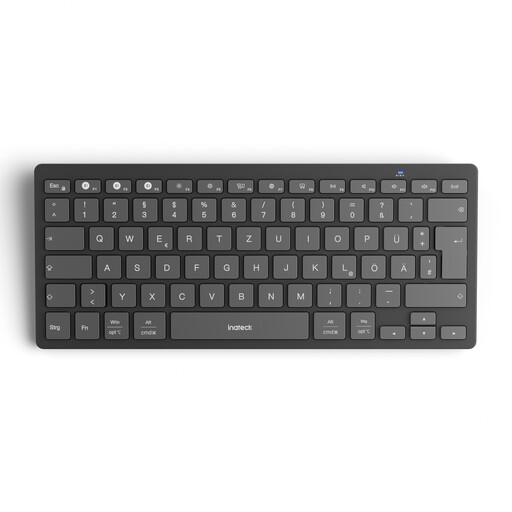
Inateck Bluetooth Keyboard KB01003G
The QWERTZ layout and Bluetooth connection could suit you if you write comments in German on compatible devices.
Connects to three devices over Bluetooth; the product details list compatibility with iPadOS, Android, Windows and iOS.
Powered by two AAA batteries.
View at Joybuy
 No image available
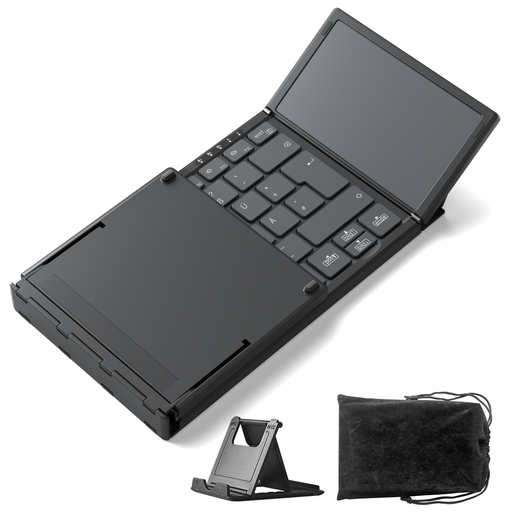
Inateck Foldable Mini Keyboard N0153BK
The foldable design and built-in touchpad combine typing and cursor control in one device.
With a QWERTZ layout and three Bluetooth channels; check compatibility with your devices and their operating systems.
View at Joybuy
 No image available
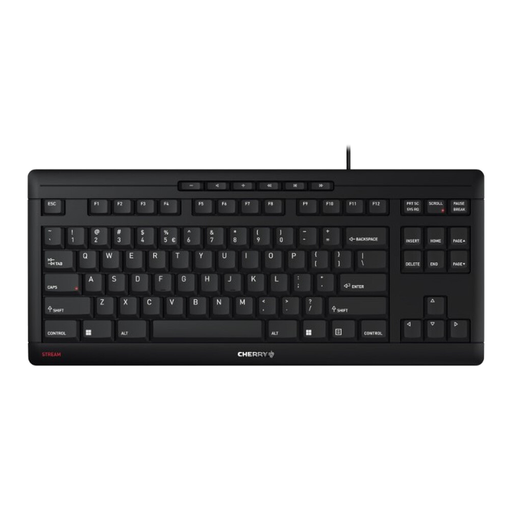
CHERRY STREAM KEYBOARD TKL
This wired TKL model has no number pad, so it could suit you if you mainly work at one computer and want to save space.
With USB connection, CHERRY SX scissor mechanism and six multimedia keys.
The version on offer is specifically listed with an English US layout and euro symbol; check that the key layout suits you.
View at Joybuy
 No image available
Logitech MX Mechanical Wireless
The German QWERTZ layout and the option to switch between compatible devices could be useful if you proofread on more than one device.
With Bluetooth and Logi Bolt; the product details list Easy-Switch for up to three devices.
The switches are described as Tactile Quiet. Charging is via USB-C.
View at Joybuy
 No image available
Logitech ERGO K860
The split keyboard and palm rest offer a different layout for long typing sessions; the right hand position will depend on the individual.
With a QWERTZ layout, Bluetooth or USB receiver.
This full-size model measures 456 × 233 mm, so it needs a good amount of desk space.
View at Joybuy
Frequently asked questions
Which keys should I try before buying a keyboard for digital proofreading?
Check whether the arrow, function and navigation keys are easy to reach for the comments you write. A TKL model doesn’t have a number pad; whether that works for you depends on how often you enter numbers.
How should I set up a keyboard for long sessions on a laptop or tablet?
Where possible, use a separate keyboard and mouse, along with an external monitor if you have one. The DGUV particularly recommends this separate setup for longer sessions on mobile devices. If you’re using Bluetooth, you’ll also need to check that it pairs with your device.
What should I know about the battery, faults and warranty?
First, check whether the specific model is powered by a rechargeable battery, disposable batteries or a cable. According to information from the European Union, when you buy goods from a business seller in the EU, you have a legal right to a minimum two-year guarantee from the date you receive them. This is separate from any voluntary manufacturer’s warranty.
Which compliance details matter for a wireless keyboard?
The Bundesnetzagentur explains the CE marking requirements for products covered by the relevant EU harmonisation rules. It also lists labelling, product identification, manufacturer details, instructions in German and a declaration of conformity as points to check; a shop description alone doesn’t prove that a specific device complies.
How should I dispose of an old keyboard?
Don’t put it in your household waste. The German Environment Agency lists local collection points and take-back options at retailers; removable batteries should be taken out and disposed of separately before you hand the keyboard in.


