People who do a lot of proofreading
If you write lots of individual comments, you may pay particular attention to key shape and typing posture. An ergonomic design claim is no substitute for trying the keyboard out for yourself.


You don’t need a keyboard with device switching to use two screens with one computer; that feature only matters if you switch between two separate computers. If you write lots of comments, a split layout might be worth considering, while a compact keyboard saves desk space and a full-size model gives you a number pad. Before choosing, check the German keyboard layout and connections, and make sure the key arrangement and size suit your day-to-day work.
If you write lots of individual comments, you may pay particular attention to key shape and typing posture. An ergonomic design claim is no substitute for trying the keyboard out for yourself.
If you need to fit paperwork and two screens alongside your keyboard and mouse, you’ll need to weigh up the space you save against having a separate number pad and easy-to-reach navigation keys.
If your two screens are connected to different computers, compatible connections and straightforward switching between devices matter. Having two monitors connected to a single computer doesn’t automatically mean you need this feature.
First, work out whether you use one computer or two. Then you can weigh up the keyboard layout, desk space and typing feel to suit your proofreading tasks.
| What matters | What to check before buying | Who is it important to? |
|---|---|---|
| Posture and typing comfort | Split or straight layout, wrist rest, desk space and how easily you get used to the keyboard. | If I write comments for long periods, I want to find a key shape that feels comfortable to use; around 31% of consumers put typing comfort first. |
| Connections and switching between computers | Number of computers you use, available USB ports and Bluetooth, as well as which connections are permitted on your work device. | If my two screens are connected to different computers, I want to know whether the keyboard can connect to both; around 25% of consumers prioritise suitable connections. |
| Proofreading and number keys | German layout, special characters, arrow and navigation keys, and whether you need a number pad. | If I often navigate or enter numbers while proofreading, I want the keys I need close at hand; around 25% of consumers focus primarily on the keyboard layout. |
| Desk space and typing noise | Dimensions, room for your mouse and how noisy the specific model is in your working environment. | If my desk is cramped or I type in a shared room, the right size or a pleasant typing sound matters to me; around 19% of consumers prioritise space or noise. |
Extra connection options matter when switching between separate devices, not simply because you have a second monitor connected to the same computer.
Before choosing, make a note of which screens are connected to which computer and which keyboard connections are available.
A split keyboard or wrist rest describes the design, but it doesn’t tell you how the layout will feel to use.
Compare the key shape and desk space it requires, and try an unfamiliar layout for yourself if you can.
On compact keyboards, the layout and accessibility of navigation keys and the number pad may differ from what you’re used to.
Check the German layout, special characters, navigation keys and whether you need a number pad.
A voluntary guarantee doesn’t replace your statutory rights against the retailer. The Verbraucherzentrale explains the difference between a guarantee and statutory rights.
Check what’s included with the specific version and read the written guarantee terms.
If you need to buy a separate receiver or batteries, that means extra shopping; check whether the necessary accessories are included.
The POP Icon Keys is a compact model, while the ERGO K860 has a split keyboard and is designed for people considering a different key arrangement.
The STREAM KEYBOARD WIRELESS is a wireless version, while the STREAM KEYBOARD ULTIMATE offers several connection options, according to the manufacturer.
The PERIBOARD-612 W is a split model available in a DE-QWERTZ version, with Bluetooth and 2.4 GHz connectivity.
The K3 Max is a compact mechanical keyboard, also available with a DE-ISO layout.
This selection includes compact and foldable QWERTZ keyboards, models with several connection options and a full-size keyboard with a number pad.
 No image available
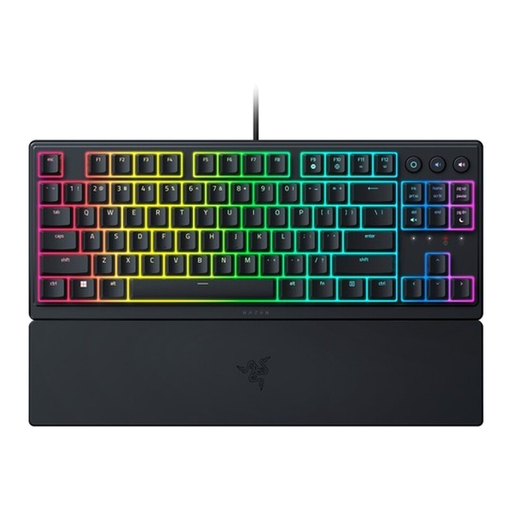
The TKL format could suit you if you need more room for your mouse beside the keyboard.
German QWERTZ layout, USB connection, wrist rest and keys described as clicky. No number pad; wired.
 No image available
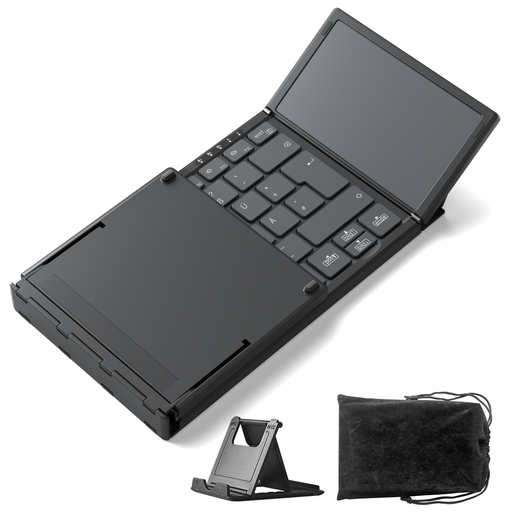
The foldable mini design could be a good choice if you want a small, portable keyboard. For a permanent proofreading set-up, consider whether you’ll be comfortable with the compact key layout.
QWERTZ layout, touchpad and three Bluetooth channels. Described as compatible with Windows, iPadOS and Android.
 No image available
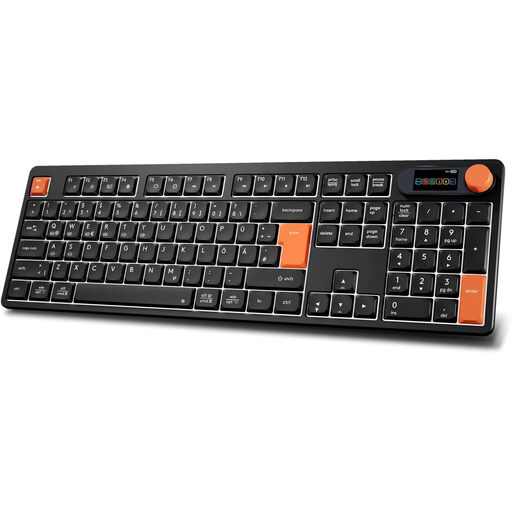
The multiple connection options could suit you if you want to switch between separate devices; check which connections you can use with your computers.
QWERTZ layout, LCD display and rotary dial. The product title lists four Bluetooth connections, 2.4 GHz, USB-C, a 2000-mAh battery and backlighting.
 No image available
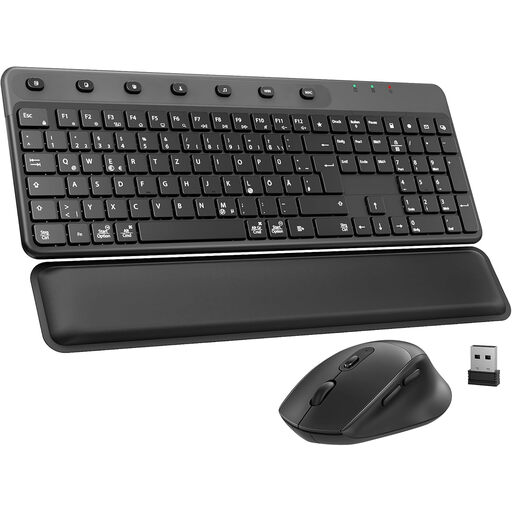
The full-size format could suit you if you enter numbers often and want a dedicated number pad.
Keyboard and mouse set with a German QWERTZ layout, number pad, keys described as quiet and a 2.4-GHz USB connection. The wrist rest is detachable.
 No image available
The 65% format could be an option if you’re looking for a compact keyboard with several connection types; check that the key layout suits your proofreading tasks.
German QWERTZ layout and three connection types: Bluetooth, 2.4 GHz wireless and USB-C. With low-profile MX Speed switches.
No, not just because you have two monitors. First check whether both screens are connected to the same computer; switching the keyboard connection only matters if you’re using separate computers.
Position the keyboard to suit your usual typing posture, and make sure your mouse and paperwork are still within reach. Logitech recommends aligning the split in the ERGO K860 with the centre of your body; this is a recommendation for that specific model from its manufacturer.
For the version you choose, check whether batteries or a required receiver are included, and read the terms of any voluntary guarantee. When buying as a consumer in Germany, statutory rights against the seller are distinct from a voluntary guarantee; the German federal government states that the general period for goods to be free from defects is two years.
The official ASR A6 sets out requirements for display-screen workstations in workplaces and in home-working environments. Its stated scope doesn’t automatically cover every type of work at home outside a designated home-working set-up, so check whether it applies to your particular workspace.