Log reviewers in shared offices
If you search through logs and make notes alongside colleagues, quiet keys and familiar navigation are particularly important.


For checking server logs at a shared desk, first make sure the keyboard’s connection and layout suit the computer you’ll be using. Quiet keys and familiar navigation and function keys are important if you often search through logs and make notes. A TKL keyboard saves space but does without a number pad; a split model may be worth considering for longer typing sessions, although it could take some getting used to.
If you search through logs and make notes alongside colleagues, quiet keys and familiar navigation are particularly important.
When you work at different desk-sharing stations, the right connection, straightforward use with each computer and the space available all matter.
If you type for long periods, consider the keyboard’s shape and how you hold your hands in the context of your working environment.
A good fit if: your regular computer has a compatible USB port and desk space is limited.
The trade-off: There’s no number pad, and the cable and specific key layout need to suit your workspace.
A good fit if: you switch between computers and need a connection that works at each workstation.
The trade-off: The wireless receiver, Bluetooth pairing, power supply and any required software need to work with your IT setup; a full-size keyboard also takes up more space.
A good fit if: your hand position is a priority during longer typing sessions, and the shape and wrist rest suit you.
The trade-off: A split keyboard may take some getting used to; with mechanical models, the layout and switch type need to be compatible.
When choosing a keyboard for checking server logs at a shared desk, first make sure it has the keys you use most and connects to your computer. Then consider noise and the space it takes up.
| What matters when buying | What to check | Who it matters most to |
|---|---|---|
| Quiet keys | Check the mechanism or switch type, as well as the specific information about typing noise; ‘mechanical’ doesn’t automatically mean ‘quiet’. | If I’m searching through logs alongside colleagues, I want my typing to be as unobtrusive as possible. That’s why around 22% of consumers put quiet keys first. |
| Familiar log navigation | Check the layout and the arrow, navigation, function and symbol keys on the specific version. | When I’m repeatedly searching for text and recording findings, I want familiar keys and symbols at my fingertips. Around 22% of consumers prioritise log navigation and input keys. |
| Connection and moving between workstations | Check USB ports, wireless receivers, Bluetooth and any required software with your IT team. | If I work at different computers, I need a connection that I can actually use at each one. Around 22% of consumers prioritise connectivity and switching between workstations. |
| Space required | Consider the desk space available, room for a mouse and wrist rest, and whether you need a number pad. | If space is limited at a shared desk, I want to free up room without losing keys I use often. Around 17% of consumers put the space required first. |
| Individual hand position | Consider the keyboard’s shape, the wrist rest and the time it may take to get used to it; the right shape depends on the individual. | When typing for longer periods, I want to choose a keyboard shape that suits my working environment. Around 17% of consumers focus on their individual hand position. |
A model range may include different language versions. A US layout with a euro symbol is not the same as German QWERTZ, so the positions of symbols and keyboard shortcuts may differ.
Before buying, check the name and image of the specific version, especially if you need German characters and familiar keyboard shortcuts.
A different layout may take time to get used to and could mean you have to return the keyboard.
The fact that a keyboard uses Bluetooth or a wireless receiver doesn’t tell you whether that connection is allowed or usable on a shared computer.
Ask your IT team which ports, pairings and, where relevant, configuration software are permitted at your workstation. If there’s a suitable USB port, you could also consider a wired keyboard.
Depending on the connection, you may need to plug in a receiver, power the keyboard or agree a suitable workstation setup.
A split layout won’t automatically suit everyone or every workspace, and it may take some getting used to.
Consider the shape and wrist rest in the context of your own working environment. The manufacturer’s claims are no substitute for your own assessment.
The STREAM KEYBOARD and STREAM KEYBOARD TKL are wired options for office typing, with a choice of full-size or number-pad-free designs.
The MX Keys S and split-layout ERGO K860 cater to different office typing needs and preferences for keyboard shape.
The PERIBOARD-335 combines a compact split keyboard with a choice of mechanical switches.
The B6 Pro is a full-size option if you need a German ISO layout and several connection types.
This Joybuy selection includes keyboards for checking server logs at a shared desk, from compact and wired models to wireless and split options.
 No image available
For changing workstations when you need German QWERTZ and several connection options; check which ones you can use with each computer.
65% layout; tri-mode connectivity with 2.4 GHz, Bluetooth and USB-C; MX Speed switches; RGB lighting.
 No image available
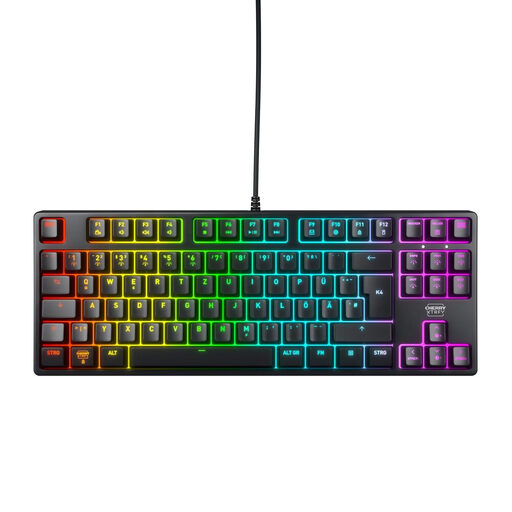
For a fixed USB workstation if a compact TKL layout without a number pad suits the way you work.
Wired; TKL layout; German QWERTZ layout; linear MX2A Red switches; RGB lighting.
 No image available
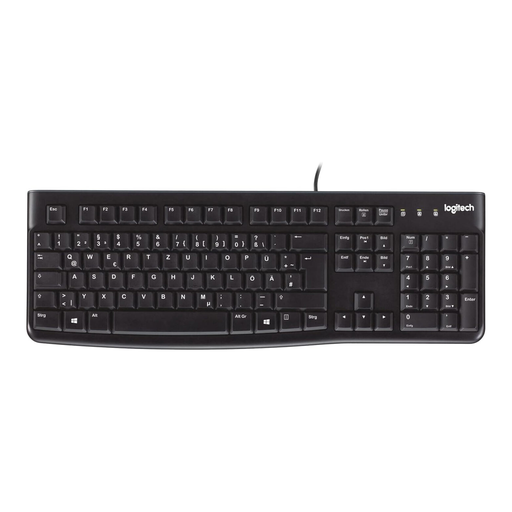
For a compatible USB computer if you prefer a familiar full-size keyboard to a compact model.
Wired; USB plug and play; full-size with 104 keys; German QWERTZ layout; described as spill-resistant.
 No image available
If you’re considering a split layout for longer typing sessions, check whether the shape suits your hand position and whether you can connect it at your workstation.
Split keyboard; Bluetooth and USB receiver; QWERTZ layout; listed as compatible with Windows and Mac.
 No image available
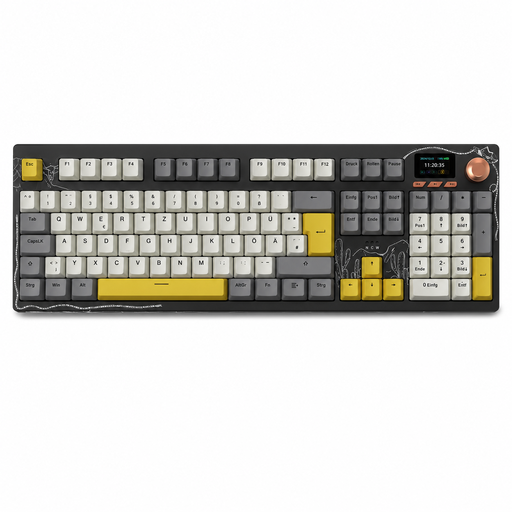
For moving between computers if you want to choose between Bluetooth, 2.4 GHz wireless and USB-C; check that the connection works at your specific workstation.
Tri-mode connectivity with Bluetooth, 2.4 GHz and USB-C; 10,000 mAh battery; 1.14-inch colour display; hot-swappable; listed as compatible with Windows and Mac.
No, not necessarily. If you mainly search, navigate and jot down short notes, a TKL model can save space. If you often enter strings of numbers, consider whether a number pad would make your particular workflow easier.
Ask your IT team which USB ports, wireless receivers, Bluetooth pairings and, where relevant, configuration software you can use at that workstation. The German Social Accident Insurance (DGUV) covers the equipment provided at shared screen workstations in its Desk-Sharing Check-Up; this does not amount to general approval of any particular connection.
Follow the instructions for the specific model and your workplace’s cleaning procedures. Logitech recommends unplugging its wired keyboards and switching off its wireless ones before cleaning. This doesn’t mean that every cleaning product is suitable for every brand.