Writers who put in long hours
If you’re drafting and editing long chapters, key layout, feel and hand position may matter more than extra features. An ergonomic design is one option, but it won’t automatically be the right choice for you.


You don’t need a physically split keyboard to use a split-screen editor: the software provides the document or window view. Choose a keyboard based on the German layout actually supplied, the space you have and whether you need a number pad. An ergonomically split design is worth considering if you’d like to try a different hand position, but it doesn’t guarantee any health benefits.
If you’re drafting and editing long chapters, key layout, feel and hand position may matter more than extra features. An ergonomic design is one option, but it won’t automatically be the right choice for you.
If you keep your text and sources open side by side, look for easy-to-reach navigation and window keys, and allow enough room for your pointing devices. How these features work depends on the software and operating system you use.
When writing names, place names and body text in German, check the actual keyboard layout supplied before deciding on a model or an unusual design.
| Criteria | What to check before buying | Who should pay particular attention |
|---|---|---|
| Typing comfort | Key shape and hand position; for split models, also consider room for your forearms and the time it may take to get used to the layout. | If I’m writing long passages, I want to find a key layout that feels comfortable to use. Around 29% of consumers put typing comfort first. |
| German layout and navigation | Check the exact DE or QWERTZ variant, along with the shortcuts in your editor and operating system. | When writing a manuscript in German, I want to be sure of the key labels and editing keys before I buy. Around 29% of consumers prioritise layout and navigation. |
| Desk space | Measure your desk and consider how often you enter years or figures in tables using a number pad. | If you need room for notes and other input devices as well as your draft and sources, a shorter keyboard may be important. Around 24% of consumers put available workspace first. |
| Noise and connectivity | Check the switch type, the sound level you want and the right computer connection or wireless option. | In a shared room, I want to choose a typing sound and connection that suit my workspace. Around 18% of consumers prioritise noise and connectivity. |
You don’t need a special keyboard for the on-screen view itself: Microsoft Support explains how to view two documents side by side in Word. So consider the software controls and keyboard design separately.
Viewing documents side by side is a software feature. You don’t need a physically split keyboard to use it.
First, consider space, layout and typing feel. Only consider a split design if you want to try a different hand position.
The layout available may differ from the model actually supplied. The Keychron Q11 page shows UK ISO as the selected variant; the Perixx page lists German (QWERTZ) as an option while also describing US as the standard layout.
Ask the seller to confirm the German variant and full model code for the specific listing, rather than relying on ‘ISO’ or a drop-down menu alone.
The CHERRY STREAM KEYBOARD TKL has no number pad; the Logitech ERGO K860 has one built in.
Try entering years or figures in a typical chapter or table to see which input method works for you.
If you want to enter numbers using a separate keypad, you’ll need to allow extra space for it.
The STREAM KEYBOARD has a standard layout, while the wired STREAM KEYBOARD TKL is a space-saving version without a number pad.
The ERGO K860 is aimed at anyone considering a fixed split keyboard with a palm rest and built-in number pad.
The Q11 is an example of a split 75% layout, with two independently positionable halves and QMK/VIA.
The PERIBOARD-535II is a wired, fixed-split mechanical keyboard with a choice of switches.
The models below include compact and standard keyboards, as well as an ergonomically split design for workspaces where you write in German.
 No image available
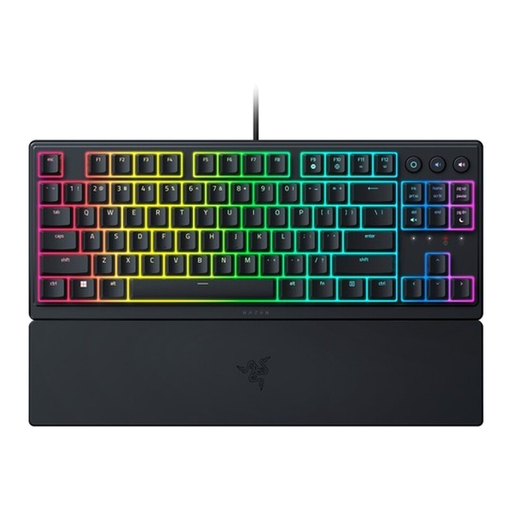
The tenkeyless format could suit you if you can manage without a built-in number pad at your desk.
Tenkeyless; German layout. The switches are described as clicky.
 No image available
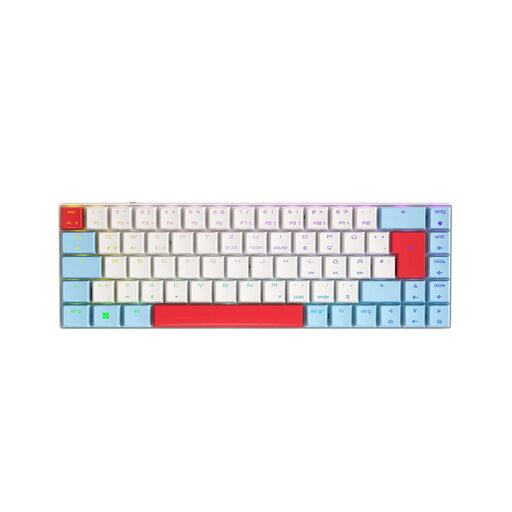
The compact design could suit you if you want to keep space free for sources and notes at your shared workspace.
Low-profile MX Speed switches; connects via 2.4 GHz, Bluetooth or USB-C.
 No image available
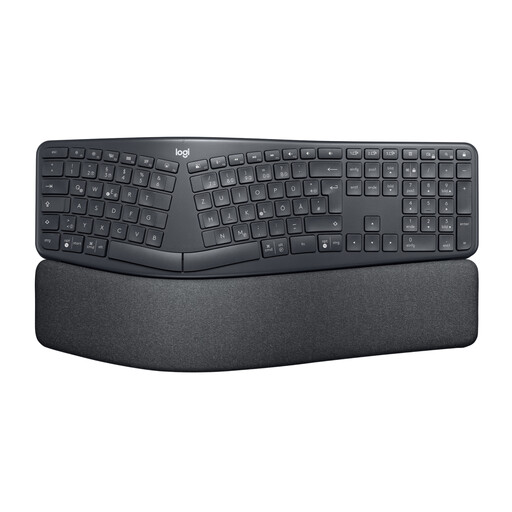
An option if you’d like to try a fixed split layout during longer writing sessions.
Curved, split key layout and palm rest; connects via Bluetooth or USB receiver. F.A.Z. Kaufkompass notes that it lacks wired mode and backlighting.
 No image available
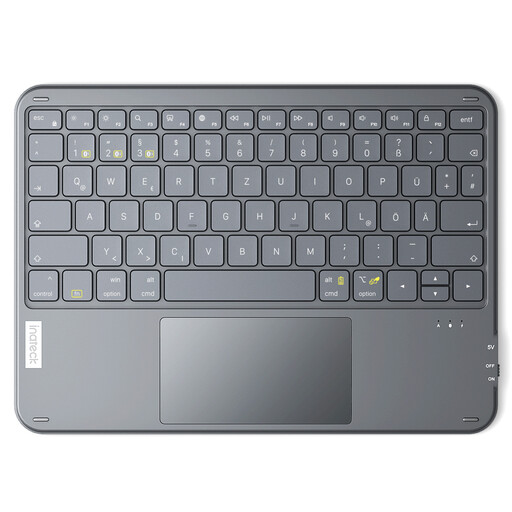
The built-in touchpad could be useful if you want a pointing device right on the keyboard when switching between documents.
Bluetooth keyboard with German QWERTZ layout; according to the product name, compatible with iPad, Android tablets, Windows, laptops and PCs. Check compatibility with your specific device.
 No image available
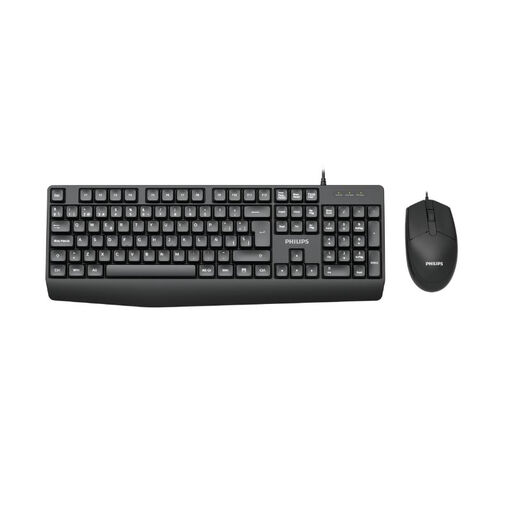
A wired keyboard and mouse set could be a good option if you’re looking for both input devices for your workspace.
German version; wired keyboard and mouse set.
No. Viewing documents side by side is a feature of your word processor or operating system. For example, Microsoft Support explains how to use ‘View Side by Side’ for two open documents in Word. Check how the feature works in the editor you actually use.
Check the shortcuts for your version of the programme and operating system, and test them with your chosen keyboard layout. Microsoft Support notes that shortcuts documented for Word using US key names may differ on other layouts; Windows has its own documented window shortcuts.
Before buying, check which computer connection or wireless option you need, and follow the care instructions for the specific model. F.A.Z. Kaufkompass noted that the gap between the palm rest and keyboard on the ERGO K860 is difficult to clean.
For online purchases from a business seller, you generally have a 14-day right to cancel, starting from delivery of the goods; exceptions and possible return costs should be taken into account. If goods are faulty, you also have a statutory right to claim against the seller for at least two years from receipt. This is separate from any voluntary manufacturer’s guarantee.