Quiz writers who need a quiet setup
If you write questions and answers in a room where typing could disturb others, it’s worth considering the keystroke before extra features.


For a study quiz in a student room, a compact keyboard without a number pad is an obvious choice if you rarely enter numbers and want to save space. If you share your room, a keystroke that the brand describes as quiet may be important; however, manufacturers’ claims are not a like-for-like noise test. If you work across several devices, check the connectivity and key layout. For longer writing sessions, make sure there is enough room for your keyboard, mouse and arms.
If you write questions and answers in a room where typing could disturb others, it’s worth considering the keystroke before extra features.
If you need space for a mouse, notes or a laptop alongside your keyboard, and rarely use the number pad, a compact design may suit your desk better.
If you switch between a compatible computer and a mobile device while creating or checking a quiz, check whether the keyboard supports both.
The figures relate to consumers choosing a keyboard for a study quiz in a student room; each person is counted against their most important buying consideration.
| Consideration | What to check before buying | Who it matters most to |
|---|---|---|
| Typing noise | Check the manufacturer’s information about the keystroke for the specific model; don’t treat “quiet” as a like-for-like measurement. | When I’m writing in a shared room, I want to disturb others as little as possible. Consumers who value a quiet keystroke most account for around 36 %. |
| Desk space | Check whether it has a compact or TKL design, as well as its actual dimensions; consider how much you need a number pad. | If I need to leave room for a mouse and study notes beside my keyboard, I’d rather have more clear desk space than a number pad. Consumers who prioritise space account for around 29 %. |
| Device connectivity | Check for Bluetooth support or the USB port you need; don’t assume wireless and Bluetooth mean the same thing. | If I switch between my laptop and a mobile device to work on quiz questions, I need a connection that both devices support. Consumers who value switching between devices most account for around 21 %. |
| Hand position while typing | Check that you can position the keyboard and mouse comfortably, with enough room for your arms. | When I’m typing for longer periods, I want to position the keyboard and mouse so there’s enough room for my arms to rest comfortably. Consumers who prioritise hand position account for around 14 %. |
The Federal Institute for Occupational Safety and Health recommends allowing enough space for computer work so you can position your mouse and keyboard freely and rest your arms. That doesn’t automatically make any particular keyboard design the right choice for you.
Keyboard variants can have different key layouts, including DE and US or EU versions. Choosing the wrong layout could make typing more difficult and mean you have to return the keyboard or start your search again.
Check that the specific model is explicitly listed as DE or QWERTZ, and ask the seller to confirm the full manufacturer’s model number if needed.
A set may include a mouse as well, so it won’t necessarily be identical to a keyboard listed separately.
Compare the full model name and what’s included before you decide.
A split design changes the position of your hands, but doesn’t guarantee that it will make you more comfortable. Desk space, your sitting position and the way you arrange your mouse and keyboard all play a part too.
Consider the keyboard alongside the space you have available and the hand position that feels comfortable for you.
The STREAM KEYBOARD TKL is a compact wired option for anyone who rarely needs a number pad.
The Pebble Keys 2 K380s is a compact Bluetooth option; the MX Keys Mini adds backlighting, while the ERGO K860 has a split design.
The KB525C in German QWERTZ is a full-size wired keyboard.
The K3 Max is a compact mechanical keyboard for anyone who wants to choose their connectivity options and customise their keys.
The Ody II is a wireless option that Trust describes as having quiet keys.
The products below are mainly compact Bluetooth and wireless keyboards, along with a full-size QWERTZ keyboard and mouse set.
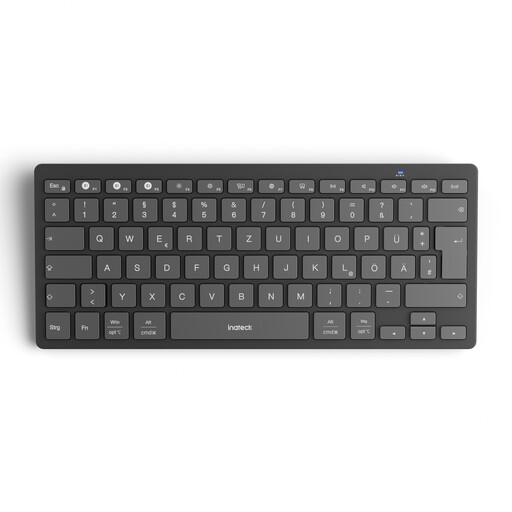 No image available
An option if you want to work on quiz questions across several compatible devices: according to the product description, you can switch the keyboard between three Bluetooth devices.
Bluetooth 5.3; QWERTZ layout.
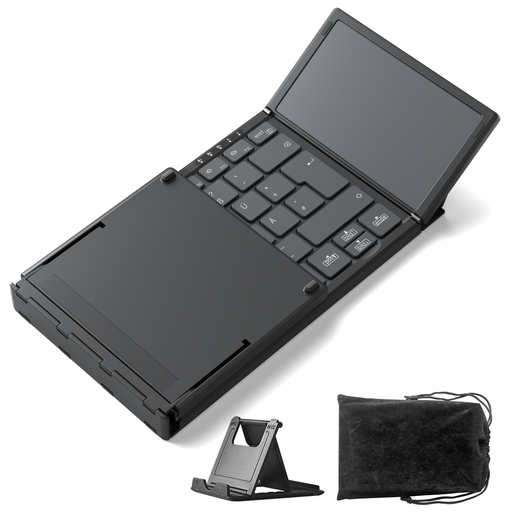 No image available
The foldable design and built-in touchpad could be useful if you have limited workspace. The product description mentions quiet keys and three Bluetooth channels.
According to the product title, it’s compatible with iPadOS, Android and Windows; QWERTZ layout.
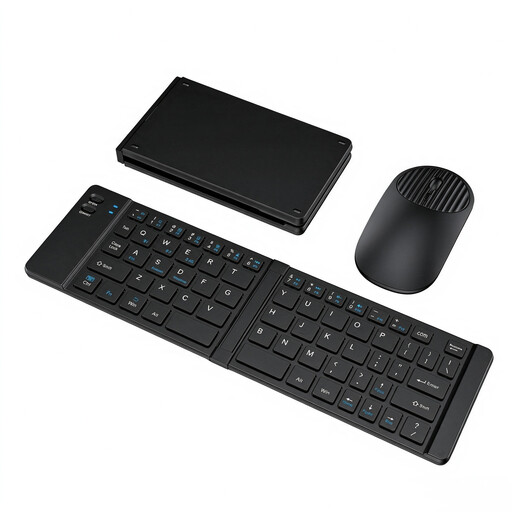 No image available
If you’re looking for a compact keyboard for several devices, the product title lists connections for up to three devices and a foldable design.
The title mentions quiet scissor keys, three connection modes and USB-C charging; compatible systems listed are Windows, Android and iOS.
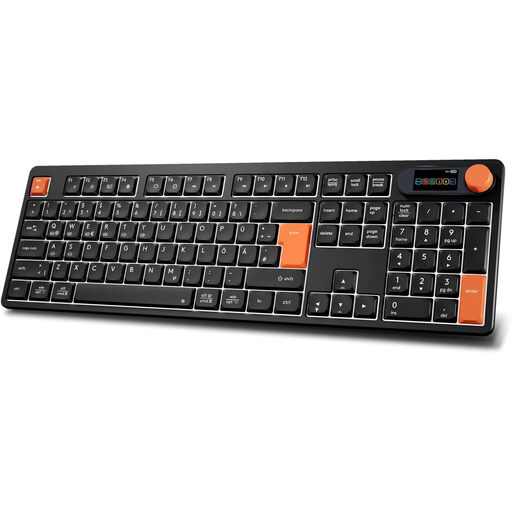 No image available
For working across several devices, the product description lists connections for up to four devices and the ability to switch between them.
QWERTZ layout; Bluetooth, 2.4 GHz and USB-C; 2000-mAh battery and backlighting.
 No image available
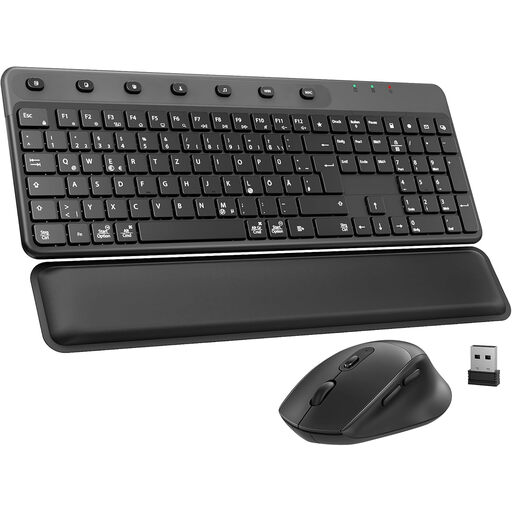
This set could be a good fit if you need a number pad and have enough desk space for a full-size keyboard.
The product title mentions quiet keys, a 2.4-GHz USB connection and a detachable wrist rest; its number pad means it takes up more desk space than a compact keyboard.
Not necessarily. If you mainly write questions and answers, a TKL keyboard can save space; a full-size keyboard may be more practical if you enter numbers often.
Check whether your device supports Bluetooth or whether you’ll need a USB receiver. According to Logitech, you can switch the Logitech Pebble Keys 2 K380s between three paired devices; the Trust Ody II uses a USB receiver, according to Trust.
Leave enough room on your desk to position the keyboard and mouse comfortably and rest your arms. The Federal Institute for Occupational Safety and Health recommends this for computer work; the best layout depends on your workspace.
For online purchases from a trader that are generally covered by the right of withdrawal, the EU usually provides a 14-day withdrawal period from the date of delivery. According to Your Europe, you may have to pay the return costs if the seller informed you of this before the purchase; separate statutory rights apply to faulty goods. Your Europe also states that goods have at least two years of legal protection from the date you receive them.
The workplace rules mentioned do not create a general requirement for a student room used for private study. Under the Workplace Ordinance, a teleworking workstation must be a computer workstation set up by an employer; it doesn’t qualify as one simply because you study at home.