First, choose a layout that suits your computer and the characters you use most often. Then decide whether a compact layout, a number pad, switching between devices or a split keyboard layout is best for your workspace. A keyboard won’t make a website responsive: you’ll need to check how it displays at different viewport widths and whether it can be operated using a keyboard separately.
Which keyboard is right for you?
Developers with a permanent workspace
If you write code and German text, compare the keyboard layout and the keys you need with your usual workflow. You’ll also need to weigh up the benefits of a number pad against the space available for other devices on your desk.
Teams testing on multiple devices
If you test a consultation website on different devices, desk space and suitable connections matter. A keyboard that switches between devices doesn’t replace the need to check different viewport widths separately.
Heavy typists focused on ergonomics
If you’d like to try a different hand position, consider the desk space you have and how long it might take to get used to a new layout. A split keyboard isn’t a medical treatment.
What should you look for when choosing?
| Buying priority |
What to check before you buy |
Who is it most relevant to? |
| Layout and keys |
Check the specific country layout and whether it gives you access to the navigation keys and number pad you need. With compact models, check for any changes to the key layout. |
If I work with code, German text and keyboard testing, I want quick access to the familiar characters and navigation keys I need. Roughly 40% of consumers put the layout and access to keys first. |
| Desk space and switching between devices |
Compare the keyboard’s dimensions with the space available on your desk, and check which connections your devices actually support. |
If I need room for other test devices next to my computer or switch between computers, the right size and connection matter to me. Roughly 30% of consumers put desk space or switching between devices at the top of their list. |
| Hand position during long sessions |
Check the keyboard’s width and layout against your desk space. If the layout is unfamiliar, it’s helpful to have a chance to try it out. |
If I type for long periods and want to try a different key layout, it also needs to suit my workspace. Roughly 20% of consumers focus mainly on hand position. |
| Connection and operation |
Check whether USB-A is available or whether the wireless connection on offer is compatible with your computer and operating system. |
If I want to connect my keyboard easily at a permanent workspace, compatibility with the devices I already own is essential. Roughly 10% of consumers put connection and operation first. |
Avoid common buying mistakes
-
Comparing only the model family name, not the country layout
A model family may be available with different country layouts. A version of the CHERRY KC 6000 SLIM listed on Joybuy is specifically labelled as having a US layout, while CHERRY also lists a German version.
Check the layout on the specific product listing and, if possible, the full variant number.
-
Assuming a split keyboard is all you need for ergonomics
A split layout changes the arrangement of the keys, but it doesn’t determine how your entire workspace is set up. Perixx notes that it can take time to get used to the PERIBOARD-512 B.
Consider your desk setup and working habits, and try an unfamiliar layout if possible.
-
Confusing a keyboard purchase with an accessibility check
Choosing the right keyboard won’t automatically make a website’s features operable using a keyboard. The W3C’s WCAG 2.2 treats keyboard accessibility as a requirement for web content; checking the website is a separate step.
Test the finished features separately using keyboard input, and check how the site looks at different viewport widths.
Keyboard brands to consider
Logitech
The MX Keys S is designed for low-profile typing, while the ERGO K860 has a split wireless layout.
- Logitech lists Easy-Switch on both models, letting you switch between paired devices.
- For the ERGO K860 model it tested, F.A.Z. Kaufkompass notes that it lacks backlit keys and wired operation. These limitations apply to the model tested, not all Logitech keyboards.
CHERRY
The KC 6000 SLIM is a low-profile wired keyboard available with several country layouts.
- CHERRY lists scissor switches, a number pad and USB-A. The model variant JK-1600DE-2 is identified as the German version.
- Check the country layout of the specific version: a Joybuy product page with the same model name lists its variant as a US layout.
Keychron
The K3 Pro is a compact mechanical keyboard with customisable keys.
- Keychron lists a 75% layout and VIA; DE-ISO is available as a layout option.
- The preselected variant on the manufacturer’s website is UK-ISO. The compact layout doesn’t include a separate number pad.
Perixx
The PERIBOARD-512 B is a wired split keyboard available with a German layout.
- Perixx lists USB-A, a number pad and a width of 485 mm.
- Perixx notes that it can take time to get used to. Make sure you have enough room for the split layout.
Keyboards at Joybuy
The models below cover compact mechanical layouts, a full-size wired layout and a split keyboard for different workspaces.
 No image available
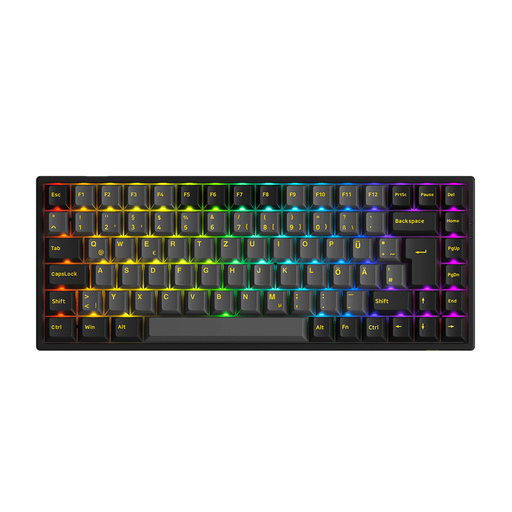
Akko 3084B Plus, ISO-DE, 75%, V3 Pro Cream Blue, Black & Gold
The compact design may suit you if you want to leave room for other test devices and are comfortable with the key layout.
ISO-DE layout; 75% layout; Bluetooth, 2.4 GHz wireless and USB-C; hot-swappable and RGB.
View at Joybuy
 No image available
CHERRY MX-LP 2.1, 65%, MX Speed, German QWERTZ, White
The compact layout is an option if you need desk space for other devices and don’t require a separate number pad.
65% layout; German QWERTZ; Bluetooth, 2.4 GHz wireless and USB-C; RGB.
View at Joybuy
 No image available
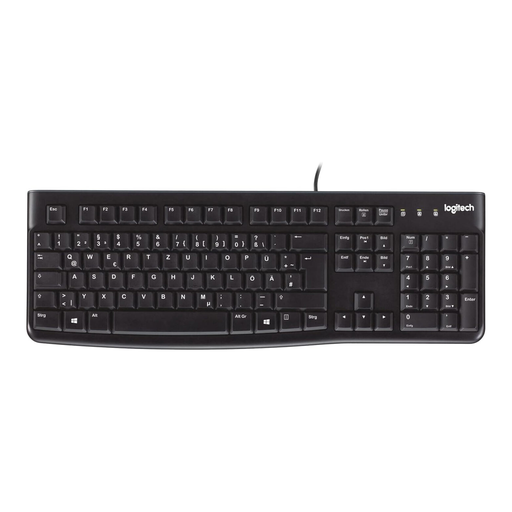
Logitech K120, wired, German QWERTZ, full-size layout
The full-size layout may suit a permanent desk setup if you need a number pad and function keys.
Wired USB connection; German QWERTZ; full-size layout with number pad and function keys; adjustable feet.
View at Joybuy
 No image available
Logitech ERGO K860, wireless, split layout, QWERTZ
The split layout is an option if you’d like to try a different key arrangement during long typing sessions.
QWERTZ; Bluetooth and USB receiver; Windows and Mac. For the model it tested, F.A.Z. Kaufkompass notes that it lacks backlit keys and wired operation.
View at Joybuy
 No image available
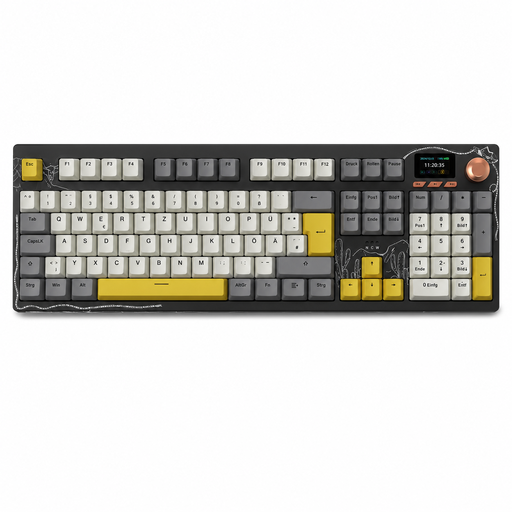
AJAZZ AK35I V4, German QWERTZ, 104 keys and number pad
The full-size layout may suit you if you need a separate number pad when typing in German.
Bluetooth, 2.4 GHz wireless and USB-C; 104 keys; 10,000 mAh battery; 1.14-inch colour TFT screen.
View at Joybuy
Frequently asked questions
Can a special keyboard make a consultation website responsive?
No. A keyboard is an input device; check responsive layouts separately, for example by changing the viewport width in Chrome DevTools. You’ll also need to assess the website’s features and display.
How can I test a consultation form without a mouse?
Use keyboard input to work through the page’s actual features and check that you can reach and operate them. The W3C’s WCAG 2.2 sets out keyboard accessibility as a requirement for web content; buying a particular keyboard doesn’t demonstrate compliance.
Which keyboard layout should I choose for code and German text?
Choose the country layout whose characters and key arrangement suit your workflow, and check the specific variant in the product listing. With compact layouts, also check whether they include the navigation keys you need and a separate number pad.
What should I consider when positioning my keyboard at my desk?
For computer workstations, ASR A6 describes positioning the keyboard centrally and separately from the screen, with the keyboard, wrist and elbow at roughly the same height. The rule applies within its relevant scope under employment law and does not require everyone to buy a split keyboard.
Does BITV 2.0 automatically apply to every public consultation website in Germany?
No. The name of a website alone doesn’t tell you who operates it. The Federal Accessibility Agency describes BITV 2.0 as a requirement for public bodies at federal level. For a specific website, you need to consider who operates it and, where relevant, the applicable state law; these obligations are separate from choosing a keyboard for developers.


