If you’re checking a workshop directory without a mouse, choose a keyboard with easy access to the Tab, arrow and function keys you use most often. For recurring development commands, customisable key mappings may be more important. If you spend long periods typing, the keyboard’s design can also matter, although split or compact models may take some getting used to and could need more desk space. A keyboard alone won’t make a website usable with a keyboard: filters, dialogue boxes and forms also need to be designed and tested accordingly, as outlined by the W3C Web Accessibility Initiative’s guidance on keyboard accessibility and avoiding keyboard traps.
Who this choice matters to
Keyboard testers for directories
If you check filters, listings and forms without a mouse, you’ll need navigation keys that are easy to reach. The W3C Web Accessibility Initiative identifies keyboard operability as a key criterion; the important thing is to test the directory’s actual workflows.
Developers who use lots of shortcuts
If you edit code and directory content, custom key mappings can make recurring commands easier to use. Just make sure you can still reach the keys you need for navigation and testing.
Frequent typists looking for comfort
If you maintain a lot of workshop content, compare fixed and split keyboard designs to see how they fit your workspace and preferred hand position. An ergonomic label doesn’t guarantee a particular effect.
What to consider when choosing
Conventional keyboard with easy-to-reach keys
A good fit if: you often need the arrow, function and, where applicable, number keys for testing without switching layers.
The trade-off: A larger keyboard can take up more desk space and won’t necessarily offer freely programmable commands.
Compact, programmable keyboard
A good fit if: you want to map recurring development commands and are happy to check the settings and navigation layers.
The trade-off: With a compact layout, make sure you can still reach the arrow, function and special keys you need for your workflow.
Split ergonomic keyboard
A good fit if: your preferred hand position and available desk space are priorities during long typing sessions.
The trade-off: A fixed split is positioned differently from separate halves; on the Dygma Raise 2, the arrow and F keys are on layers rather than dedicated keys.
| Buying priority |
What to check before buying |
Who it matters most to |
| Navigation without a mouse |
Check that the Tab, arrow and function keys you use most often are easy to reach; test how to exit dialogue boxes, too. |
When I check filters, listings and forms without a mouse, the keys need to suit my workflow. Around 33% of consumers are likely to prioritise navigation. |
| Customisable commands |
Check the configuration options for the specific model and make sure you can still reach the navigation keys with your custom mappings. |
When I repeat the same development commands frequently, I want to be able to map them to suit me without making navigation harder. Around 27% of consumers are likely to have this as their main priority. |
| Hand position during long typing sessions |
Compare the design, wrist rest and space requirements with your intended workspace; don’t treat manufacturers’ claims as a guarantee of personal results. |
When I write lots of workshop descriptions, I want a keyboard that suits my hand position and desk space. Around 27% of consumers are likely to prioritise typing comfort. |
| Layout and connection |
Check the specific German layout option, connection and operating system input layout. |
When I type in German on my work computer, I want to check that the key labels, selected layout and connection all match. Around 13% of consumers are likely to prioritise this device compatibility. |
Avoiding common buying pitfalls
-
Assuming ergonomic means guaranteed pain-free use
A particular design or wrist rest doesn’t prove that it will suit everyone or prevent discomfort.
Check the hand position and available space at your actual workstation instead of assuming it will have a particular health benefit.
-
Buying a compact keyboard without checking the navigation layout
According to Dygma, the arrow and F key functions on the Dygma Raise 2 are available on pre-installed layers, not on dedicated keys.
Try your most common keyboard tests with the specific layout and check whether adding layers suits your workflow.
-
Assuming the model name tells you the right regional layout and connection
The model name alone doesn’t tell you which layout or connection option you’re choosing. For the CHERRY KC 4500 ERGO, the German version is listed separately as JK-4500DE-2.
Check the version you’ve selected, the German layout, the connection and compatibility with your operating system.
Keyboard brands to consider
Logitech
The ERGO K860 is a fixed split keyboard with a number pad; the MX Keys S is a flatter alternative with customisable keys, according to the manufacturer.
- F.A.Z. Kaufkompass highlights the typing feel and function keys of the ERGO K860.
- The review notes that it can’t be used with a cable and that one area is difficult to clean. Claims about comfort and effects come from the manufacturer.
CHERRY
The KC 4500 ERGO is a fixed-shape, wired keyboard; version JK-4500DE-2 is listed as the German edition.
- CHERRY lists USB-A, Windows compatibility, a wrist rest and optional key customisation.
- Its fixed design can’t be positioned like two separate halves. Claims about ergonomic effects come from the manufacturer.
Keychron
The K2 Pro ISO is an option if you’re looking for a more compact mechanical keyboard with QMK/VIA configuration.
- The manufacturer lists a DE-ISO version and keycaps for Mac and Windows.
- Check the specific layout and condition you’ve selected carefully; details for another version won’t necessarily apply.
Dygma
The Raise 2 is a split keyboard with configurable layers, designed for people who want to customise their key layout.
- F.A.Z. Kaufkompass rates its flexible split positively; Dygma describes pre-installed layers that give access to the arrow and F keys.
- The arrow and F key functions are on layers rather than dedicated keys. Wireless connectivity and adjustable tilt are optional extras, not standard across every configuration.
Perixx
The PERIBOARD-335 is a compact, fixed-split wired option available with a German QWERTZ layout.
- The manufacturer describes USB-A, a choice of switches and different layouts.
- Check the switch type and layout of the specific version you select. Claims about improving posture come from the manufacturer.
Keyboards at Joybuy
This selection includes compact and full-size keyboards listed with a German layout. Compare each design and check whether the keys you need for your keyboard tests are easy to reach.
 No image available
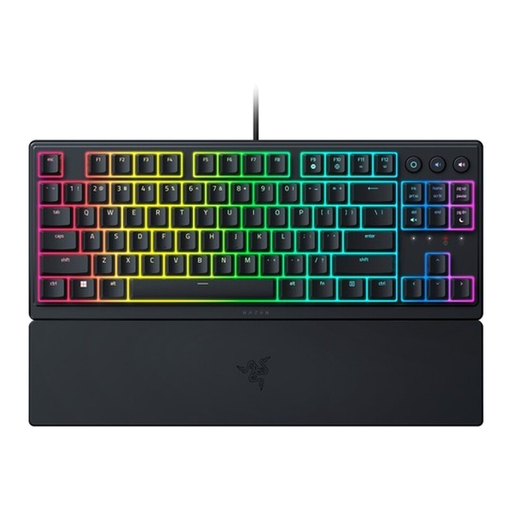
Razer Ornata V3 Tenkeyless, German layout
A possible choice if you’re looking for a German layout and a compact TKL design; check that the navigation keys you need are easy to reach for your tests.
Listed in the product name: Tenkeyless and German layout.
View at Joybuy
 No image available
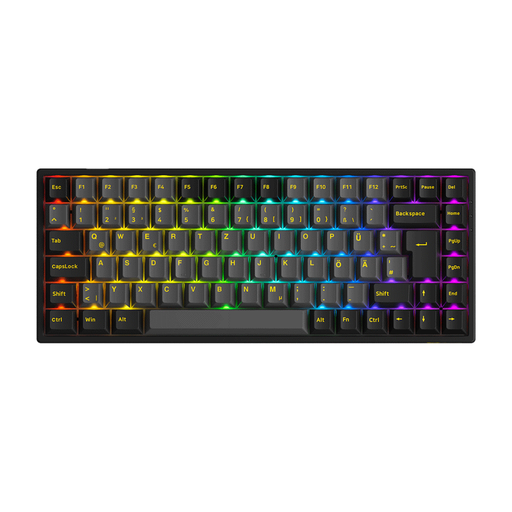
Akko 3084B Plus Tri-Mode, 75%, ISO-DE
Could suit recurring commands and typing in German; check that the more compact layout works for your navigation tests.
Listed in the product name: 75% layout, ISO-DE, Bluetooth, 2.4 GHz wireless and USB-C.
View at Joybuy
 No image available
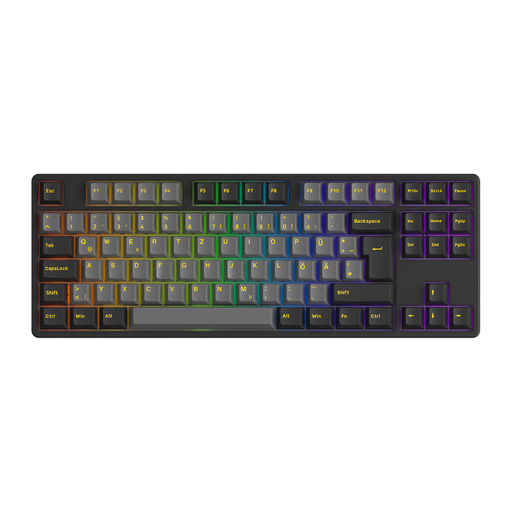
Akko 5087S V1 TKL, wired, ISO-DE QWERTZ
A possible choice if you’re looking for a wired TKL keyboard with a German layout; compare the key arrangement with the tests you carry out most often.
Listed in the product name: TKL design, wired connection and ISO-DE QWERTZ layout.
View at Joybuy
 No image available
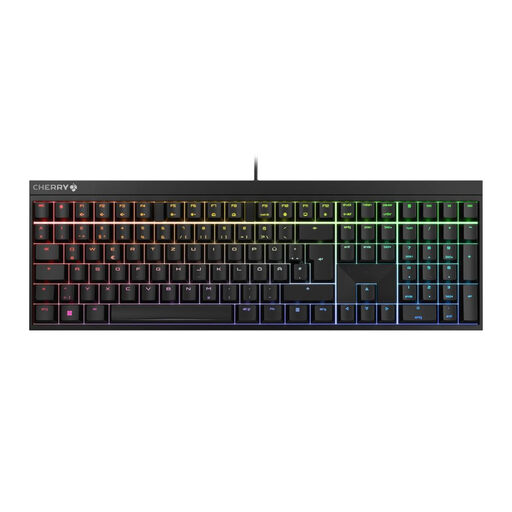
CHERRY MX 2.0S, full-size, German QWERTZ
Could suit you if you prefer a full-size keyboard with a German layout; check that you have enough space for it at your workstation.
Listed in the product name: mechanical full-size keyboard with German QWERTZ layout.
View at Joybuy
 No image available
CHERRY MX-LP 2.1 Wireless, 65%, German QWERTZ
Could be an option if you’re looking for a compact keyboard with a German layout; check in advance that the navigation keys you need are easy to reach in the chosen layout.
Listed in the product name: 65% layout, Bluetooth, 2.4 GHz wireless and USB-C.
View at Joybuy
Frequently asked questions
Is a special keyboard enough to make my workshop directory work without a mouse?
No. The W3C Web Accessibility Initiative explains that functions must be usable with a keyboard and that users must be able to move focus away from a component. So test the directory’s actual workflows rather than assuming it’s accessible based on the keyboard model alone.
Where are the arrow and function keys on a Dygma Raise 2?
According to Dygma, these functions are available via pre-installed layers, accessed by default by holding down thumb keys. Try it out to see whether this works for your most common navigation tests.
What should I check if the wrong characters appear after connecting my keyboard?
First check the physical keyboard layout, then the input layout in your operating system. Microsoft explains how to add and switch between input layouts in Windows.
What should I consider about the configuration beyond the keyboard itself?
Compare the specific version and the accessories included. For example, wireless connectivity and adjustable tilt are optional extras for the Dygma Raise 2, so check what comes with the configuration you’ve chosen.
Does a German workshop directory have to be accessible under the BFSG?
You can’t determine that from the term ‘directory’ alone. According to the German Federal Accessibility Centre, the relevant service here is e-commerce, where an individual consumer request relating to the conclusion of a consumer contract is a key consideration. It also notes an exemption for services provided by micro-enterprises with fewer than ten employees and annual turnover of no more than two million euros. To determine how the rules apply, you’ll need to clarify whether the planned directory includes booking or contract functions and who operates it. Regardless, the directory should be designed and tested for keyboard accessibility as part of this project.


