When you make frequent edits, the first thing to check is whether the layout and keys you need suit your word-processing software and operating system. Track Changes is enabled in the software itself, not via a special keyboard. For long writing sessions, you can weigh up a familiar, low-profile layout against a split ergonomic design. Compact models save space, but change the position of the keys.
Who should consider their keyboard choice
Frequent editors
If you often move between sections of text and review changes as you write, look for a familiar key layout and the features you need in your word-processing software. Microsoft Support notes that Word keyboard shortcuts can vary depending on the keyboard layout.
People who write a lot
When you’re writing long chapters in one sitting, the shape of the keys and the position of your hands at your workstation matter. A low-profile keyboard and a split keyboard offer different layouts, so consider which one best suits your workspace.
People writing at a shared desk
If you share your workspace or switch between devices, typing noise, desk space and connectivity can all be deciding factors. Check these details for the specific keyboard version and your devices.
What to look for when buying
Low-profile keyboard with a familiar layout
A good fit if: you want to stick as closely as possible to your usual typing movements when editing.
The trade-off: A conventional layout doesn’t offer the split hand position of an ergonomic keyboard.
Split ergonomic keyboard
A good fit if: you’d like to try a different hand position during longer writing sessions.
The trade-off: The unfamiliar layout may take some getting used to and needs to suit your workspace.
Compact, customisable keyboard
A good fit if: you need space beside your keyboard or want to customise key assignments.
The trade-off: On a compact layout, frequently used navigation and function keys may be in different positions.
| What matters |
What to check before buying |
Who it matters most to |
| Layout and editing keys |
Check the language layout, arrow and navigation keys, and the features you need for your operating system and word-processing software. |
If you move quickly between sections of text when editing, familiar key positions are important. Around 36% of consumers would look at the layout and editing keys first. |
| Typing comfort and hand position |
Compare the design and check that the wrist rest, arm position and space for your mouse all work with your desk. |
During long writing sessions, it’s important that the key shape and hand position feel right for you. Around 29% of consumers put hand position first when writing. |
| Typing noise |
Check the specific key or switch version and, if possible, listen to how it sounds for yourself. |
If you write in a shared space, you’ll want to minimise disruption to others. Around 21% of consumers would consider typing noise first. |
| Desk space and switching between devices |
Compare the dimensions and key layout, and check which connectivity options the version you’re considering offers. |
If you need room for notes or a mouse beside your manuscript, or you switch between devices, the footprint and connection options are key. Around 14% of consumers would prioritise these factors. |
How to avoid buying mistakes
-
Expecting Track Changes to be a keyboard feature
Whether changes are marked depends on your word-processing software settings. A special key on your keyboard won’t replace this feature.
First, check how to use the feature in your software. Then choose a layout and keys to suit the functions you use most often.
-
Choosing a compact layout based on space savings alone
When you make frequent edits, the position of the navigation and function keys can matter. A smaller layout may change the key positions you’re used to.
Compare an image of the exact version with the keys you actually use when editing.
-
Assuming an ergonomic design is guaranteed to fit
Split and conventional designs have different layouts, so a particular model won’t automatically suit every hand position or workspace.
Consider the design, hand position and any adjustment period separately from the manufacturer’s claims.
Key brands at a glance
Logitech
The MX Keys S is a low-profile keyboard with customisable features, while the ERGO K860 has a fixed split ergonomic layout. They’re different designs for different preferences.
- Logitech lists backlighting and programmable keys for the MX Keys S.
- F.A.Z. Kaufkompass notes that the ERGO K860 lacks key backlighting and wired connectivity. These comments apply to this model, not the brand as a whole.
CHERRY
The STREAM KEYBOARD is a wired keyboard with a conventional layout and low-profile SX scissor keys.
- CHERRY lists Office keys and describes the keystroke as quiet.
- The noise description comes from the manufacturer and isn’t based on a comparative test. Check the language version and layout before buying.
Keychron
The K3 Max is aimed at people looking for a compact mechanical layout with customisable key assignments.
- Keychron lists a 75% layout, VIA customisation, and wired, Bluetooth and 2.4 GHz connectivity.
- The range includes different layouts and switches. Check whether the specific version is DE-ISO.
Kensington
The Pro Fit Ergo KB675 EQ TKL is an ergonomically shaped German-layout model without a number pad.
- Kensington lists connectivity for up to three devices and customisable keys.
- The manufacturer describes the fit as suitable for small to medium-sized hands; this isn’t a guarantee that it will suit everyone.
Perixx
The PERIBOARD-335 is a compact, split mechanical keyboard with a choice of switches and language layouts.
- Perixx offers German QWERTZ, among other layouts, and a choice of switch types.
- According to the manufacturer, the downloadable configuration software is only available for Windows. The keyboard connects via USB-A cable.
Keyboards for writing and editing
The selection ranges from compact keyboards with conventional layouts to a split ergonomic design. For each version, check the specific language layout and the key positions you need for editing.
 No image available
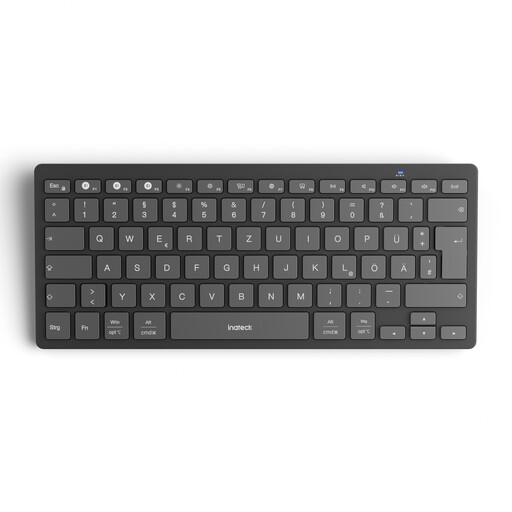
Inateck KB01003G Bluetooth keyboard, QWERTZ
A QWERTZ layout may suit you if you want familiar key positions for writing and editing.
Bluetooth connections to three devices; according to the product name, it’s designed for iPad, Windows, Android and iOS. Check compatibility with your specific device.
Joybuy
 No image available
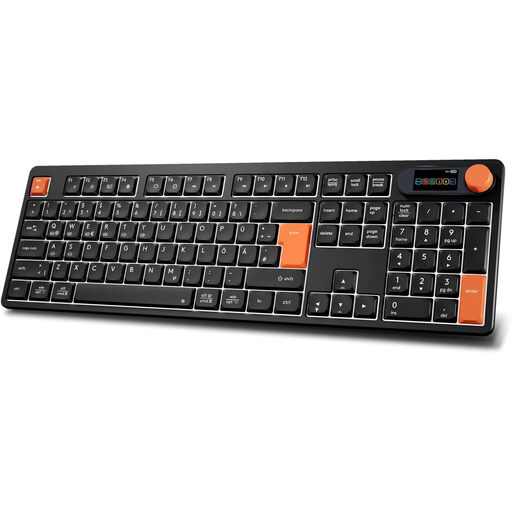
Wireless QWERTZ keyboard with LCD display and rotary dial
The QWERTZ layout is an option if you prefer a German key layout for writing and editing.
The product name lists Bluetooth, 2.4 GHz and USB-C connectivity, as well as backlighting. Check which connection option suits your devices.
Joybuy
 No image available
Logitech ERGO K860, QWERTZ
The split keyboard and wrist rest offer a different layout for longer writing sessions. Check whether it suits your hand position and desk.
Bluetooth and USB receiver; listed as compatible with Windows and Mac. F.A.Z. Kaufkompass notes that this model lacks wired connectivity and key backlighting.
Joybuy
 No image available
Logitech MX Mechanical, QWERTZ, Tactile Quiet
The German QWERTZ layout is a good starting point if you want familiar key positions when writing.
The product name lists Tactile Quiet switches, Bluetooth and Logi Bolt, as well as smart backlighting. Check which connection options your devices support.
Joybuy
 No image available
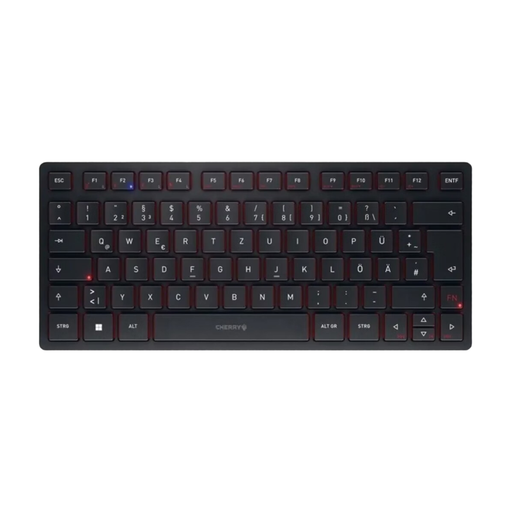
CHERRY KW 9200 MINI, compact layout
The compact design and scissor keys may suit you if you’re looking for a smaller keyboard for your desk.
Bluetooth, 2.4 GHz and USB-C. Important for German text: the product details list an English UK QWERTY layout, not a German key layout.
Joybuy
Frequently asked questions
Do I need a special keyboard to track changes in my handbook?
No. In Word, you enable Track Changes in the software. When choosing a keyboard, the most important things are a suitable layout and the keys you use with your version of the software and operating system.
What should I look for in a keyboard for long writing sessions?
Check that your hands and arms rest comfortably at your workstation and that your mouse remains within easy reach. A split keyboard has a different layout that may take some getting used to; the design alone doesn’t guarantee a suitable hand position.
What’s the difference between a fault and an additional warranty on offer?
Your statutory rights if a product is faulty are against the seller; a warranty is an additional voluntary promise. Verbraucherzentrale recommends checking the warranty terms separately.
What marking should I look for on a wireless keyboard sold in Germany?
The Bundesnetzagentur explains that CE marking is required for products covered by relevant EU harmonisation legislation. Check the marking and product information for the specific keyboard; a label is no substitute for trying it out.
Can I put an old keyboard in household waste?
No. The Umweltbundesamt explains that discarded electrical equipment must be disposed of separately from household waste. Find out about suitable return options or a collection point near you.


